How Much Does an Emperor Scorpion Really Cost?
On This Page▾

Emperor scorpions are one of the more affordable exotic pets to keep, both to buy and to maintain, and the "scary invertebrate" reputation doesn't come with a scary price tag.
The Scorpion: $25 to $100
The typical range for captive-bred specimens is $25 to $100, though three jurisdictions ban the animal outright and that is worth settling before any money changes hands. Juveniles or smaller individuals often run $25 to $50, with larger adults or proven breeders toward the higher end, $60 to $100. Specialty size or locality variants can reach $100 to $200 in some listings, and pet store pricing commonly falls in the $30 to $80 range.
One thing worth flagging directly: some sources list dramatically higher prices, $800 or more, but that figure doesn't match current breeder, retailer, or hobbyist reporting and appears to be an outlier, not a realistic expectation. True color or size morphs exist but aren't nearly as extensively bred in this species as they are in many popular reptiles, so don't expect the kind of morph-driven price spread you'd see with a ball python.
Upfront Setup: $120 to $290
| Item | Cost Range |
|---|---|
| 10-20 gallon enclosure with secure lid | $40 - $80 |
| Moist substrate (coconut fiber + topsoil) | $10 - $35 |
| Cork bark slabs and flat stones | $15 - $40 |
| Heat mat with thermostat | $25 - $50 |
| Digital thermometer and hygrometer | $10 - $25 |
| Sphagnum moss to hold moisture between mistings | $5 - $15 |
| Shallow water dish, deep enough to drink from and not to drown in | $5 - $15 |
| Spray bottle for misting | $5 - $15 |
| Long forceps with soft padding | $5 - $15 |
| Setup total | $120 - $290 |
Typical price ranges across retailers.
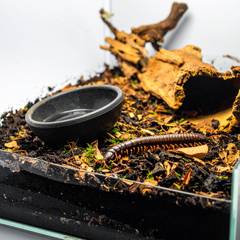
A secure glass or plastic enclosure, minimum around 10 gallons, roughly 20x10x12 inches, is the starting point, and larger is better for groups or enrichment. No specialized UVB lighting is needed here, which keeps this setup meaningfully cheaper than a comparable reptile enclosure. Altogether, most first-time setups land around $120 to $290 before the scorpion.
Ongoing Costs: Typically Under $20 a Month
| Item | Annual Cost |
|---|---|
| Live feeder insects (crickets, dubia roaches, mealworms) | $50 - $100 |
| Substrate replacement | $20 - $35 |
| Electricity (low-wattage heat mat) | Minimal |
Typical price ranges across retailers.
An adult eating 2 to 3 appropriately sized prey items once a week keeps monthly feeding costs modest, and substrate refresh or misting supplies add just a few dollars on top. There's no ongoing lighting cost to speak of, since this species doesn't need UVB.
Vet Costs
Exotic vets experienced with invertebrates are uncommon, and most routine issues are managed by keepers directly through husbandry correction rather than a vet visit. Part of that is the animal itself: severe toxicity is unlikely from this species and its relatives, whose stings produce localized pain, swelling, and redness instead of systemic illness, and emperor scorpion venom in particular is documented as mild. When professional care is genuinely needed, a failed molt, a serious injury, or infection, expect exotic vet exam fees in the $80 to $200-plus range, with limited treatment options available for many invertebrate conditions. Prevention through correct humidity and substrate does far more work here than veterinary care ever will, since dehydration and a failed molt are the two failures that kill this animal and both are husbandry problems.
Emperor scorpions typically live just 5 to 8 years in captivity, which makes them one of the lightest long-term commitments among popular exotic pets, nowhere near the decades a tortoise, parrot, or even a koi can rack up.
Lifespan: Shorter Than You Might Expect
5 to 8 years in captivity is the usual figure, and the full reported range runs 4 to 9. Either way, this is a genuine multi-year commitment, but nowhere near the decades-long timeline of many reptiles, birds, or even koi, which makes the emperor scorpion one of the lighter long-term commitments among exotic pets.
If you're budgeting across several pet types at once, our Koi cost guide, Green Cheek Conure cost guide, and Red-Eared Slider cost guide cover very different budgeting patterns worth comparing.
Our Tarantula cost guide is the closest apples-to-apples comparison among invertebrates specifically. For a direct verdict between the two rather than just the price tags, our Tarantula vs. Emperor Scorpion guide is the one to read.
The emperor scorpion also appears alongside koi, the conure, and red eared slider in our Four Pets People Get Wrong Before They Even Bring One Home roundup.
Sources & Further Reading
Frequently Asked Questions
How much does an emperor scorpion itself cost?
Typically $25 to $100 for a captive-bred specimen, with juveniles toward the lower end and larger adults or proven breeders toward the higher end. Specialty size or locality variants can reach $100 to $200. Some listings claim prices as high as $800 or more, but that figure doesn't match current breeder or hobbyist reporting and isn't a realistic expectation.
What does the upfront setup cost?
Roughly $120 to $290, covering the enclosure, deep substrate and sphagnum moss, hides, a heat mat and thermostat, a hygrometer and thermometer, a water dish, a spray bottle and forceps, before the scorpion. No UVB lighting is required, which keeps this setup meaningfully cheaper than a comparable reptile enclosure.
What are the ongoing monthly costs?
Typically under $20 a month. Live feeder insects, crickets, dubia roaches, and mealworms, are the main expense, and electricity from a low-wattage heat mat is minimal.
Do emperor scorpions need regular vet care?
Not usually. Exotic vets experienced with invertebrates are uncommon, and most routine issues are managed by correcting husbandry rather than a vet visit. When professional care is needed, expect exam fees in the $80 to $200-plus range, with limited treatment options for many invertebrate conditions.
How long do emperor scorpions live, and how does that affect budgeting?
5 to 8 years in captivity is the usual figure, with the full reported range running 4 to 9. That's a multi-year commitment, well short of the decades many reptiles, birds, or even koi ask for.
More on the Emperor Scorpion
Emperor Scorpion care guide
🦂 Should You Handle an Emperor Scorpion? Rarely, and Carefully
🦂 Common Emperor Scorpion Health Issues and What Causes Them
🦂 Emperor Scorpion Enclosure Setup: Deep Substrate, High Humidity, No UVB
🦂 Emperor Scorpion Feeding: Schedule, Diet, and Why Fasting Is Normal
🕷️ 10 Surprising Emperor Scorpion Facts
Recommended Gear
As an Amazon Associate I earn from qualifying purchases through the links above, at no extra cost to you.

Written by Michael Ryan
Mike keeps two rescued bearded dragons, Dex and Cera, and writes the care guides on BeastlyFacts from his own research and mistakes. He is not a veterinarian.
More about Michael Ryan →