Cherry Shrimp Aren't Handled at All, But Transfers Deserve Real Care
On This Page▾

Cherry shrimp are never handled the way a hamster or even a fish sometimes is. This is a pure observation pet, and the closest thing to "handling" that ever happens is netting one for a transfer, which deserves more care than it might look like it needs.
Netting: The Only Real Contact This Species Gets
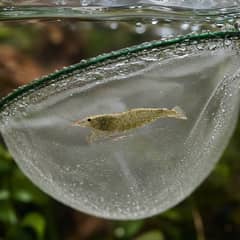
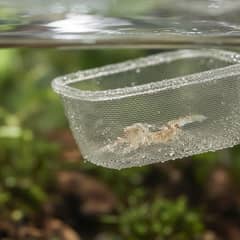
Use a soft, fine-mesh aquarium net, nothing stiff or coarse. Move it slowly through the water instead of chasing a shrimp down, and let it swim into the net or settle there on its own instead of scooping aggressively at the substrate. Avoid pinning a shrimp against the glass or gravel, and never pick one up directly with bare fingers, a shrimp's exoskeleton and legs are far more fragile than they look, and a firm grip can injure or kill one outright. If you're moving shrimp between tanks, transfer some of the original tank water along with them instead of netting them completely dry.
Why Acclimation Matters More Here Than It Does for Most Fish
This is the part of handling that actually matters for cherry shrimp. Fish regulate their internal salt and water balance fairly efficiently even through a moderate parameter change. Shrimp don't. A sudden shift in the surrounding water forces more water into the animal's cells than its body can compensate for quickly, which can damage tissue and blood cells rather than just causing mild stress. The number to watch: once total dissolved solids (TDS) shift by more than 30 to 40 ppm in a short window, the shrimp cannot adjust fast enough and water moves into or out of its body.
The fix is a slow drip acclimation rather than a quick float-and-dump. Run it at roughly one drop per one to two seconds until the water volume in the acclimation container has doubled, which in practice takes 60 to 90 minutes for most home setups. That's meaningfully slower than typical fish acclimation advice, and it's the single biggest handling-adjacent thing you can do right for a new shrimp.
Quarantine
Quarantine new shrimp in a separate, already-established tank for at least two weeks before introducing them to an existing colony. Flip Aquatics quarantines shrimp for a full 30 days on the supplier side before anything ships, partly to let shrimp recover from shipping stress and partly to catch problems early.
That supplier-side quarantine catches more than you'd expect. A 2023 study in the journal Animals examined 900 cherry shrimp imported from Taiwan and found that three quarters of them carried at least one epibiont, a small hitchhiking organism living on the shrimp's shell or gills, including two species new to science described in that same paper. The study also found epibiont loads were highest in shrimp collected from outdoor aquaculture ponds and lowest in shrimp already established in aquaria, evidence that a real quarantine period reduces what comes along for the ride. It's a good reminder that "quarantine because you should" and "quarantine because something specific is actually riding along" are often the same advice.
Signs a Shrimp Is Stressed After a Transfer
Watch for a shrimp that stays unusually still, hides constantly, or looks pale and washed out for more than a day or two after moving tanks. A little initial hiding is completely normal, cherry shrimp are naturally cautious in a new environment, but a shrimp that never resumes normal grazing and movement within a few days is worth investigating, since the short list of causes behind unexplained losses is well understood.
The Takeaway
If you're looking for a pet you interact with directly, cherry shrimp won't give you that, and that's fine, the appeal here is watching a colony forage and grow, not handling individual animals. Get the transfer and acclimation right, and from there it really is mostly a hands-off pet.
The Cherry shrimp encyclopedia profile covers the species itself.
Sources & Further Reading
Frequently Asked Questions
Do you handle cherry shrimp the way you'd handle a fish or a hamster?
No. Cherry shrimp are essentially never touched by hand at all. This is a pure observation pet, and the only real 'handling' that happens is netting one for a transfer, which is different from picking up or holding an animal.
What's the right way to net a cherry shrimp?
Use a soft, fine-mesh aquarium net, move it slowly rather than chasing the shrimp around the tank, and let the shrimp swim or settle into it instead of scooping aggressively. Avoid pinning a shrimp against glass or gravel with the net, and never handle one directly with bare fingers.
Why does drip acclimation matter so much for cherry shrimp specifically?
Because shrimp regulate their internal water balance far less efficiently than fish do. A sudden shift in pH, hardness, or temperature between the bag and the tank can trigger osmotic shock, and shrimp specifically are considerably more sensitive to that kind of parameter swing than most fish. A slow drip, roughly one drop every one to two seconds over 60 to 90 minutes, gives them time to adjust gradually instead of all at once.
How long should new cherry shrimp be quarantined?
At least two weeks in a separate, established tank before adding them to an existing colony, longer if you want extra confidence. Some specialty retailers, Flip Aquatics among them, quarantine shrimp for a full 30 days before they're even offered for sale, both to help shrimp settle after shipping stress and to catch parasites or hitchhikers before they reach a customer's tank.
What's the most common cherry shrimp handling mistake?
Skipping acclimation entirely, sometimes called 'plop and drop', where shrimp go straight from bag to tank with no adjustment period. It's a bigger risk for shrimp than it is for most fish, given how much less tolerant shrimp are of a sudden parameter change, and it's a leading cause of losses in the first day or two after bringing shrimp home.
More on the Cherry Shrimp
Cherry Shrimp care guide
🦐 How Much Does Cherry Shrimp Ownership Really Cost?
🦐 Common Cherry Shrimp Health Issues (And the One Chemical That Kills Them Fastest)
🦐 Cherry Shrimp Tank Setup: Size, Hard Water, and a Gentle Sponge Filter
🦐 Cherry Shrimp Feeding: Diet, Portions, and the Overfeeding Trap
🦐 Cherry Shrimp Enrichment: Surfaces to Graze, Not Food to Add

Written by Michael Ryan
Mike keeps two rescued bearded dragons, Dex and Cera, and writes the care guides on BeastlyFacts from his own research and mistakes. He is not a veterinarian.
More about Michael Ryan →