Common Gargoyle Gecko Health Issues and What Causes Them
On This Page▾

Gargoyle gecko health problems overwhelmingly come down to two husbandry errors: an enclosure that's too wet, or one that doesn't give the gecko enough hiding spots. Get those two things right and most of this list never shows up.
Metabolic Bone Disease (MBD)
Caused by calcium or vitamin D3 deficiency, often combined with inadequate UVB, exactly why getting the powdered diet and supplementation schedule right matters so much. Watch for a kinked or wavy tail, a soft jaw, curved limbs, tremors, appetite loss, and loss of coordination.
A vet may also check the calcium sacs, the calcium stores at the back of the roof of the mouth. Gargoyle geckos may be more prone to early MBD than crested geckos, but early cases often resolve within months once diet and supplementation are corrected. Advanced cases need a vet for bloodwork and imaging, existing deformities are usually permanent.
A gargoyle gecko keeps a calcium store inside its own head: the calcium sacs sit on the roof of the mouth, at the back of the palate. They cannot be seen from outside the glass, so checking them is part of a vet's exam for metabolic bone disease.
Stuck Shed Leading to Toe or Tail-Tip Loss
The most common gargoyle-specific husbandry failure, and it traces directly to low humidity. Retained shed wraps around the narrow toes like a tourniquet, cutting off circulation until the toe dies and eventually drops off.
Prevent it with a proper daily wet-and-dry humidity cycle, misting heavily and letting it dry back down rather than keeping the enclosure constantly damp. Early stuck shed often softens with a gentle warm soak; a constricting band or a blackened toe needs a vet.
Respiratory Infection
The direct result of the opposite mistake, an enclosure kept constantly wet with poor ventilation. Signs include labored or open-mouth breathing, mucus or bubbles around the nose, a clicking or wheezing sound, lethargy, and appetite loss. This needs a vet for antibiotics, and it can be fatal if untreated.
The fix is letting humidity drop back down between mistings rather than keeping things perpetually damp. A hygrometer makes it easy to confirm the enclosure is actually cycling instead of just guessing.
Floppy Tail Syndrome (FTS)
A condition seen in gargoyle and crested geckos alike, where the tail hangs over the gecko's back or to one side, usually from repeatedly sleeping upside-down on bare glass. Over time this can deform the tail base and hips, making it difficult for the gecko to defecate or, in females, lay eggs.
The fix is almost entirely about the enclosure: clutter the terrarium with enough hides and branches that your gecko doesn't default to sleeping flat against the glass. Severe cases may need a vet, occasionally tail amputation. This is a different problem from the tail-drop response, which is a defense mechanism rather than a husbandry-caused condition.
Parasites and Impaction
Internal parasites are diagnosed through a fecal exam, exactly why new geckos should be quarantined and tested before joining an established collection. Impaction, a gut blockage, is linked to ingesting substrate along with food. The risk sits with sharp or indigestible particles, sand, wood chips and gravel, rather than with soil or coconut fiber, and the substrate section of the setup guide has the full list either way. An arboreal species that spends most of its time off the floor is at lower risk than a ground-dweller to begin with.
When to See a Vet
Any kinked tail, soft jaw, or tremor (possible MBD); open-mouth breathing or mucus (possible respiratory infection); a tail that stays deformed despite adding hides (possible FTS); or any sign of parasites or impaction.
The same two husbandry mistakes, too wet or too dry, show up across small gecko species, including the mourning gecko and the African fat-tailed gecko.
Sources & Further Reading
Last reviewed 14 Sep 2026 · 2 sources
- ReptiFiles: Metabolic Bone Disease (MBD); Floppy Tail Syndrome (FTS)
- Reptile Direct: on the stuck-shed toe-loss mechanism (cited generally, applies across gecko species)
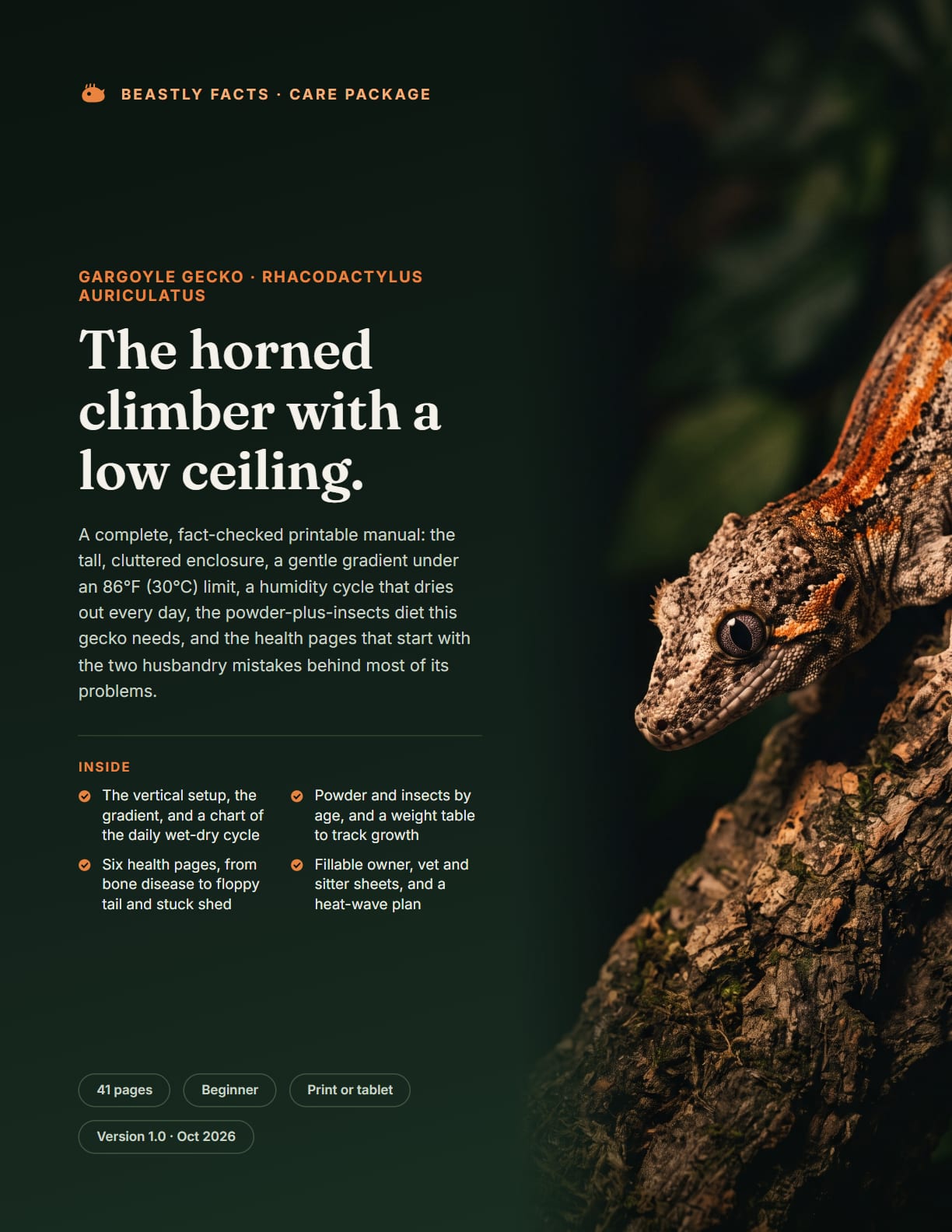
A sick gargoyle gecko is no time to be scrolling. The Gargoyle Gecko Care Package puts these red flags, a symptom quick reference and an emergency card on paper, in a 42-page PDF, $8.99.
Frequently Asked Questions
What is the first sign of metabolic bone disease in a gargoyle gecko?
A kinked or wavy tail, a soft jaw, or curved limbs, sometimes with tremors, appetite loss, or loss of coordination. During an exam, a vet may also look at the calcium sacs, which sit at the back of the palate. The cause is calcium or vitamin D3 deficiency, often with inadequate UVB.
Why do gargoyle geckos lose toes or tail tips?
Stuck shed from low humidity, almost always. Retained shed wraps the narrow toes like a tourniquet, cutting off circulation until the toe dies and drops off. A proper daily wet-and-dry humidity cycle prevents most cases.
What causes respiratory infection in gargoyle geckos?
The opposite husbandry mistake from stuck shed, an enclosure kept constantly wet with poor ventilation. Watch for labored or open-mouth breathing, mucus or bubbles around the nose, clicking or wheezing, lethargy, and appetite loss. This needs a vet, it can be fatal if untreated.
What is floppy tail syndrome and is it gargoyle-specific?
No. It shows up in crested geckos too, and in both species it is a condition where the tail hangs over the gecko's back or to one side, usually from repeatedly sleeping upside-down on bare glass. Over time it can deform the tail base and hips, making it hard to defecate or, in females, lay eggs. Cluttering the enclosure with hides and branches prevents it.
When should I take my gargoyle gecko to a vet?
A soft jaw, kinked tail, or tremor (possible MBD). Open-mouth breathing or mucus (possible respiratory infection). A tail still deformed after adding hides (possible FTS). Any sign of parasites or impaction. New geckos should also be quarantined and given a fecal exam.
More on the Gargoyle Gecko
Gargoyle Gecko care guide
🦎 How Much Does a Gargoyle Gecko Really Cost?
🦎 How to Handle a Gargoyle Gecko (And How It Differs From a Crested Gecko)
🦎 Gargoyle Gecko Enclosure Setup: A Low Ceiling, Not No Heat at All
🦎 Gargoyle Gecko Feeding: Schedule, Diet, and Why They Stop Eating
🦎 Gargoyle Gecko Enrichment: Build Up, and Fill What You Build
Recommended Gear
As an Amazon Associate I earn from qualifying purchases through the links above, at no extra cost to you.
Written by Michael Ryan
Mike keeps two rescued bearded dragons, Dex and Cera, and writes the care guides on BeastlyFacts from his own research and mistakes. He is not a veterinarian.
More about Michael Ryan →