Is It Legal to Own a Corn Snake? State-by-State Guide
On This Page▾

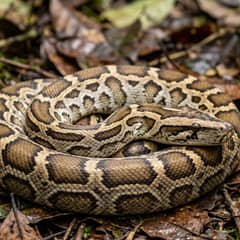
Corn snakes are one of the most common first snakes in the pet trade, sold in pet stores everywhere and recommended constantly to first-time keepers. So it comes as a genuine surprise that Georgia's own wildlife agency puts them on a list of pets you simply cannot keep, not because they're dangerous or invasive, but because they're native to the state.
Where Corn Snakes Stand
| Where | Status | Why |
|---|---|---|
| Georgia | Illegal as a pet | DNR's own Guide to Legal Pets names corn snake among native species that "may not be held as a pet regardless of its origin or morphology" |
| New Jersey | Nine named color morphs only | The corn snake is on New Jersey's own endangered list at 7:25-4.13(b), so no permit may issue for it; Fish and Wildlife carves out nine captive morphs by name and nothing else |
| South Carolina | Legal, captive-bred under 20 inches only | Act 177's native-reptile law carves out captive-bred corn snakes under 20 inches total length as the one allowed pet-trade exception |
| Illinois | Legal, except four named morph lines | Corn snake isn't on Illinois' native taxa list, but a 2025 rule treats creamsicle, dreamsicle, root beer, and scaleless corns as endangered by descent from the Great Plains ratsnake |
| Maryland | Four per person, no permit | The cornsnake is a Maryland native, capped at four whether wild-caught, captive-bred, or bought lawfully out of state |
| Minnesota | Legal, breeder-sourced only | Since August 2021, a pet snake must come from a permitted breeder or have been possessed before that date |
| Tennessee | Legal, no permit | Native status would put it in the Class II permit tier, but Class II excepts species listed in other classes and every nonvenomous reptile is listed in Class III |
| West Virginia | Banned as a native | The cornsnake is on the state checklist, and the reptile rule prohibits possessing any native not on its short takeable list |
| Hawaii | Banned | The entire snake suborder Serpentes is prohibited, with no exception for a harmless species |
| Colorado | Legal, captive bred with documentation | On Appendix B, so no license is needed, but the animal must be captive bred and carry documentation that reasonably identifies it, a receipt, bill of sale or donation record |
| Maine | Legal, captive bred only | No permit of any kind is needed, but the whole Reptilia section of the unrestricted list sits under a Captive Bred Origin Only heading |
| Delaware | Conditional | The corn snake reaches the northern edge of its range in Delaware, so it is DNREC's animal rather than Agriculture's, and the state's carve-out is written for captive-bred aberrant color morphs under permit |
| Virginia | One per address, or unlimited as a morph | The red cornsnake is a Virginia native capped at one per physical address, but a visibly distinguishable morph is a domestic animal and outside the scheme entirely |
| Everywhere else | Generally legal | No state-level ban; most states' venomous or large-constrictor rules don't reach a small native colubrid like this one |
West Virginia Bans It, and the Reason Is a List With No Snakes On It
Georgia is the ban people know about. West Virginia is the one almost nobody does, and it is easy to miss because the corn snake sits at the northern edge of its range there and most people do not think of it as a West Virginia animal. The state's own checklist does: WVDNR lists the "Cornsnake (Pantherophis guttatus)" among the twenty-two snake species found in West Virginia.
That is the whole trigger. W. Va. C.S.R. § 58-73-1.1 says "The take or possession of any native West Virginia reptile or amphibian species not listed hereafter is prohibited pursuant to W. Va. Code 20-2-4," and the list that follows runs ten salamanders, two frogs and two turtles. No snake is on it. The department's public summary of the rule states the consequence directly: West Virginia's herp regulations prohibit the possession of 80 species of reptiles and amphibians.
The rule's own definition of possession is written around animals "taken alive or dead from the wild," which pulls against the flat wording of the scope sentence for a captive-bred animal bought from a breeder. We follow the scope sentence, because that is the sentence the department itself repeats in its public guidance.
Illinois Restricts Four Morphs, Not the Species
Illinois is worth reading closely because the condition it attaches lands nowhere near where you would look for it. The corn snake is not an Illinois native taxon: the state's native herptile list at 17 Ill. Adm. Code 885.40 carries three Pantherophis species, the Great Plains ratsnake, the black and gray ratsnakes, and the fox snakes, and Pantherophis guttatus is not among them. So the possession caps that Illinois applies to its own native reptiles, 4 per species and 8 in total, do not reach an ordinary corn snake at all, and no Herpetoculture Permit is needed to keep one.
What does reach it is a subsection added to the Herptile Code effective July 31, 2025. Illinois lists the Great Plains ratsnake, Pantherophis emoryi, as a state endangered species, and § 885.105(j) provides that "any hybrid, intergrade, cross, or morphological variation of any listed herptile shall be treated as an endangered or threatened herptile under this Part." It then names examples, and they are pet-shop names rather than field-guide ones: scaleless corn snakes, root beer corn snakes, and creamsicle or dreamsicle corn snakes, all lines carrying emoryi ancestry from historical crosses. Those are endangered animals in Illinois and need a Department possession permit; a normal corn snake beside them on the same shelf does not.
It is the only rule of its kind we've found, and it is close to undiscoverable by the ordinary route, since looking up "corn snake" in Illinois law returns nothing at all.
Georgia's Blanket Native-Species Ban
Georgia's Department of Natural Resources maintains a list of native species that cannot be kept as pets under any circumstances, and corn snake is on it by name. The DNR's own guidance states plainly that this applies "regardless of its origin or morphology," meaning a captive-bred corn snake from an out-of-state breeder is treated exactly the same as one caught in a Georgia backyard. The rule traces back to Georgia's wild animal statute, O.C.G.A. § 27-5-4 and § 27-5-5; we couldn't pin down a numbered administrative subrule any more specific than that, but the DNR guidance page itself leaves no ambiguity.
Corn snakes are about as close to a "starter snake" as the pet trade gets, sold in big-box pet stores and recommended in beginner care guides everywhere. Georgia is the outlier: because the species is native to the state, its wildlife law treats it the same as any other wild animal a resident can't legally keep, captive-bred pet-store stock included. It's the same rule, and the same DNR guidance page, that also bans keeping a native milk snake in Georgia.
New Jersey Bans the Species and Then Names Nine Morphs
New Jersey is the state where the corn snake is endangered, and reading it as an ordinary permit state gets the answer wrong in a way that matters. Its native range barely reaches the southern counties, the population was cut down by habitat loss and poaching, and the species went onto the state endangered list in 1984. That listing sits in the rule itself: N.J.A.C. 7:25-4.13(b) names the corn snake, Elaphe guttata guttata, seventh on the list. Two consequences follow. 7:25-4.10(a) says no permit shall be issued for possession of a species designated endangered, and 7:25-4.15(b) says such an animal "may not be kept as a pet, for hobby purposes." So the catch-all permit route under 7:25-4.5, which is what most people find first because the corn snake is absent from the exempted-species list, is closed to this species.
What keeps the corn snake in New Jersey pet shops at all is an enforcement carve-out. A captive color morph is visibly not a wild-phase animal, so it cannot be used to launder a Pine Barrens snake into the trade. Fish and Wildlife's restricted species notice states that "wild phase corn snakes are classified as endangered in the State of New Jersey and may not be possessed as pets or for hobby purposes, nor may they be sold, for any reason," and then names the nine that may be: red albino (amelanistic), butter, blizzard, candy cane, creamsicle, lavender, pearl, snow, and sun glow.
Nine is a small number for a trade that has produced hundreds of named morphs, and the notice does not say what happens to the rest. A normal-looking corn snake is clearly out. Anything that is a morph but not one of the nine is not addressed at all, which is a real gap rather than an implied yes.
Possession Caps and Sourcing Rules
A handful of other states allow corn snakes but attach a condition. South Carolina's 2021 native-reptile law generally bars possessing native reptiles, but carves out captive-bred corn snakes under 20 inches total length as an allowed exception. Maryland lists the cornsnake among its native species and caps possession at four per person without a permit, and the cap explicitly reaches captive-bred animals and ones bought lawfully out of state, so buying from a breeder elsewhere does not lift it. Illinois attaches a stranger condition, described in its own section below. Minnesota has required any pet snake to come from a permitted breeder, or be grandfathered in from before August 1, 2021, and the rule isn't limited to native species. Tennessee looks like it should attach one and doesn't, which is worth spelling out because the state's structure invites the mistake. Its wildlife falls into three classes, and Class II, the permit tier, covers "native species, except those listed in other classes." The corn snake is a Tennessee native, so the first half of that clause reaches it. The second half takes it straight back out, because Class III subdivision (3)(A) lists "nonpoisonous reptiles and amphibians except caimans and gavials," and Class III "requires no permits except those required by the department of agriculture." The documentation requirement people cite here, at Tenn. Code Ann. § 70-4-401(b), is written for Class I and Class II wildlife, so it does not reach a Class III animal either.
Virginia Counts the Snake by How It Looks
Virginia runs two schemes, and 4VAC15-20-50 decides which one an animal is in. A "nonnative (exotic) animal" is one "not naturally occurring in Virginia, excluding domestic and naturalized species", so the special permit table at 4VAC15-30-40 never reaches an animal Virginia already has. The department’s incorporated 2024 List of Native and Naturalized Fauna of Virginia carries the red cornsnake, Pantherophis guttatus, with no asterisk, so it is a Virginia native and the permit table never applied to it.
What applies instead is 4VAC15-360-10(A): "it shall be lawful to capture and possess live for private use and not for sale or export no more than one individual of any native or naturalized, as defined in 4VAC15-20-50, species of amphibian or reptile per physical address." One, per address, not per person. That the cap binds a keeper rather than only a collector shows from the other direction: the closed domestic animal list in 4VAC15-20-50 writes an express carve-out for "Domesticated morphs of red cornsnake (Pantherophis guttatus) visibly distinguishable from native red cornsnakes", and that exception would have nothing to do if keeping a Virginia native herp were free.
So Virginia is the one state whose corn snake rule turns on what the animal looks like rather than on where it came from. A snow, amel, lavender or any other morph a warden could tell apart from a wild Virginia cornsnake at a glance is a domestic animal, with no cap and no limit on it. A normal-phase animal is a native reptile and the one-per-address cap applies. The corn snake is on neither of the two bars in 4VAC15-360-10(A)(6), which withholds private possession from the red-eared slider and from every reptile and amphibian Species of Greatest Conservation Need.
Pennsylvania Regulates Neither Way
Pennsylvania is legal with no permit, and it is worth knowing why. The Game Code defines wildlife as wild birds and wild mammals only, so every reptile sits outside it, including under the Game Commission's exotic wildlife permits. The corn snake is also absent from the Fish and Boat Commission's native species list, since Pennsylvania's native ratsnake is Pantherophis alleghaniensis, so that commission's possession-limit chapter does not reach it either.
The Takeaway
Outside of three bans, Georgia's blanket native-species ban, West Virginia's native-reptile rule and Hawaii's ban on every snake, a corn snake is legal to keep almost everywhere in the US, which fits its reputation as one of the most common beginner pet snakes around. The catch is that several states attach real conditions rather than an outright ban: New Jersey lists the species as endangered and then allows nine named morphs, South Carolina and Maryland cap what you can have, Virginia counts a normal-phase snake as native and a visible morph as domestic, Illinois regulates four morph lines rather than the species, and Minnesota cares where the animal came from. The exotic pet legal hub holds the federal and state framework those conditions sit inside.
To see this at a glance, our interactive map of corn snake laws shades every state that restricts one, and clicking a state gives you the rule it comes from.
Sources & Further Reading
Last reviewed 2 Oct 2026 · 8 sources
- W. Va. C.S.R. § 58-73, Reptile and Amphibian Rule, as summarized by WVDNR (official PDF)
- Georgia DNR: Guide to Legal Pets
- N.J.A.C. 7:25, Division of Fish and Wildlife rules (NJDEP courtesy copy, endangered list at 7:25-4.13)
- New Jersey Fish & Wildlife: Restricted, Potentially Dangerous and Endangered Species notice
- New Jersey Division of Fish & Wildlife: Corn Snake species status
- South Carolina DNR: Reptile & Amphibian Laws, Regulations and Permits
- Illinois Administrative Code, Title 17, Part 885, Herptile Code (official JCAR text)
- Illinois Administrative Code, Title 17, Part 1010, Illinois List of Endangered and Threatened Fauna (official JCAR text)
Frequently Asked Questions
Is a corn snake banned in Georgia?
Yes. Georgia DNR's own Guide to Legal Pets lists corn snake among native species that "may not be held as a pet regardless of its origin or morphology," so even a captive-bred corn snake from an out-of-state breeder is treated the same as a wild-caught one. The rule is grounded in Georgia's wild animal statute, O.C.G.A. § 27-5-4 and § 27-5-5.
Can I own a captive-bred corn snake in New Jersey?
Only if it is one of nine named color morphs. The corn snake is on New Jersey's own endangered species list at N.J.A.C. 7:25-4.13(b), which under 7:25-4.10(a) means no permit may be issued for it and under 7:25-4.15(b) means it may not be kept as a pet. Fish and Wildlife then carves out captive morphs, because a morph is visibly not a wild-phase animal, and names nine that may be kept and sold: red albino, butter, blizzard, candy cane, creamsicle, lavender, pearl, snow, and sun glow. A normal-looking corn snake is barred whatever its paperwork says.
Is there a size limit on corn snakes in South Carolina?
Yes, for the specific exception that makes them legal at all. South Carolina's Act 177 generally bars possessing native reptiles, but allows corn snakes that are captive-bred and under 20 inches in total length as the one pet-trade exception to that rule.
More on the Corn Snake

Written by Michael Ryan
Mike keeps two rescued bearded dragons, Dex and Cera, and writes the care guides on BeastlyFacts from his own research and mistakes. He is not a veterinarian.
More about Michael Ryan →