Green Cheek Conure
Pyrrhura molinae
On This Page▾
🌍 Overview
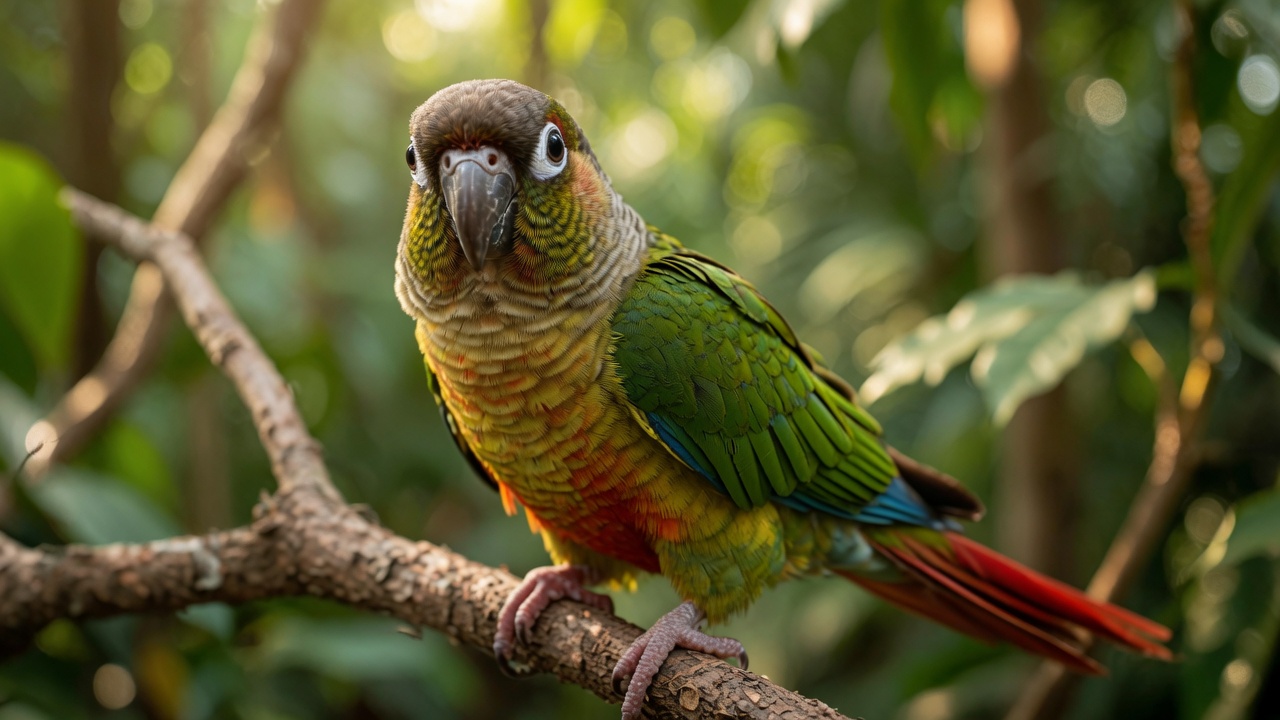
Green cheek conures are small parrots native to the forests of Bolivia, Brazil, Argentina, and Paraguay, where they live in noisy flocks in the forest canopy. They are among the quietest of the conure species - making them more apartment-friendly than larger parrots - and have a reputation for playfulness and deep affection. They bond closely with their keepers, and that bond is built on time: a conure needs three to four hours of supervised time out of the cage every day.
📋 Quick Facts
Native Range
South America (Bolivia, Brazil, Argentina, Paraguay)
Natural Habitat
Forest, woodland, and forest edges
Adult Size
10 inches (25 cm) including tail; 2-2.5 oz
Wild Diet
Seeds, fruits, berries, and plant matter
Wild Lifespan
25 to 30 years in the wild, and the same is reachable in captivity, though the captive average is nearer 10 years, put down to poor diet and neglect
Conservation Status
Least Concern (IUCN)
📜 History
Massena and Souance described the species in 1854 and named it for Juan Ignacio Molina, the Chilean Jesuit naturalist. It stayed on the margins of aviculture for more than a century. Large shipments reached the United States in the 1980s, and among the wild-caught birds were odd individuals sold as a separate species, the yellow-sided conure; breeders later showed that yellow-sided was a sex-linked opaline mutation of the green cheek, the first color mutation established in American aviculture for this bird. A cinnamon form arrived about the same time, filed at first as fallow, and the California breeder Steve Garvin crossed the two to produce the pineapple. American opalines went out to Europe and South Africa in the late 1980s and early 1990s.
⚖️ Compare
Green Cheek Conure
Human
Adult Size
10 inches (25 cm) including tail; 2-2.5 oz
5-6 feet (150-185 cm); ~135-200 lbs
Wild Lifespan
25 to 30 years in the wild, and the same is reachable in captivity, though the captive average is nearer 10 years, put down to poor diet and neglect
~73 years (global average)
Wild Diet
Seeds, fruits, berries, and plant matter
Omnivorous - eats just about anything
Native Range
South America (Bolivia, Brazil, Argentina, Paraguay)
Global - originated in Africa roughly 300,000 years ago
Natural Habitat
Forest, woodland, and forest edges
Everywhere from arctic tundra to tropical megacities
Conservation Status
Least Concern (IUCN)
Least Concern (8+ billion and counting)
🧠 Test Yourself
What's the Green Cheek Conure's native range?
⚖️ Legal Guide
Subscribe - it's free
New animal facts and care guides straight to your inbox. No spam. 🐾
📰 Deep Dive
🦜 How Much Does a Green Cheek Conure Really Cost?
🦜 How to Handle a Green Cheek Conure
🦜 Common Green Cheek Conure Health Issues and What Causes Them
🦜 Green Cheek Conure Cage Setup: What Your Bird Actually Needs
🦜 Conure Feeding: Why the Seed Dish Is the Problem
🦜 Conure Enrichment: A Big Parrot's Needs in a Small Parrot's Body
🩺 Health and More
⚠️ Household Hazards for Pet Birds: The Complete Safety Checklist
🚪 Quarantining a New Bird: The Real Timeline and Why It Matters
💩 Reading Bird Droppings: The Daily Health Check Every Owner Should Know
🌙 Photoperiod and Sleep: The Light Schedule That Controls Your Bird's Hormones
🦜 Converting a Seed-Eating Bird to Pellets Without Starving It
✂️ Wing Clipping: Flighted vs. Clipped, Both Sides Explained
🔦 Bird Emergency Plan: Power Outages, Travel, and Transport
⚖️ Sexing, Weight, and Body Condition in Pet Birds: What Actually Works
🥚 Chronic Egg Laying and Egg Binding in Budgies, Cockatiels, and Lovebirds
🪶 Why Is My Bird Losing Feathers? Molt vs. Plucking vs. PBFD vs. Giardia
🦜 Choosing a Pet Bird: What You're Actually Signing Up For
🦠 Avian Polyomavirus: Budgerigar Fledgling Disease and French Molt
🦜 Reading Bird Body Language: Fluffed Content vs. Fluffed Sick
🌫️ Feather Dust, Air Quality, and Bird Fancier's Lung
🎯 Parrot Training: The Behavior Ladder From Budgie to Macaw
🩹 Bird First Aid Kit and Grooming: Nails, Beak, and Blood Feathers
📋 Succession Planning for a Pet That May Outlive You
🕊️ Adopting a Rescue Parrot: The First Months, Honestly
🎭 Four Pets People Get Wrong Before They Even Bring One Home
🦅 The Ultimate Birdwatching Guide: Best Places, Times, and Tips for Beginners (2026)
🤓 Did You Know?
Green cheek conures are notorious for learning to hang upside down, play dead, and roll over on command. They're often called the 'class clown' of the parrot world and learn tricks faster than almost any other small parrot!
Explore More