Oscar Fish Tank Setup: Bigger and More Filtered Than You Expect
On This Page▾

Oscars get large and messy, and the setup needs to reflect that from day one, not grow into it gradually.
Tank Size
75 gallons is the widely recommended minimum for a single adult, with 100 to 125-plus gallons for a pair or small group. This is considerably larger than what most community fish need, and it's worth building for immediately: a 2-inch juvenile oscar reaches 12 inches or more within its first year, so starting small and upgrading later is both more expensive overall and more disruptive for the fish than getting the adult tank from the start. A 75-gallon or larger glass or acrylic aquarium is the practical starting point.
Temperature
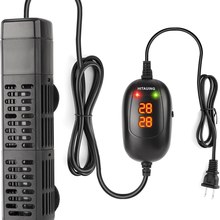
74 to 81°F, kept stable. A reliable submersible heater is required, ideally one with a built-in thermometer for easy monitoring, this is a genuinely tropical species with no cold tolerance.
Filtration: The Part That Matters Most
This is where oscar keeping diverges most sharply from a standard community tank. Oscars produce an enormous amount of waste relative to their size, and filtration needs to be genuinely heavy-duty, not just adequate. Canister filters are the standard choice here, sized to handle roughly 4 to 5 times your tank's total volume per hour. Many keepers run a large canister filter alongside a secondary hang-on-back unit for redundancy, this isn't overkill for this species, it's close to the baseline expectation.
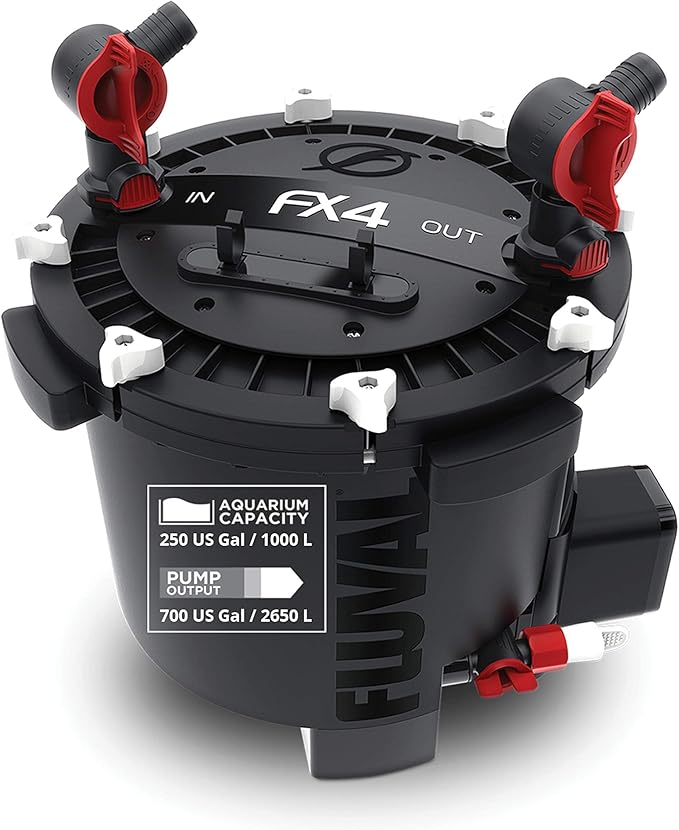
Sizing a filter to move 4 to 5 times an oscar tank's total volume every hour is well beyond what most community fish setups need. Some keepers run two filters at once, a large canister plus a secondary hang-on-back unit, and in oscar keeping circles that's treated as close to the baseline, not overkill.
Substrate
Sand, which oscars genuinely enjoy sifting through, or smooth, pea-sized or larger gravel both work well. Avoid sharp or coarse substrate, which can injure this fish's mouth given how much it interacts with the tank floor.
Water Chemistry
A pH range of 6 to 8 and soft to moderately hard water both suit this species well, oscars are fairly adaptable on this front compared to some pickier fish.
The Non-Obvious Requirements
Weekly water changes of 25 to 30% are mandatory, not optional, this connects directly to preventing hole-in-the-head disease. Secure, heavy decor matters too, oscars rearrange their environment with their mouths and will topple anything not properly anchored, and thicker aquarium glass is worth considering given how much this fish bumps and interacts with its tank walls. A tight, secure lid is essential, oscars are capable jumpers. And skip feeder goldfish as a food source entirely, they're a real disease vector and nutritionally inadequate as a dietary staple.
A tank this size and this heavily filtered is an expensive build, and the tank, not the fish, is where nearly all of that money goes.
This species also appears in our Leaf-Tailed Gecko, California Kingsnake, Box Turtle & Oscar Fish compared roundup.
❓ Frequently Asked Questions
What size tank does an oscar need?
75 gallons is the usual minimum for one adult, and 100 to 125-plus for a pair or small group. A 2-inch juvenile hits 12 inches or more inside a year, so build for the adult rather than upgrading later.
What temperature do oscars need?
74 to 81°F, held stable. A reliable heater is required, ideally with a built-in thermometer, since this tropical species has no cold tolerance.
What kind of filtration does an oscar tank need?
Heavy-duty. Oscars put out an enormous amount of waste for their size, so canister filters are standard, sized for roughly 4 to 5 times the tank volume per hour. Running a large canister plus a secondary hang-on-back for redundancy is common.
What substrate is best for an oscar tank?
Sand, which oscars enjoy sifting through, or smooth gravel at pea size or larger. Sharp or coarse substrate can injure the mouth of a fish that works the tank floor this much.
What water changes does an oscar tank need?
Weekly changes of 25 to 30%, and they aren't optional: this is what keeps hole-in-the-head disease away. Chemistry itself is flexible, pH 6 to 8 and soft to moderately hard water both work.
What non-obvious setup mistakes do oscar owners make?
Loose or light decor that gets toppled by a fish that rearranges its tank with its mouth, a lid that isn't secure enough to stop a capable jumper, and using feeder goldfish as a food source, which is a real disease vector and nutritionally inadequate as a dietary staple.
📰 More on the Oscar Fish
📘 Oscar Fish care guide
🐠 How Much Does Oscar Fish Ownership Really Cost?
🐠 Oscar Fish Aren't Handled, But They're the Closest Thing to a Pet Dog in Your Tank
🐠 Common Oscar Fish Health Issues (Hole-in-the-Head Is the One to Know)
🐠 Oscar Fish Feeding: Schedule, Diet, and Why Feeder Goldfish Are a Mistake
🐠 Oscar Enrichment: The Fish That Rearranges the Tank Itself
🛒 Recommended Gear
As an Amazon Associate, we earn from qualifying purchases through the links above - at no extra cost to you.

Written by Michael Ryan
Mike keeps two rescued bearded dragons, Dex and Cera, and writes the care guides on BeastlyFacts from his own research and mistakes. He is not a veterinarian.
More about Michael Ryan →Comments
No comments yet - be the first!