Fire-Bellied Toads Have Genuinely Toxic Skin, Here's What That Means
On This Page▾

Fire-bellied toads are display animals, and there's a real, specific safety reason behind that recommendation, not just general amphibian caution.
The Toxin Is Real and Documented
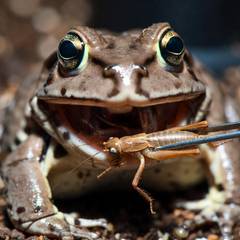
This species secretes toxins from glands in its skin, specific defensive peptides that have been identified and characterized in scientific research. This isn't folklore or overcaution, it's a genuine, confirmed feature of this animal's biology, and the bright red-orange belly it flashes when threatened is a textbook warning display, arching its back and lifting its limbs to show off that color to a potential predator.
The warning display isn't just color, it's a full posture. A threatened fire-bellied toad arches its back and lifts its limbs specifically to show off its red-orange belly to a predator, a genuine, documented defense behavior, not a random reflex.
What This Means for You
Veterinary sources are clear and reassuring on the practical risk: unless ingested, a fire-bellied toad's toxins aren't dangerous to people. The precaution is simple and it is not optional: never let a toad's skin secretions come into contact with your eyes, mouth, or any open wound. Basic care covers it, and it's exactly why minimal handling is the right default here.
If You Do Need to Handle One
Wear moistened, powder-free nitrile or latex gloves, or use a small net instead of bare hands. Wash your hands thoroughly before and after any contact, both to protect the toad's sensitive, permeable skin from oils and residue on your hands, and to protect yourself, this species can also carry Salmonella like most reptiles and amphibians.
Signs It Is Stressed by You
The unken reflex is the sign, and it comes in stages. Smithsonian's National Zoo describes the first: the toad bends its back downward into a concave curve, holds its limbs up, and arches its head so the edges of the bright belly show. Provoked further, it flips onto its back to show the whole belly, and if the provocation continues it secretes a milky toxin from pores all over its body until it is coated. Animal Diversity Web adds the extreme case: in real danger the toad can put out so much that its body is covered in a soapy foam.
A keeper reaching in does not need to get past stage one. The arched back means the toad has classed the hand as a predator, and every stage after it is the toad spending toxin on you. Close the lid. If the toad is already on its back, leave it there and wash your hands.
Hiding and refusing food are not listed as stress signs for this species by either source here, so this section does not list them either. Smithsonian's note that a predator which tastes the toxin rarely attacks again is the point of the display. A toad that gives you the full unken reflex every time you open the lid has learned nothing about you except that you keep coming back.
First-Timer Mistakes
- Handling with bare, dry hands and then touching your face or eyes afterward.
- Housing fire-bellied toads with other amphibian species. Their skin toxins can genuinely harm tankmates that aren't the same species.
- Treating this as a species you can casually pick up the way you might handle a more tolerant reptile.
Semi-Aquatic, Not a Typical Terrestrial Toad
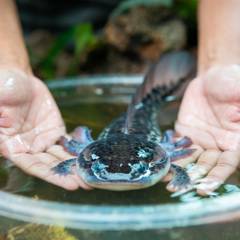
Worth understanding clearly: fire-bellied toads are frogs, not true toads, despite the name, and they're semi-aquatic, spending most of their time in or right at the edge of water. This is genuinely different from true terrestrial toads, which only return to water to breed, and it's exactly why this species' enclosure needs a real water section with filtration, which a humid terrestrial setup alone doesn't provide. It's also a useful contrast with a fully aquatic amphibian like the axolotl, which never leaves the water at all, the fire-bellied toad sits in the middle ground between that and a purely terrestrial species.
Fire-bellied toads sit inside a four-species comparison, Green Anole, Argentine Tegu, Fire-Bellied Toad & Tiger Salamander compared, which stacks the handling considerations against three very different pets. The toxin isn't the toad's biggest day to day risk.
The species away from its care sheet is in 10 Surprising Fire-Bellied Toad Facts.
Sources & Further Reading
Last reviewed 8 Sep 2026 · 2 sources
❓ Frequently Asked Questions
Is it safe to handle a fire-bellied toad?
Unless ingested, a fire-bellied toad's skin toxins aren't dangerous to people under normal handling, according to veterinary sources. Even so, minimal handling is the right default for this species, not an overcautious rule.
What toxin does a fire-bellied toad have?
Defensive peptides, secreted from glands in the skin and characterized in published research. It's a confirmed feature of the animal's biology, not folklore.
What precautions matter when handling one?
Keep the secretions away from your eyes, mouth, and any open wound. Wash your hands before and after contact, which protects the toad's sensitive skin as much as it protects you. This species can carry Salmonella too.
What's the correct way to handle a fire-bellied toad if I need to?
Moistened powder-free gloves, nitrile or latex, or a small net. Bare hands are the thing to avoid, and hands get washed before and after either way.
Are fire-bellied toads true toads?
No. Despite the name they're frogs, and semi-aquatic ones: they spend most of their time in the water or right at its edge. A true terrestrial toad only returns to water to breed.
Can fire-bellied toads be housed with other amphibians?
No. Their skin toxins can harm tankmates that aren't the same species, so they should only ever be housed with their own kind.
📰 More on the Fire Bellied Toad
📘 Fire Bellied Toad care guide
🐸 How Much Does a Fire-Bellied Toad Really Cost?
🐸 Common Fire-Bellied Toad Health Issues (Water Quality Is Everything)
🐸 Fire-Bellied Toad Enclosure Setup: Half Fish Tank, Half Terrarium
🐸 10 Surprising Fire-Bellied Toad Facts
🐸 Fire-Bellied Toad Enrichment: Plants Beat Pipes, and Someone Tested It

Written by Michael Ryan
Mike keeps two rescued bearded dragons, Dex and Cera, and writes the care guides on BeastlyFacts from his own research and mistakes. He is not a veterinarian.
More about Michael Ryan →Comments
No comments yet - be the first!