How Much Does a Tokay Gecko Really Cost?
On This Page▾

Tokay geckos have a wide price range that reflects a real quality divide in this species: wild-caught animals are cheap and come with real downsides, while captive-bred animals cost more and are the meaningfully better choice.
The Gecko: $15 to $400+
Wild-caught or unspecified "normal" tokays run as low as $15 to $50, and these are genuinely not recommended given the parasite load and poor temperament typical of wild-caught animals. Captive-bred normals run $100 to $150. Captive-bred color morphs, patternless, granite, blue-headed green, and rarer options like leucistic or albino, run $150 to $400 or more.
Upfront Setup: $490 to $715
| Item | Cost Range |
|---|---|
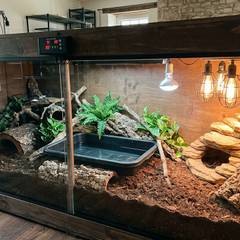
| Vertical, arboreal enclosure, 18x18x36 inches or larger, front-opening | $285 - $315 |
| Halogen basking bulb and a dome fixture for daytime heat | $20 - $35 |
| Ceramic heat emitter for night heat, since tokays need warmer nights than most homes | $20 - $60 |
| Thermostat | $25 - $35 |
| Low-output UVB, a 5% T5 fixture and bulb | $45 - $75 |
| Coconut fiber or bioactive substrate, enough for 2 to 3 inches | $25 - $40 |
| Sphagnum moss and leaf litter | $5 - $15 |
| Cork bark and branches | $10 - $30 |
| Foliage spanning the full height | $15 - $35 |
| Digital thermometer and hygrometer | $10 - $20 |
| Fine mist spray bottle | $5 - $15 |
| Shallow water dish | $5 - $15 |
| First supply of calcium with D3 | about $5 |
| A reptile multivitamin | about $5 |
| Gram scale | $10 - $15 |
| Setup total | $490 - $715 |
Typical price ranges across retailers.
Altogether, this species runs $490 to $715 before the gecko itself.
That total is built on the 18x18x36 inch enclosure, the least to buy. The better target for an adult is 24 by 24 by 48 inches tall, and a particularly large tokay needs 36 by 24 by 48. A PVC vertical enclosure at 24x24x48 runs about $545 to $575 on its own, more than the entire starter setup. Buying the bigger enclosure first costs less than buying the small one and replacing it.
Where the Money Goes Once It's Running
The monthly figure tracks age. A juvenile eats every day and an adult every other day, so a young tokay costs more in feeders than the same animal will as an adult. A juvenile gets a calcium dusting at every feeding and an adult at least twice a week, plain calcium under UVB, and the UVB bulb is a scheduled purchase, replaced every 6 to 12 months even while it still lights. Night heat is the running cost most gecko budgets miss: a tokay needs 75 to 80F overnight, so the ceramic heat emitter works through the night for much of the year.
Ongoing Costs: Roughly $15 to $30 a Month
Crickets or roaches, supplements, and regular misting make up the monthly total.
A well-cared-for captive tokay gecko can live 20 years or more, well beyond the 10 to 15 years typical in captivity, which is a lot of years for a single upfront setup to be worth getting right the first time.
Vet Costs
Plan on a yearly vet visit even for a healthy gecko: an annual physical and fecal test, with blood work when the vet wants it. A routine exam runs $50 to $100. Wild-caught animals frequently need a fecal test plus antiparasitic treatment on top of that. Emergencies, prolapse or respiratory infection among them, can reach $200 or more.
Lifespan
10 to 15 years is typical in captivity, with well-documented cases reaching 20 years or more under excellent care.
The Cost Decision: Captive-Bred vs. Wild-Caught
A cheaper wild-caught tokay isn't the budget option once you factor in likely parasite treatment and a considerably more defensive, harder-to-work-with animal. Paying more for a captive-bred gecko is the better value for nearly every keeper.
Anyone weighing this species against a calmer gecko can put the numbers beside the crested gecko and the leopard gecko, two much more beginner-friendly budgets.
The Tokay Gecko encyclopedia profile has the wild background, and the tokay turns up next to the uromastyx, African grey parrot, and jumping spider in Four Animals That Break Their Own Category's Rules.
Sources & Further Reading
Last reviewed 23 Jul 2026 · 3 sources
Frequently Asked Questions
How much does a tokay gecko itself cost?
$15 to $400 or more, depending heavily on whether it's wild-caught or captive-bred. Wild-caught or unspecified 'normal' tokays run $15 to $50, captive-bred normals run $100 to $150, and captive-bred color morphs, patternless, granite, blue-headed green, and rarer options like leucistic or albino, run $150 to $400 or more.
Is a cheap wild-caught tokay gecko a good deal?
Not usually. Wild-caught animals are not recommended given the parasite load and poor temperament typical of them, and the money saved upfront is frequently spent right back on fecal testing and antiparasitic treatment.
What does a tokay gecko setup cost to build?
Roughly $490 to $715 upfront, covering a vertical arboreal enclosure, a halogen basking bulb, a ceramic heat emitter with a thermostat for overnight warmth, low-output UVB, substrate and décor, a thermometer and hygrometer, a misting bottle, a water dish, supplements and a gram scale.
What are the ongoing monthly costs for a tokay gecko?
Roughly $15 to $30 a month, covering crickets or roaches, supplements, and the supplies for regular misting.
How much do vet visits cost for a tokay gecko?
$50 to $100 for a routine exam. A wild-caught animal frequently adds a fecal test and antiparasitic treatment. Emergencies such as prolapse or respiratory infection can reach $200 or more.
How long do tokay geckos live?
10 to 15 years in captivity is typical, and well-documented cases reach 20 years or more under excellent care.
More on the Tokay Gecko
Tokay Gecko care guide
🦎 Should You Handle a Tokay Gecko? Probably Not Often
🦎 Common Tokay Gecko Health Issues and What Causes Them
🦎 Tokay Gecko Enclosure Setup: Warm, Vertical, and Genuinely Humid
🦎 Tokay Gecko Feeding: Five Minutes of Insects, Nothing Wider Than the Head, and Mice as a Rare Treat
🦎 Tokay Gecko Enrichment: A 2024 Study Says Keep Them in Pairs
Recommended Gear
As an Amazon Associate I earn from qualifying purchases through the links above, at no extra cost to you.

Written by Michael Ryan
Mike keeps two rescued bearded dragons, Dex and Cera, and writes the care guides on BeastlyFacts from his own research and mistakes. He is not a veterinarian.
More about Michael Ryan →