Common Tokay Gecko Health Issues and What Causes Them
On This Page▾

Tokay geckos are generally hardy, and most issues trace back to temperature, humidity, or, for wild-caught animals specifically, parasites picked up before the gecko ever reached you.
Metabolic Bone Disease (MBD)
Watch for a soft or rubbery jaw, tremors, difficulty gripping or climbing, and visible deformities, which tend to be worse in juveniles. Caused by low calcium or vitamin D3 and insufficient UVB. Always see a vet.
Correct UVB and calcium supplementation are the two levers that prevent this before it starts.
What a keeper notices first is usually appetite and movement, not bone shape. Poor appetite, weakness, and an inability to walk normally come ahead of the swollen jaw and leg bones, with fractures, muscle spasms, and cloacal prolapse later. Fix the UVB and calcium the same day, then get a vet to stage it.
Respiratory Infection
Watch for wheezing, open-mouth gaping, mucus around the nostrils or mouth, and lethargy. Caused by temperatures running too low, humidity mismanagement, or both together. Always see a vet, this needs antibiotics.
The early version is subtle: a gecko that sits with its mouth slightly open, or a bubble at a nostril that comes and goes. The enclosure targets are 90 to 105F in the basking zone, 80 to 85F by day, and 75 to 80F at night, never below 75F, with humidity at 60 to 80%. A tokay kept cooler or damper than that, or in stagnant air, is the one that gets this. The causes also include unsanitary conditions, malnutrition, and vitamin A deficiency, which is why a clean enclosure and a supplemented diet are part of the treatment.
Retained shed in tokay geckos comes from humidity running too low, the opposite failure mode from desert species, since this is a genuinely humid-loving gecko.
Retained Shed (Dysecdysis)
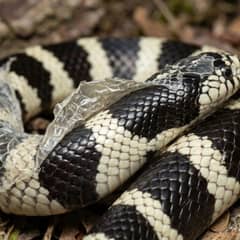
Skin that doesn't come off cleanly can constrict around the toes or tail, cutting off circulation. Caused by humidity running too low for this genuinely humid-loving species. Manageable at home with a humidity boost, achieved with a fine mist spray bottle, and, if needed, gently assisting the shed once it's soaked and loosened.
The first place to look is the toes and the tail tip, where a ring of old skin tightens as the new skin grows under it. A humid hide and a heavier evening mist handle a fresh case at home. A band that will not soak loose, or a toe that has gone dark or swollen past it, is a vet visit, because the constriction cuts circulation. Skin parasites and nutritional deficiency are also among the causes of bad sheds, so a gecko that keeps retaining shed at correct humidity needs a closer look than another misting.
Parasites
Watch for weight loss, lethargy, and abnormal stool. Genuinely common in wild-caught animals specifically, one of several reasons captive-bred is worth the higher purchase price. A vet is required for diagnosis and treatment.
Even farmed stock carries them. A 2025 study in the journal Animals screened 21 commercially farmed tokay geckos in China, a small sample, and found intestinal parasites in 42.9% of them, with Strongyloides in 19.1%, Spauligodon pinworms in 14.3%, and Spironucleus in 9.5%. The signs of reptile parasitism are appetite loss, weight loss, vomiting, and diarrhea, and a gecko can carry a load for months before any of them show. That is why a tokay needs an annual exam with fecal testing even in a gecko that looks fine.
Prolapse
Tissue protruding from the vent. This is always an emergency, get to a vet immediately.
The tissue can be cloaca, colon, oviduct, or a hemipenis, and what pushes it out runs from egg binding and breeding trauma to infection, metabolic disease, bladder stones, kidney disease, and masses in the abdomen. The prolapse is the symptom; the vet's job is to identify the organ, put it back, and find the cause underneath. Do not try to replace it yourself.
Quarantine for a Wild-Caught Tokay
If your tokay is wild-caught, the first job is finding out what it arrived with. Quarantine for a new reptile runs 3 to 6 months, and a reptile should be screened and treated for parasites in quarantine before it enters a collection. Shorter 30-day figures circulate; the longer window is the safer one for a wild-caught animal. The rest is practice rather than protocol: its own enclosure in a separate room from any other reptile, a fecal exam from a reptile vet early and a repeat before quarantine ends, and a weekly weight on a gram scale, since slow weight loss is the sign a keeper can catch before the gecko looks sick.
When to Call a Vet
This list is worth keeping near the enclosure. Any of these means a call, not a wait:
- Loss of appetite, or no interest in food at all
- Lethargy or unusual inactivity
- Nasal discharge or any change in breathing
- Swelling, damage, or changes in skin color
- Weight loss
- Limping or difficulty moving
- Loose or abnormal droppings
- Eye discharge or swelling
- Retained shed
- Any injury or trauma
- Ulcers or excessive discharge in the mouth
- Tissue protruding from the vent
The Husbandry Pattern Worth Remembering
Low humidity, the opposite failure mode from many desert species, causes the retained shed that's especially common in this humidity-loving gecko. Weak UVB and calcium cause MBD, and the feeding guide has the calcium schedule for a gecko kept with and without UVB. And buying wild-caught rather than captive-bred is the single biggest predictor of a parasite problem.
The leopard gecko and crested gecko fail in the same three places, temperature, supplementation, and whatever the animal arrived carrying, just at different numbers.
Sources & Further Reading
Last reviewed 7 Sep 2026 · 4 sources
- Dial A Vet: Tokay Gecko Species Information
- PetMD: Tokay Gecko Care Sheet (Melissa Witherell, DVM)
- Merck Veterinary Manual: Disorders and Diseases of Reptiles; Management and Husbandry of Reptiles; Parasitic Diseases of Reptiles
- Yu et al., Animals (2025): Intestinal Parasitic Infections in Captive Tokay Gecko and Chinese Blue-Tailed Skink
Frequently Asked Questions
What causes metabolic bone disease in tokay geckos?
Low calcium or vitamin D3 plus insufficient UVB. Signs: a soft or rubbery jaw, tremors, trouble gripping or climbing, and visible deformities, which tend to be worse in juveniles. Always see a vet.
What causes respiratory infection in tokay geckos?
Temperatures running too low, humidity mismanagement, or both together. Watch for wheezing, open-mouth gaping, mucus around the nostrils or mouth, and lethargy. This always needs a vet and antibiotics.
Why does retained shed happen in tokay geckos specifically?
Humidity running too low for this humid-loving species. Skin that doesn't come off cleanly can constrict around the toes or tail, cutting off circulation. It's manageable at home with a humidity boost and, if needed, gently assisting the shed once it's soaked and loosened.
Are parasites common in tokay geckos?
Yes, especially in wild-caught animals. Watch for weight loss, lethargy, and abnormal stool. A vet is required for diagnosis and treatment.
What should I do if I see tissue protruding from my tokay gecko's vent?
That's a prolapse, and it's always an emergency. Get to a vet immediately.
More on the Tokay Gecko
Tokay Gecko care guide
🦎 How Much Does a Tokay Gecko Really Cost?
🦎 Should You Handle a Tokay Gecko? Probably Not Often
🦎 Tokay Gecko Enclosure Setup: Warm, Vertical, and Genuinely Humid
🦎 Tokay Gecko Feeding: Five Minutes of Insects, Nothing Wider Than the Head, and Mice as a Rare Treat
🦎 Tokay Gecko Enrichment: A 2024 Study Says Keep Them in Pairs
Recommended Gear
As an Amazon Associate I earn from qualifying purchases through the links above, at no extra cost to you.

Written by Michael Ryan
Mike keeps two rescued bearded dragons, Dex and Cera, and writes the care guides on BeastlyFacts from his own research and mistakes. He is not a veterinarian.
More about Michael Ryan →