Flying Squirrel Cage Setup: Tall, Not Wide
On This Page▾

Flying squirrels are arboreal climbers and gliders, and their housing needs reflect that directly, height matters far more than floor space, the same priority as their unrelated look-alike, the sugar glider.
Cage Size
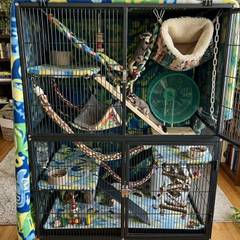
The floor is roughly 24x24x36 inches, or 30 wide by 18 deep by 36 tall, and both put height first, which is the dimension that matters for a climbing, gliding animal. Go bigger than the minimum wherever you can, especially for a pair or small group. A tall, multi-level flight cage built for large birds works well here for the same reason it works for sugar gliders, it prioritizes height and climbing levels over floor footprint.
Bar Spacing
Keep it to no more than half an inch, matching the standard used for sugar gliders. A young or small-bodied flying squirrel is small enough to squeeze through wider gaps, so escape-proofing matters here as much as the cage's overall size does.
Temperature
Here's a genuine difference from the sugar glider. Sugar gliders are native to Australia and New Guinea and need a warmer 75 to 88°F range. Flying squirrels are native to temperate North American forests, where they deal with real seasonal cold every winter, huddling together in tree cavities for warmth, so they're comfortable in a noticeably cooler 65 to 75°F range indoors. They tolerate a cool room reasonably well but struggle with heat, so avoid letting the room climb much past 80°F, and still keep the cage away from cold drafts and direct sun.
Humidity and Lighting
No special humidity control is needed for this species. Lighting is where it actually differs from a sugar glider's setup, though. There's no UVB requirement the way a bearded dragon has, but flying squirrels can synthesize some vitamin D through skin exposure to light, unlike a sugar glider, whose care sheets generally treat lighting as a non-issue. Regular access to natural daylight or full-spectrum lighting, at least 20 minutes a day, alongside dietary calcium and D3, is generally recommended here rather than optional.
Substrate
A solid cage bottom with a washable liner underneath the main living area works better than loose bedding, which accumulates waste and gets harder to keep clean over time. Fresh water stays available at all times from a bottle mounted to the cage, with the sipper tube checked daily. Inside the nest box or sleeping pouch itself, a soft lining, shredded paper or a scrap of fleece, gives them something to burrow into the way they would with leaves and shredded bark in the wild.
The Non-Obvious Requirements
Position sleeping pouches or a nest box high in the cage, matching this species' natural preference for denning up off the ground. A few hanging fleece hammocks or sleep sacks at varied heights work well, and flying squirrels den communally, so plan for more than one resting spot even with a bonded pair.
A standard hamster or rat wheel is genuinely dangerous for a flying squirrel, not just the wrong size. Many of those wheels have a center axle bar running through the middle, and it can seriously injure a small, bouncy animal's spine or tail mid-run. Look specifically for a solid, axle-free wheel at least 12 inches across, the same design sold for sugar gliders and hedgehogs, like an axle-free 12 inch wheel, rather than assuming any small-pet wheel will do.
Add plenty of branches and climbing structure at varying angles and heights. This isn't just enrichment, it's the closest a caged animal gets to the constant vertical movement it would do in the wild every night, and a squirrel with room to move and retreat settles faster than one in a cramped, understimulating setup.
Once the cage is dialed in, the other big piece of the puzzle is diet. A properly balanced diet and calcium supplementation matter more for this species than almost anything else in the setup. The Flying Squirrel encyclopedia profile has the wild habitat this setup is meant to approximate.
Sources & Further Reading
Frequently Asked Questions
What size cage does a flying squirrel need?
A minimum of roughly 24x24x36 inches, or 30x18x36. Either way, prioritize height over floor space, this is a climbing, gliding animal, and bigger than the stated minimum is always better, especially for a pair or small group.
How much bar spacing is safe for a flying squirrel cage?
No more than half an inch, the same standard used for sugar gliders. A young or small-bodied flying squirrel can squeeze through wider gaps, so escape-proofing matters as much as the cage's overall size.
What temperature does a flying squirrel cage need to stay at?
Roughly 65 to 75°F is the comfortable range, cooler than a sugar glider needs, since flying squirrels are native to temperate North American forests rather than a tropical climate. They tolerate cool rooms reasonably well but struggle with heat, avoid letting the room climb much past 80°F, and still keep the cage away from cold drafts.
Do flying squirrels need special lighting the way reptiles do?
Not UVB lighting specifically, but light exposure matters more here than it does for a sugar glider. Flying squirrels can synthesize some vitamin D through skin exposure to light, so regular access to natural daylight or full-spectrum lighting, alongside dietary calcium and D3, is generally recommended rather than optional.
What kind of exercise wheel and substrate does a flying squirrel cage need?
A solid, axle-free exercise wheel at least 12 inches across, the same style used for sugar gliders and hedgehogs, never a standard hamster or rat wheel with a center bar. For the cage floor, a solid bottom with a washable liner works better than loose bedding, which accumulates waste and gets harder to keep clean.
More on the Flying Squirrel
Flying Squirrel care guide
🐿️ How Much Does a Pet Flying Squirrel Really Cost?
🐿️ How to Handle a Flying Squirrel (Bonding Starts in the Pouch, Not Your Hands)
🐿️ Common Flying Squirrel Health Issues (Diet Drives Almost Everything)
🐿️ Flying Squirrel Feeding: Diet, Schedule, and the Calcium Ratio That Prevents Paralysis
🐿️ Flying Squirrel Enrichment: A Rodent That Solved the Same Problem
Recommended Gear
As an Amazon Associate, we earn from qualifying purchases through the links above - at no extra cost to you.

Written by Michael Ryan
Mike keeps two rescued bearded dragons, Dex and Cera, and writes the care guides on BeastlyFacts from his own research and mistakes. He is not a veterinarian.
More about Michael Ryan →