How Much Does Bristlenose Pleco Ownership Really Cost?
On This Page▾

A bristlenose pleco itself is cheap. The budgeting consideration is that this is one of the few beginner fish where a single required item, driftwood, isn't optional decor, skip it and you're not saving money, you're just deferring a problem.
The Fish: $7 to $25 Depending on Morph and Size
Common color morphs like albino and brown typically run $7 to $10, with green dragon and lemon varieties close behind and red bristlenose running a bit more, around $12. Larger or specialty specimens can reach $20 to $25. That's a small price for a fish that, with decent care, sticks around for a decade.
The bristlenose sold across the aquarium trade is usually labeled simply "Ancistrus sp." rather than a specific species, and that's not laziness. Genetic testing on the most common trade strain has found it isn't even closely related to Ancistrus cirrhosus, the species it was long assumed to be, and its exact wild origin is still unresolved.
Upfront Setup: $165 to $375
| Item | Cost Range |
|---|---|
| 20 gallon long tank (minimum) | $35 - $80 |
| Filter sized above the tank's rating | $50 - $85 |
| Aquarium heater | $15 - $35 |
| Driftwood (required, not decorative) | $10 - $35 |
| Caves for daytime hiding | $10 - $30 |
| Water test kit | $15 - $40 |
| Two 10 lb bags of smooth sand or rounded gravel (check the quantity against your tank's floor) | $20 - $40 |
| Water conditioner that neutralizes chlorine and chloramine | $5 - $15 |
| First supply of sinking wafers | $5 - $15 |
| Setup total | $165 - $375 |
Typical price ranges across retailers.
A 20-gallon long tank is the practical minimum for a single adult, a 29 to 30-gallon tank is genuinely the better long-term choice, and it costs more, budget somewhat higher than the table above if you're starting there. Filtration is worth over-budgeting on: a bristlenose produces a surprising amount of waste for its size, and a filter rated for a larger tank than you have is standard advice rather than overkill. Driftwood isn't a style choice here either, it's tied to digestion rather than aesthetics.
Ongoing Costs: Roughly $45 to $85 a Year
Sinking algae wafers should be the dietary staple, not tank algae. Sinking wafers made for catfish and other bottom feeders are the staple to buy, and pair well with regular blanched vegetables. Water conditioner and occasional test kit refills add a modest amount on top. Driftwood doesn't need frequent replacing, but budget for an occasional new piece, $10 to $35, every year or two once an older piece is fully grazed down.
Vet Costs
Aquatic vets are genuinely uncommon, and most bristlenose health issues, water-quality problems and nutritional deficiency chief among them, are managed directly by the keeper rather than through professional visits.
Lifespan
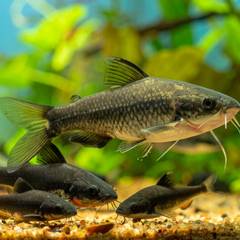
5 to 10 years is typical with decent care, and some individuals live longer still. That's a genuinely long commitment for a fish this inexpensive and this unassuming, worth factoring in before you buy, especially since a corydoras catfish, a similarly priced and similarly long-lived bottom dweller, makes the same point from the other direction.
The Budgeting Lesson: Confirm the Species Before You Buy
The single most expensive mistake in this hobby isn't a bristlenose pleco, it's buying a fish labeled simply "pleco" that turns out to be a common pleco (Hypostomus plecostomus) instead. At the size stores sell juveniles, an inch or two long, the two can look genuinely similar. A common pleco grows into a 12 to 24-inch adult that needs a 75-gallon-plus tank, while a bristlenose stays 4 to 6 inches for life.
Telling a Young Bristlenose From a Common Pleco
The bristles are no help at shop size: full bristles are a male trait, and females carry few or none. Four features work instead.
- The dorsal fin. Wait for the fish to raise it. The common pleco's Pterygoplichthys relatives, the sailfin plecos, carry a large dorsal fin with 9 to 14 rays. A bristlenose's dorsal fin is small by comparison, and a tall, sail-like fin on a two-inch fish is a sign it will outgrow the tank.
- The head and body. A bristlenose is flat-bodied, with a noticeably wide head.
- The snout edge. Fleshy tentacles on the snout mark a bristlenose, and females carry them too, just smaller than a male's.
- The color. Wild-type bristlenose run dark gray to brown, usually flecked with small white or yellow spots.
If a shop cannot give a scientific name, Ancistrus, check those features before paying.
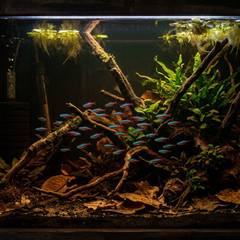
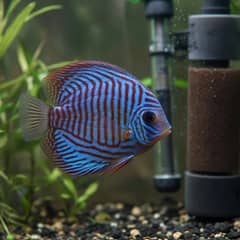
The bristlenose pleco also shows up alongside the zebra danio, discus, and cardinal tetra in our roundup of Four Fish, Four Completely Different Difficulty Levels.
The Bristlenose Pleco encyclopedia profile has more on the species itself.
Sources & Further Reading
Last reviewed 14 Sep 2026 · 4 sources
Frequently Asked Questions
How much does a bristlenose pleco cost?
Albino and brown, the common morphs, typically run $7 to $10. Green dragon and lemon sit close behind, red bristlenose a bit more at around $12, and larger or specialty specimens $20 to $25. Cheap for a fish that can live a decade or more.
What does a basic bristlenose pleco tank setup cost?
Roughly $165 to $375 upfront, covering a 20 to 30 gallon tank, a filter sized above the tank's minimum rating, a heater, driftwood, caves for daytime hiding, substrate, a water test kit, water conditioner and the first wafers. Driftwood is a genuine line item here, not an optional decor upgrade.
What are the ongoing costs of keeping a bristlenose pleco?
Roughly $45 to $85 a year: sinking algae wafers and fresh vegetables, plus water conditioner and occasional test kit refills. Driftwood doesn't need frequent replacing, but budget for an occasional new piece, $10 to $35, every year or two as an older piece gets fully grazed down.
Do bristlenose plecos need regular vet visits?
Aquatic vets are uncommon, and most bristlenose health issues, from water-quality problems to nutritional deficiency, are managed directly by the keeper rather than through professional visits.
How long do bristlenose plecos live?
5 to 10 years with decent care is typical, and some individuals live longer still. Long commitment for a fish this cheap and this small, worth factoring in before you buy.
More on the Bristlenose Pleco
Bristlenose Pleco care guide
🐟 Bristlenose Plecos Aren't Handled, and They're Genuinely Hard to Catch
🐟 Common Bristlenose Pleco Health Issues
🐟 Bristlenose Pleco Tank Setup: Driftwood Is the Detail That Actually Matters
🐟 Bristlenose Pleco Feeding: Diet, Driftwood, and the Algae Myth
🐟 Bristlenose Pleco Enrichment: Wood Is Not Optional, For Murkier Reasons Than You Think
Recommended Gear
As an Amazon Associate, we earn from qualifying purchases through the links above - at no extra cost to you.

Written by Michael Ryan
Mike keeps two rescued bearded dragons, Dex and Cera, and writes the care guides on BeastlyFacts from his own research and mistakes. He is not a veterinarian.
More about Michael Ryan →