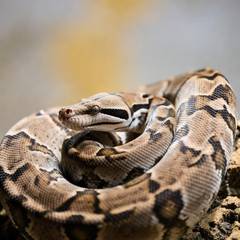
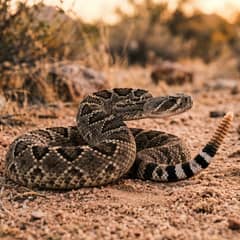
Is It Legal to Own a Ball Python? State-by-State Guide
On This Page▾

Ball pythons are one of the most commonly kept pet snakes in the US, and also one of the most needlessly worried-about when it comes to the law. Years of news coverage about invasive Burmese pythons taking over the Everglades has left a lot of owners assuming any "python" might be swept up in the same restrictions. It isn't.
Where Ball Pythons Stand
| Where | Status | Why |
|---|---|---|
| Federal law (all 50 states) | Not restricted | The 2012 federal injurious-wildlife python listing covers only four large invasive species; ball pythons were considered and specifically left off |
| Florida, Georgia | Not restricted | State prohibited or licensed-species lists name the same large invasive pythons as federal law; ball pythons are explicitly absent |
| Hawaii | Illegal statewide | A total ban on every snake species, with no size-based carve-out; one of only two real exceptions found |
| New York City | Illegal (city only) | Bans the entire family Pythonidae by name, which includes ball pythons even though they aren't individually listed |
| New Jersey | Permit required | Answered by name on the 4.3 permit list, which takes the whole family, 'Pythons - Family Pythonidae', so it does not matter that Python regius is never named |
| Delaware | Permit required | A non-native reptile not on the exempt list, so a $25 Individual permit applies. The giant-snake entry people cite is a breeding restriction on Sales Permit holders, not a possession ban |
| Minnesota | Legal from a permitted breeder | Snakes are protected wild animals as a whole category, and one from a permitted breeder or held before August 2021 may be kept as a pet |
| West Virginia | Permit required | § 20-2-13 bars possessing live wildlife from without the state without an importation permit from the director; § 20-1-2 makes every reptile wildlife |
| Everywhere else | Generally legal | No state-level ban; check city and county exotic-pet ordinances since local rules can still vary |
Why the Federal "Python Ban" Doesn't Touch Ball Pythons
The US Fish and Wildlife Service's 2012 rule under the Lacey Act lists four species as injurious wildlife: Burmese python, Northern African python, Southern African python, and yellow anaconda. The rule's own discussion of import statistics specifically named ball python as one of a dozen heavily imported constrictor species that were considered for the list and left out. A 2017 court ruling, USARK v. Zinke, later struck down part of how the interstate-transport restriction applied to the species that are actually listed, but that case has no bearing on ball pythons either way, since they were never part of the listing to begin with.
Hawaii and New York City: The Two Real Exceptions
Hawaii bans every species of snake statewide, with narrow exceptions only for a couple of male nonvenomous snakes at a government zoo and a handful of sterile detector-dog training animals, so a ball python is illegal there the same as any other snake. New York City takes a different approach, banning the entire family Pythonidae under its health code, which catches ball pythons by taxonomy even though the ordinance never names the species individually. Outside these two, Florida and Georgia's prohibited-species rules both explicitly stop at the large invasive pythons and leave ball pythons off entirely.
West Virginia Regulates the Shipment, Not the Species
West Virginia never names the ball python, and no species list reaches it. A ball python is a reptile and a West African species, so it is wildlife from without the state on any route into West Virginia. That puts it under W. Va. Code § 20-2-13, which bars bringing live wildlife in from out of state, or keeping it there, without an importation permit from the director. The state's definition of wildlife covers reptiles with no captive-bred exception, so buying from a breeder does not change the answer.
The permit exists on paper only. The Division of Natural Resources publishes no application for it, and no rule puts the section into practice outside aquaculture. If you keep one in West Virginia or are moving there with one, ask the DNR in writing before the animal crosses the state line and keep the reply with its purchase records.
The Takeaway
Ball pythons are broadly legal across the US, and the federal and state rules aimed at invasive constrictors were deliberately written to exclude them. Hawaii and New York City are the two places where that doesn't matter, since both ban them through a different mechanism entirely, a total snake ban and a family-wide ban, respectively. Everywhere else, check local city or county ordinances the way you would for any exotic pet, but don't assume the Everglades headlines apply to your snake. The exotic pet legal hub holds the federal and state framework those rules sit inside.
To see this at a glance, our interactive map of ball python laws shades every state that restricts one, and clicking a state gives you the rule it comes from.
Sources & Further Reading
Frequently Asked Questions
Are ball pythons illegal because of the Everglades python problem?
No. The federal 2012 rule that restricts invasive pythons names only four species: Burmese python, Northern African python, Southern African python, and yellow anaconda. Ball pythons were specifically considered during that rulemaking and left off, since they aren't established as an invasive species in the wild.
Can I own a ball python in New York City?
No. NYC's health code bans the entire snake family Pythonidae by name, which includes ball pythons even though they aren't individually listed. This is a city-specific rule; it doesn't reflect state or federal law.
Is Florida cracking down on ball pythons the way it has on Burmese pythons?
No. Florida's Reptiles of Concern list names the same large invasive species as federal law, Burmese and African pythons among them, and explicitly does not include ball pythons.
More on the Ball Python
Ball Python care guide
🐍 How Much Does a Ball Python Really Cost?
🐍 How to Handle a Ball Python: Timing Matters More Than Technique
🐍 Common Ball Python Health Issues and What Causes Them
🐍 Ball Python Enclosure Setup: Humidity Is the Detail That Makes or Breaks It
🐍 Ball Python Feeding: Everything You Need to Know

Written by Michael Ryan
Mike keeps two rescued bearded dragons, Dex and Cera, and writes the care guides on BeastlyFacts from his own research and mistakes. He is not a veterinarian.
More about Michael Ryan →