Ackie Monitor Feeding: Schedule, Diet, and Why They Stop Eating
On This Page▾

Ackie monitors are lean, active insectivores, and getting their diet right is about resisting the urge to feed them like they're a bigger, meatier lizard than they are.
Feeding Schedule by Age
- Hatchlings and juveniles (up to about 6 months): Fed daily, allowed to eat as much as they want, they need the calories to fuel rapid growth.
- Subadults and adults (6+ months): Every other day, offering roughly what your ackie can finish within a 5 to 10 minute window rather than leaving food available indefinitely.
- Reproductive females may be allowed to eat more freely during breeding cycles.
Small, frequent meals are genuinely healthier for this species than large, occasional ones.
What Ackie Monitors Eat
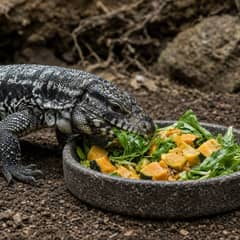
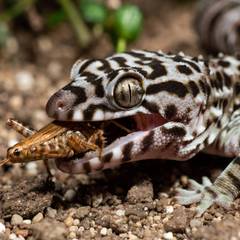
This species is primarily insectivorous, with a smaller amount of lizard prey rounding out its natural diet. Build the captive diet around well-gutloaded insects: black soldier fly larvae, crickets, discoid roaches, dubia roaches, grasshoppers, and silkworms all work well as regular staples. Mealworms and superworms are fine as occasional additions but shouldn't anchor the diet, they're higher in fat and have harder exoskeletons. Isopods and hornworms are useful too, and notably don't need calcium dusting since they're naturally high in it already. Gutload every feeder insect at least 24 hours before offering it, since what the insect ate is most of what the ackie gets out of it, and size prey to roughly the width of your ackie's head, not bigger.
Lightly dust most insect feeders with a reptile calcium powder at each feeding, skipping isopods and hornworms since they're already calcium-rich. Use a reptile multivitamin containing true vitamin A, not just beta-carotene, occasionally rather than on a fixed weekly schedule, over-supplementing vitamins is a real risk with this species, so when in doubt, use less rather than more. Inconsistent calcium dusting is one of the more common feeding mistakes with this species, and it opens the door to metabolic bone disease even when UVB is otherwise adequate.
Foods to Avoid
The biggest one: don't make rodents a dietary staple. Mice and rats are calorie-dense, and a rodent-heavy diet is directly linked to the fatty liver disease that shortens more captive monitor lifespans than almost anything else, arguably the single biggest feeding mistake with this species. Eggs, quail chicks, and young mice or rats are fine as occasional treats, genuinely sparingly, not a weekly habit. Skip dog or cat food entirely, and don't offer fruits or vegetables, ackies are carnivores and get no real benefit from plant matter.
The second most common mistake is simply overfeeding adults. Ackies have voracious appetites even once they've stopped growing, and free-feeding an adult the way you'd feed a juvenile leads to obesity.
Why Ackie Monitors Stop Eating
- Dehydration. A leading cause of health problems in hatchlings specifically, showing up alongside sunken eyes and wrinkled, inelastic skin.
- Shedding. A common, temporary appetite dip in younger ackies from the stress and physiological changes of a shed.
- Stress or boredom. An under-enriched enclosure or a recent change in environment can suppress appetite even in an otherwise healthy animal.
- An incorrect basking temperature. Like any ectotherm, an ackie that isn't warm enough can't digest properly, and appetite drops accordingly.
- Parasites. Internal or external parasites commonly show up as decreased appetite alongside lethargy, weight loss, and irregular stool.
- Illness. Metabolic bone disease, mouth rot, respiratory infection, and gastrointestinal impaction from substrate ingestion are all genuine medical causes of appetite loss.
When to Worry
We couldn't find a single, consistently sourced number for how many days an ackie monitor can safely go without eating, and would rather say that honestly than invent one. What's well documented instead is the troubleshooting order every reptile source points to: check temperature and hydration before assuming illness, since an incorrect basking temperature or a dehydrated hatchling can suppress appetite entirely on its own.
See a vet if appetite loss comes with lethargy, sunken eyes, wrinkled or tented skin, irregular or absent stool, or any visible weight loss, and don't wait out a persistent refusal in a hatchling given how little margin young, fast-growing animals have.
Sources & Further Reading
Last reviewed 10 Aug 2026 · 2 sources
- ReptiFiles: What Do Ackie Monitors Eat?
- Veterinary Partner (VIN): Hepatic Lipidosis in Reptiles
- Furry Critter Network: Monitor (Ackie) Newborn & Baby Care
❓ Frequently Asked Questions
How often should I feed my ackie monitor?
Hatchlings and juveniles, up to about 6 months, should be fed daily and allowed to eat as much as they want, they need the calories to fuel rapid growth. Once your ackie passes the 6-month mark, shift to feeding every other day, offering roughly what it can finish within a 5 to 10 minute window.
What do ackie monitors eat?
This species is primarily insectivorous. Build the diet around well-gutloaded black soldier fly larvae, crickets, discoid roaches, dubia roaches, grasshoppers, and silkworms as regular staples, with mealworms and superworms as occasional additions only, they're higher in fat with harder exoskeletons.
Can I feed my ackie monitor mice or rats?
Only as an occasional treat, never a staple or a weekly habit. Mice and rats are calorie-dense, and a rodent-heavy diet is linked to fatty liver disease in captive monitors.
Do ackie monitors need calcium and vitamin supplementation?
Yes. Lightly dust most insect feeders with reptile calcium powder at each feeding, skipping isopods and hornworms since they're already calcium-rich. Use a multivitamin containing true vitamin A occasionally rather than on a fixed schedule, over-supplementing vitamins is a real risk with this species.
Why has my ackie monitor stopped eating?
Common causes include dehydration (especially in hatchlings), shedding, stress or boredom, an incorrect basking temperature, internal or external parasites, and illnesses like metabolic bone disease or respiratory infection. Check temperature and hydration first before assuming something more serious.
How long can an ackie monitor safely go without eating?
We couldn't find a single, consistently sourced number for this species, and would rather say that honestly than invent one. Treat any persistent refusal in a hatchling as urgent given how little margin fast-growing young animals have, and see a vet for an adult refusing food alongside lethargy, sunken eyes, or weight loss.
📰 More on the Ackie Monitor
📘 Ackie Monitor care guide
🦎 How Much Does an Ackie Monitor Really Cost?
🦎 How to Handle an Ackie Monitor
🦎 Common Ackie Monitor Health Issues and What Causes Them
🦎 Ackie Monitor Enclosure Setup: Bigger, Hotter, and Deeper Than You'd Guess
🦎 Ackie Monitor Enrichment: Eight Out of Eight, First Try, Ten Minutes

Written by Michael Ryan
Mike keeps two rescued bearded dragons, Dex and Cera, and writes the care guides on BeastlyFacts from his own research and mistakes. He is not a veterinarian.
More about Michael Ryan →