Four Animals, Four First Impressions That Are Wrong
On This Page▾

Look at each of these for the first time and you'd guess wrong about what you're getting. A lizard that looks like just another basking reptile turns out to be a genuine athlete. A snake dressed like a killer is completely harmless. A bug that hisses like a threat is one of the most docile pets in the hobby. And a fish that looks peaceful as a baby grows into something else entirely.
Ackie Monitor: Not Another Sit-and-Bask Lizard
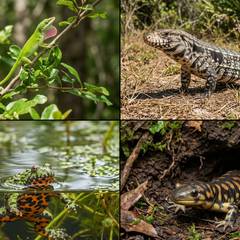
Glance at an ackie next to a bearded dragon or blue-tongued skink and you might assume similar energy. You'd be wrong. This is an active, intelligent, food-driven predator that needs genuinely extreme basking heat and 12 to 24 inches of diggable substrate to feel at home, closer to keeping a small, busy predator than a calm basking lizard.
It is a small animal with a long runway. Ackies come from the west, north and center of northern Australia, adults typically measure about 2 feet, and they live at least 15 years with good care, so the heat, the digging depth and the feeding schedule are a commitment on the same scale as a much larger lizard's.
Ackie Monitor Cost · Handling · Health Issues · Enclosure Setup
Milk Snake: Dressed Like Danger, Harmless Underneath
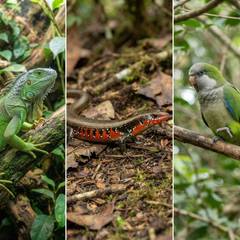
Red, black, and yellow banding that mimics a venomous coral snake closely enough to fool predators in the wild. In your living room, it's a completely harmless, increasingly calm colubrid, just a bit muskier and flightier than the corn snake it's often compared to.
The costume fits a snake with a varied menu. Wild milk snakes eat almost anything they can overpower, including reptile eggs, lizards, other snakes, amphibians, birds and rodents. The popular Sinaloan milk snake, from the Mexican states of Sonora, Sinaloa and Chihuahua, reaches about 3.5 feet. The name comes from an old farm belief that these snakes milked cows; they were in the barns for the mice.
Milk Snake Cost · Handling · Health Issues · Enclosure Setup
Madagascar Hissing Cockroach: A Threat Display With Nothing Behind It
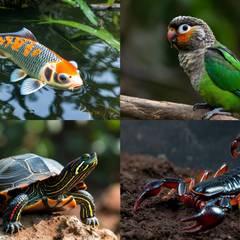
That hiss, produced by forcing air through modified breathing pores rather than anything resembling a vocal cord, sounds like a warning. What it's actually attached to is one of the most docile, easy-to-handle invertebrates you can keep, and one of the cheapest pets to set up.
The hiss comes out of the breathing spiracles along the abdomen, and it is a warning aimed at intruders. Males carry a pair of large bumps behind the head and use them, along with hissing and posturing, in contests where the bigger, louder male usually wins. Adults run 2 to 4 inches, males larger than females, and live in the leaf litter of Madagascar's lowland rainforests. Females even carry their egg case internally and release live nymphs.
Madagascar Hissing Cockroach Cost · Handling · Health Issues · Enclosure Setup
Angelfish: Peaceful Until It Isn't
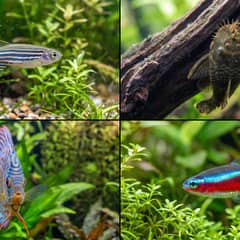
A young angelfish coexists calmly with neon tetras and guppies, which is exactly what makes this one dangerous to misjudge. Once it hits about 3 inches, that same fish, even ones it grew up alongside, can become dinner. This is a cichlid first, a community fish only for a while.
Height is the other surprise. A common angelfish reaches about 8 inches from fin tip to fin tip, and altum angelfish 10 to 13, so the tank has to be tall as well as long: a 29 gallon tall is the smallest worth starting with, and a group of four to six belongs in a 55. Keep it warm too: angelfish are comfortable at 78 to 82°F. Nano fish and dwarf shrimp are off the list of tankmates for good, and a guppy becomes prey once the angel passes about 3 inches.
Angelfish Cost · Handling · Health Issues · Tank Setup
The ackie monitor and the Madagascar hissing cockroach sit at opposite ends of the demand spectrum in a way that's easy to miss at a glance: one needs a setup costing $900 to $2,245 with basking surfaces hotter than most ovens' warming settings, while the other's entire enclosure, animal included, can cost less than a single vet exam for almost any other pet.
The Common Thread
Every one of these teaches the same lesson from a different angle: don't judge a pet by its first appearance, its size, its sound, or its coloring. The ackie's calm cousins don't predict its energy. The milk snake's threatening pattern predicts nothing about its actual danger. The cockroach's alarming hiss predicts nothing about its temperament. And the angelfish's juvenile behavior predicts nothing about what it becomes. Read the actual research, not the first impression.
Last reviewed 21 Jul 2026 · 4 sources
Frequently Asked Questions
Is an ackie monitor as low-key as a bearded dragon or blue-tongued skink?
No. An ackie is an active, intelligent, food-driven predator, closer to a small, busy hunter than a calm basking lizard. It wants 158 to 172°F on the basking surface and 12 to 24 inches of substrate deep enough to dig in.
Does a milk snake's coral-snake-mimic coloring mean it's dangerous?
Not at all. The red, black, and yellow banding is widely explained as Batesian mimicry of the venomous eastern coral snake, but the milk snake itself is completely harmless. For a pet owner buying a captive-bred milk snake from a breeder, there's no real confusion risk at all.
Is the Madagascar hissing cockroach's hiss a warning?
Partly. The hiss is air pushed out through the breathing pores along the abdomen. It is an alarm when the insect is disturbed and, between males, a territorial warning, but the insect behind it is docile and easy to handle.
Can you trust a young angelfish's peaceful behavior to continue as it grows?
No. Angelfish are cichlids, and an adult will eat small fish like neon tetras and guppies once it reaches roughly 3 inches, even fish it was raised alongside as a juvenile. Peaceful coexistence at a young age predicts nothing about what happens once the fish matures.
🦎 How Much Does an Ackie Monitor Really Cost?
🐠 How Much Does Angelfish Ownership Really Cost?
🐍 How Much Does a Milk Snake Really Cost?
🦎 How to Handle an Ackie Monitor
🐠 Angelfish Aren't Handled, But They Do Get Territorial
🐍 How to Handle a Milk Snake (And the Coral Snake Look-Alike Question)
🦎 Common Ackie Monitor Health Issues and What Causes Them
🐠 Common Angelfish Health Issues (And What Actually Prevents Them)
🐍 Common Milk Snake Health Issues
🦎 Ackie Monitor Enclosure Setup: Bigger, Hotter, and Deeper Than You'd Guess
🐠 Angelfish Tank Setup: Height Matters More Than You'd Think
🐍 Milk Snake Enclosure Setup: Corn Snake Basics, Plus a Few Species-Specific Twists
🐠 Angelfish Feeding: Schedule, Diet, and Why They Stop Eating
🦎 Ackie Monitor Enrichment: Eight Out of Eight, First Try, Ten Minutes
🐠 Angelfish Enrichment: The Study Found Group Size Did Not Matter
🐍 Milk Snake Enrichment: A Shy Snake Needs More Cover, Not Less Space
🦎 Is It Legal to Own an Ackie Monitor? State-by-State Guide
🐍 Is It Legal to Own a Milk Snake? State-by-State Guide
🕷️ 10 Surprising Madagascar Hissing Cockroach Facts
🪳 How Much Does a Madagascar Hissing Cockroach Cost?
🪳 How to Handle a Madagascar Hissing Cockroach (And How That Hiss Works)
🪳 Common Madagascar Hissing Cockroach Health Issues (Prevention Does Almost All the Work)
🪳 Madagascar Hissing Cockroach Enclosure Setup: Humidity, Substrate, and Keeping Them From Climbing Out
🪲 Madagascar Hissing Cockroach Feeding: Schedule, Diet, and Why They Stop Eating
Written by Michael Ryan
Mike keeps two rescued bearded dragons, Dex and Cera, and writes the care guides on BeastlyFacts from his own research and mistakes. He is not a veterinarian.
More about Michael Ryan →