Gargoyle Gecko
Rhacodactylus auriculatus
On This Page▾
🌍 Overview
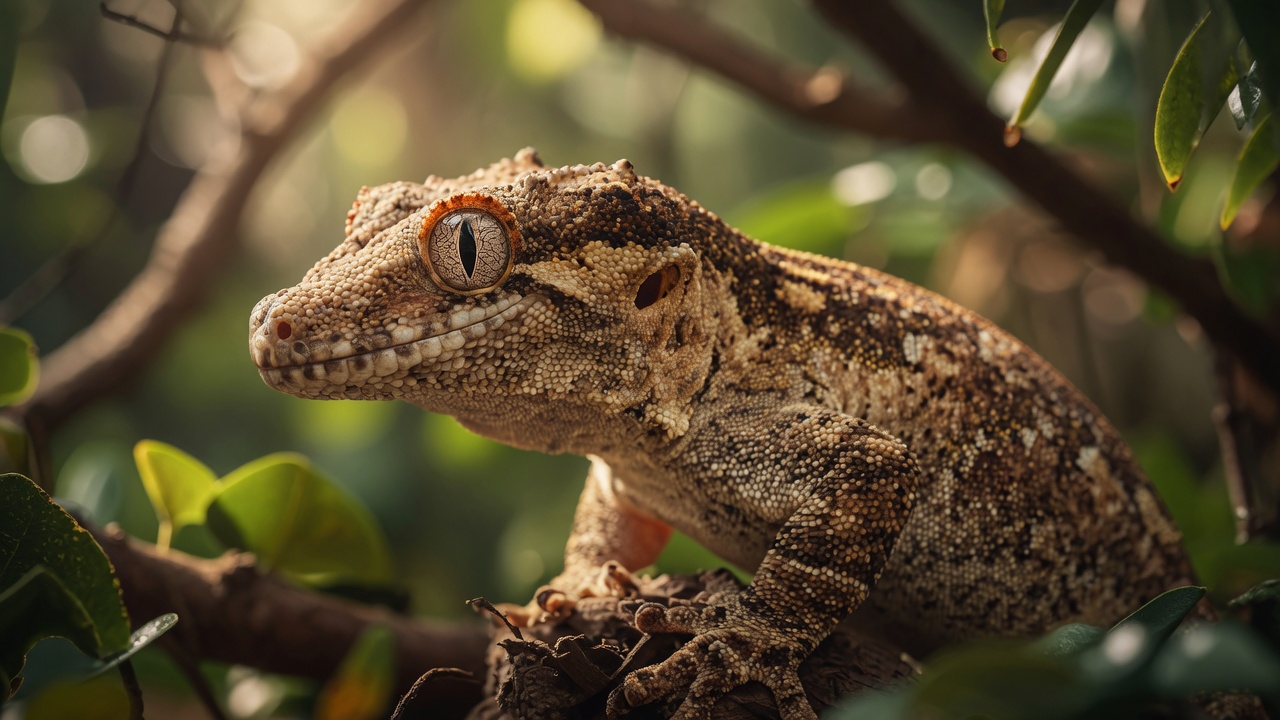
Endemic to southern New Caledonia, the gargoyle gecko takes its name from the bumpy protrusions on its head that resemble stone gargoyles. Like the crested gecko, it is an arboreal species adapted to humid forest environments. If threatened it can drop its tail, and unlike the crested gecko it grows the tail back: the replacement is prehensile and cartilage-based rather than bone, with somewhat asymmetrical scales, but functional.
📋 Quick Facts
Native Range
Southern New Caledonia
Natural Habitat
Tropical and subtropical forest
Adult Size
7-9 inches (18-23 cm) including tail
Wild Diet
Fruit, nectar, small insects, and invertebrates
Wild Lifespan
Not documented (the widely quoted 15-20 years is a captive range; wild longevity for this species has not been studied)
Conservation Status
Least Concern (IUCN)
📜 History
Arthur Bavay described the species in 1869. For more than a century it sat in Rhacodactylus alongside the crested gecko and the mossy prehensile-tailed gecko, until a 2012 revision by Aaron Bauer, Anthony Whitaker, Ross Sadlier and Todd Jackman broke that genus apart: the crested gecko moved to Correlophus and the mossy species to Mniarogekko, while the gargoyle gecko kept the original name and now shares Rhacodactylus with the giant leachianus and the rough-snouted geckos. New Caledonia stopped issuing export permits for its endemic geckos, so captive animals descend from founders exported decades ago. The IUCN still rates the species Least Concern, though deforestation across its range in the south of the island is listed as the main threat.
⚖️ Compare
Gargoyle Gecko
Human
Adult Size
7-9 inches (18-23 cm) including tail
5-6 feet (150-185 cm); ~135-200 lbs
Wild Lifespan
Not documented (the widely quoted 15-20 years is a captive range; wild longevity for this species has not been studied)
~73 years (global average)
Wild Diet
Fruit, nectar, small insects, and invertebrates
Omnivorous - eats just about anything
Native Range
Southern New Caledonia
Global - originated in Africa roughly 300,000 years ago
Natural Habitat
Tropical and subtropical forest
Everywhere from arctic tundra to tropical megacities
Conservation Status
Least Concern (IUCN)
Least Concern (8+ billion and counting)
🧠 Test Yourself
What's the Gargoyle Gecko's native range?
🤩 Fun Facts
🦎 Gecko Toe Magic
Geckos can walk on walls and ceilings thanks to millions of tiny hair-like structures on their toes called setae. Each foot has about 500,000 of them, using molecular forces to stick to surfaces!
🦎 Climbing the Walls
Geckos have microscopic hairs on their feet that allow them to stick to surfaces and even run on ceilings! This amazing ability comes from van der Waals forces, making them one of nature's great climbers.
Subscribe - it's free
New animal facts and care guides straight to your inbox. No spam. 🐾
📰 Deep Dive
🦎 How Much Does a Gargoyle Gecko Really Cost?
🦎 How to Handle a Gargoyle Gecko (And How It Differs From a Crested Gecko)
🦎 Common Gargoyle Gecko Health Issues and What Causes Them
🦎 Gargoyle Gecko Enclosure Setup: A Low Ceiling, Not No Heat at All
🦎 Gargoyle Gecko Feeding: Schedule, Diet, and Why They Stop Eating
🦎 Gargoyle Gecko Enrichment: Build Up, and Fill What You Build
🩺 Health and More
🔌 Reptile Emergency Plan: Power Outages, Travel, and Pet Sitters
💧 Reading Reptile Stool, Urates, and Hydration: A Daily Health Check
🧼 Salmonella and Reptile Hygiene: The Rules That Actually Matter
🌡️ Reptile Heating and Thermostats: Preventing Burns
🧫 Reptile Quarantine: Why New Snakes and Lizards Need Months, Not Weeks
🦎 Understanding Reptile Shedding (Ecdysis)
🤓 Did You Know?
Gargoyle geckos are named for the horn-like bumps on their heads, and unlike their crested gecko cousins they can regrow a dropped tail. A 2024 genome study confirmed the difference: same family, one very different superpower.
Explore More