Leaf-Tailed Gecko Enclosure Setup: Cool, Genuinely Humid, and Precisely Misted
On This Page▾

Leaf-tailed gecko care flips a lot of typical reptile assumptions. This species wants to stay cool, not warm, and humidity management is the central skill in keeping one healthy.
Enclosure Size
Smaller species do fine in 12x12x18 inches, with 18x18x18 better. The satanic leaf-tailed gecko, the smallest commonly kept species, does well in an 18x18x24 inch enclosure as an adult. Larger species like Henkel's need considerably more room. This is a vertical, arboreal species, so height matters more than floor space.
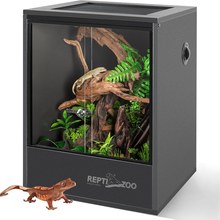
Temperature: Cool, With No Basking Spot
Keep ambient temperature around 68 to 75F, with a night drop to around 64 to 68F. This species has thin skin, dehydrates easily, and genuinely does not handle heat stress well. A basking heat source is generally not needed and can be actively dangerous for this species, the opposite setup priority from most reptiles.
Humidity: The Defining Requirement
60 to 80% for most species, though the satanic leaf-tailed gecko specifically needs 90 to 100% overnight and dehydrates extremely easily if that's not met. Achieve this through morning and evening misting, live plants, and moisture-retentive substrate. An automated misting system is genuinely worth the investment for the more sensitive species. A useful check: a gecko kept at correct humidity sheds in one clean piece with no sunken eyes or a drooping tail afterward.
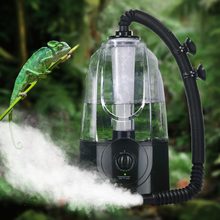
The satanic leaf-tailed gecko needs 90 to 100% humidity overnight, essentially saturated air, while its ambient daytime temperature tops out around 75F, a cool, damp combination that's nearly the opposite of what most reptiles need.
Substrate
A moisture-retentive bioactive mix or coconut husk substrate supports both the humidity this species needs and some light burrowing behavior.
Lighting
Low-output UVB, in the 2.0 to 5.0 range, is increasingly recommended for long-term health, though not definitively required. Avoid high-output basking-style UVB entirely, this species doesn't use or tolerate intense light the way a desert lizard would. Run a standard 12-hour photoperiod on a timer.
The Non-Obvious Requirement: Use Tap Water, Not Distilled
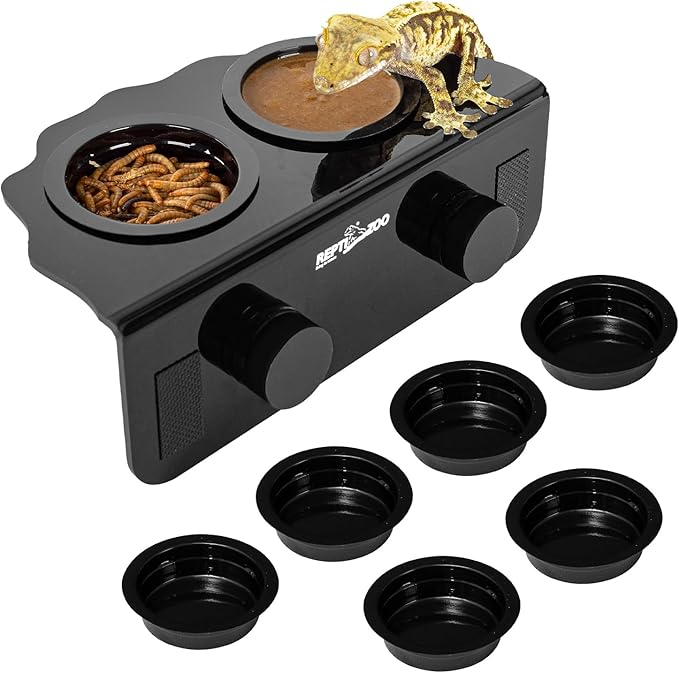
This is a detail specific to this species worth getting right. Use ordinary tap water for misting and drinking rather than distilled, softened, or heavily filtered water, tap water contains minerals important to this gecko's health. Provide water through a magnetic feeding ledge with a small cup, and mist to keep the enclosure damp without letting water pool or standing moisture build up, over-misting invites mold just as reliably as under-misting causes dehydration. A digital hygrometer and thermometer combo makes it far easier to confirm you're hitting the target range rather than guessing.
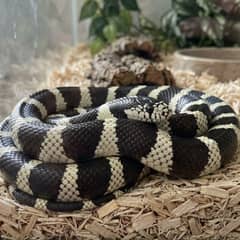
If you're comparing this against a warmer, more humid setup, our tokay gecko tank setup guide shows what a rainforest-style enclosure looks like instead. This species also turns up alongside the California Kingsnake, Box Turtle, and Oscar Fish in our Leaf-Tailed Gecko, California Kingsnake, Box Turtle & Oscar Fish compared overview.
For how UVB actually works and why the bulb distance matters as much as the bulb, see our complete guide to UVB lighting.
❓ Frequently Asked Questions
What size enclosure does a leaf-tailed gecko need?
Smaller species do fine at 12x12x18 inches, and 18x18x18 is better. A satanic leaf-tailed gecko, the smallest kept commonly, is fine in 18x18x24 as an adult; Henkel's and other large species need much more. Height matters more than floor space for an arboreal lizard.
What temperature does a leaf-tailed gecko need?
Ambient 68 to 75F, dropping to 64 to 68F at night. No basking spot: heat is generally unnecessary here and can be dangerous, the reverse of most reptile setups.
How humid should a leaf-tailed gecko enclosure be?
60 to 80% for most species. The satanic leaf-tailed gecko is the exception, needing 90 to 100% overnight, and it dehydrates fast without it.
What substrate is best for a leaf-tailed gecko?
A moisture-retentive bioactive mix or coconut husk substrate, which supports both the humidity this species needs and some light burrowing behavior.
Does a leaf-tailed gecko need UVB?
Low-output UVB at 2.0 to 5.0 is increasingly recommended for long-term health, though not definitively required. Skip high-output basking-style UVB, and put the enclosure on a standard 12-hour photoperiod with a timer.
Why should I use tap water instead of distilled water for misting?
Tap water carries minerals this gecko needs. Mist and offer drinking water from the tap rather than distilled, softened, or heavily filtered water.
🛒 Recommended Gear
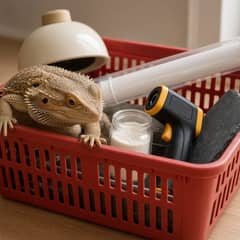
As an Amazon Associate, we earn from qualifying purchases through the links above - at no extra cost to you.

Written by Michael Ryan
Mike keeps two rescued bearded dragons, Dex and Cera, and writes the care guides on BeastlyFacts from his own research and mistakes. He is not a veterinarian.
More about Michael Ryan →Comments
No comments yet - be the first!