Discus Aren't Handled, But They Are Surprisingly Social for a Cichlid
On This Page▾

Discus aren't a hands-on pet, but there's an important behavioral fact to understand before stocking a tank with them: unlike most cichlids, which pair off and defend territory, this one wants company.
The Social Behavior Most Cichlids Don't Share
Most cichlids, angelfish among them, pair off as they mature and defend a territory against anything else in the tank. Discus break that pattern. Multiple dedicated care sources are consistent on this: discus are a genuine schooling fish that should never be kept alone or in a pair outside of active breeding, with a recommended group of at least 5 to 6 individuals. Within that group, discus develop a real social hierarchy, along with pair-bonding behavior between individual fish once they mature, and keeping too few fish tends to produce a noticeably more stressed, reclusive animal than keeping a proper group does.
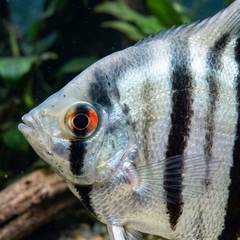
Discus and angelfish are both tall-bodied Amazonian cichlids, close enough in shape that people often assume they behave alike. Socially, they're nearly opposites. Angelfish pair off and get more territorial as they mature, eventually treating small tankmates as prey. Discus do the opposite: kept alone or in a pair, they tend to become more withdrawn and stressed, and only really settle into normal behavior, hierarchy, pair bonding, and the attentive parental care that comes with it, once they have a real group around them.
Stress Triggers That Catch New Keepers Off Guard
Discus are genuinely easy to stress. Sudden movement, loud noise, and bright light are all named repeatedly across care sources as real triggers, and tank placement matters more for this species than for a lot of community fish, a quiet spot away from doorways and high-traffic areas makes a measurable difference. New arrivals commonly hide for anywhere from a few days to a few weeks while settling in, which is normal and not automatically a red flag. A taller tank helps here too, since it puts more distance between the fish and movement happening above the waterline, one more reason height matters for this species beyond just body shape.
Acclimating a New Discus
This is a case where sources genuinely disagree, and it's worth knowing that going in rather than assuming there's one settled answer. General fishkeeping guidance commonly recommends a slow drip acclimation, sometimes 60 to 90 minutes, for a sensitive species like discus. At least one discus-specialty breeder's own instructions argue the opposite: that drip acclimation can be more stressful for discus specifically, since it keeps the fish confined in a small volume of shipping water for longer while oxygen depletes and temperature only gradually equalizes, and recommends a more controlled, faster temperature and pH match instead.
What does line up across sources: keep the tank lights off during acclimation and for several hours after introduction, since a fish that's been in darkness for 15 to 25 hours during shipping can be shocked by sudden bright light. Don't feed a newly introduced discus right away, and feeding established tank residents something they enjoy during that window helps draw attention away from the newcomer.
Sexing and Pair-Bonding
Telling male and female discus apart is genuinely difficult outside of breeding. A more pointed dorsal fin and a somewhat larger body size are rough visual cues some keepers use, though sources are clear these aren't fully reliable on their own. The one truly certain indicator is the genital papilla, a small breeding tube that becomes visible during spawning, pointed and narrower on males, rounder and blunter on females, and even that retracts and becomes hard to see outside of that window. In practice, most keepers raise a group and let pairs form and reveal themselves naturally through spawning behavior instead of sexing young fish by eye.
Tankmate Compatibility
This is narrower than it looks from a typical "peaceful community fish" list. Discus need sustained 82 to 86°F water, and that alone rules out a lot of standard tropical community fish. Cardinal tetras are the tankmate named most consistently across dedicated discus care sources, they tolerate the warmth more reliably than most small tetras, alongside rummynose tetras. Sterbai cories and bristlenose plecos turn up on the same lists with a catch: about 82°F is already the top of the sterbai's range and past the 80°F a bristlenose is comfortable at, so both suit only a discus tank held at the cool end, and the pleco is a compromise even there. Neon tetras are a genuine point of disagreement: some care guides specifically avoid them at discus temperatures or simply don't list them, while at least one general aquarium retailer's guide does include neons as compatible. Given that split, cardinal tetras are the safer default recommendation if you want a warm-water tetra schooling alongside your discus.
What "Handling" Looks Like Day to Day
Direct contact with a discus should be rare, limited to net-catching for water changes, quarantine, or a health check, never routine touching. The real relationship with this species is built through the group size, tank placement, and stocking decisions covered above, not through physical interaction. Water quality and stress management also do most of the work preventing illness, a stressed discus is measurably more prone to it than a settled one in a proper group.
The Takeaway
Get the group size right, at least 5 to 6 fish, keep the tank in a calm, low-traffic spot, and choose tankmates that can handle the temperature, and discus settle into genuinely social, engaging behavior that most cichlids never show.
The Discus encyclopedia profile covers the species itself.
Sources & Further Reading
Last reviewed 7 Sep 2026 · 4 sources
- Discus.com: Discus Fish Acclimation Instructions; How to Sex Discus Fish
- How to Sex Discus
- Ultimate Guide to Discus Fish, Care, Breeding & Diseases
- Cardinal Tetra Care: Tank Mates, Size, Lifespan & More
Frequently Asked Questions
Do discus need to be kept in groups?
Yes. Unlike most cichlids, which pair off and defend territory, discus are a schooling fish that develop a social hierarchy within the group and become noticeably more stressed and reclusive when kept alone or in a pair outside of active breeding. Most sources recommend at least 5 to 6 individuals.
Why is my discus hiding?
Stress, most likely. Sudden movement, loud noise, bright light, and a busy spot in the house all set this species off. A new arrival that hides for a few days or even a few weeks is settling in, not necessarily ill.
How should I acclimate a new discus?
Carefully and without rushing, but sources disagree on the specific method. General fishkeeping guidance often recommends a slow drip acclimation for sensitive species, while some discus-specialty breeders argue drip acclimation can be more stressful for discus specifically, since it prolongs the fish's time in a small, oxygen-depleted bag while temperature slowly equalizes. Either way, keep the lights off for several hours after introduction and don't feed immediately.
Can I tell a male discus from a female?
Only with real difficulty outside of breeding. A more pointed dorsal fin and slightly larger body size are rough visual indicators used by some keepers, but they're not fully reliable. The only truly certain method is the genital papilla, which becomes visible during spawning, pointed on males and rounder and blunter on females, and even that structure retracts and is hard to see outside of that window.
Can discus live with neon tetras?
Not well, long term, and this one is debated. Discus need sustained 82 to 86°F water, and several dedicated discus care guides either specifically recommend against neon tetras or simply don't list them as compatible, favoring cardinal tetras instead, though at least one general fish-store care guide does list neons as compatible. Cardinal tetras tolerate the warmth more reliably and are the safer, more commonly recommended choice.
More on the Discus
Discus care guide
🐠 How Much Does Discus Ownership Really Cost?
🐠 Common Discus Health Issues (And What Actually Prevents Them)
🐠 Discus Tank Setup: Why the Water-Change Routine Matters More Than the Gallon Number
🐠 Discus Feeding: Schedule, Diet, and the Beef-Heart Debate
🐠 Discus Enrichment: A Nervous Cichlid Needs a Group and a Quiet Room

Written by Michael Ryan
Mike keeps two rescued bearded dragons, Dex and Cera, and writes the care guides on BeastlyFacts from his own research and mistakes. He is not a veterinarian.
More about Michael Ryan →