Rosy Boa
Lichanura trivirgata
Beastly Facts · Updated
On This Page▾
Overview
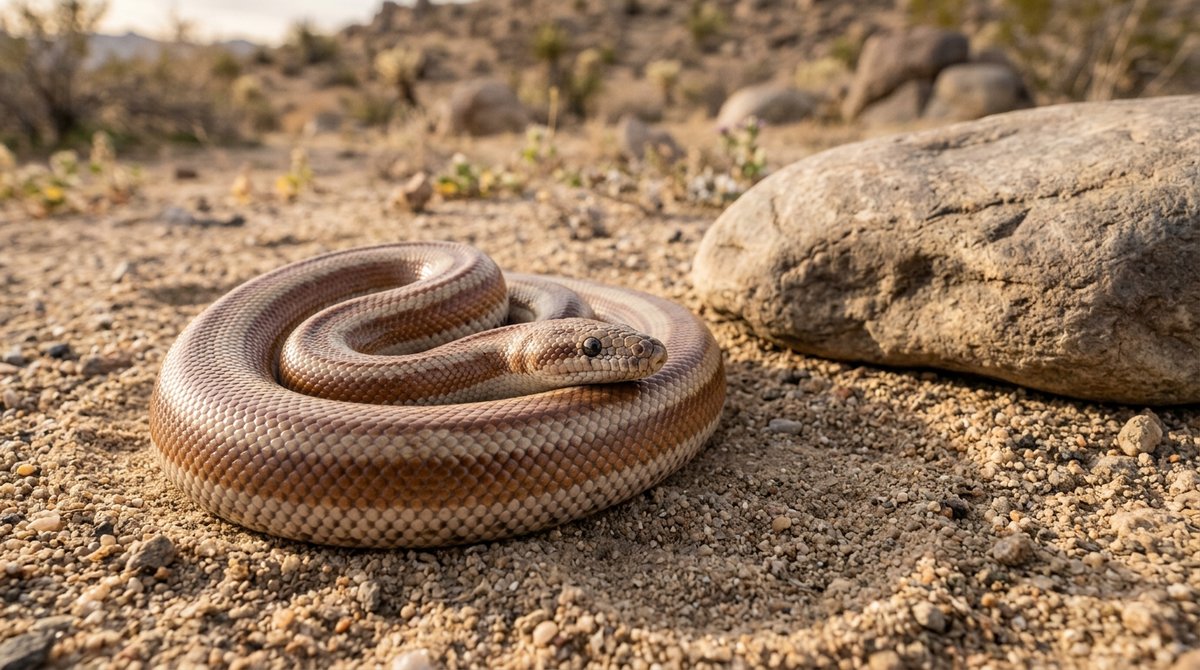
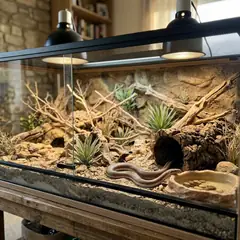
The rosy boa is a small desert boa of the southwestern United States and northwestern Mexico, living in boulder-strewn canyons and desert foothills from the Death Valley region to the tip of Baja California. It is classed as two or three species (Lichanura trivirgata and L. orcutti), and the pet trade sells it by locality name. Most adults are 24 to 36 inches long, and about 44 inches is the most on record. It is docile and unhurried, very rarely bites, and spends most of its life deep in rock crevices and rodent burrows. Its desert origin means it needs a drier enclosure than the tropical boas and pythons. In captivity it averages 18 to 22 years, with documented individuals past 30.
Quick Facts
Native Range
Southwestern United States (California, Arizona) and northwestern Mexico (Baja California, Sonora)
Natural Habitat
Boulder-strewn canyons, desert foothills, dry shrubland and desert, from sea level to about 5,000 feet
Adult Size
24 to 36 inches (60 to 90 cm) for most adults; about 44 inches (112 cm) at most
Wild Diet
Small mammals such as kangaroo rats, deer mice and wood rats, often taken from the nest; also birds and lizards
Wild Lifespan
Not known in the wild; 18 to 22 years on average in captivity, past 30 documented
Conservation Status
Least Concern (IUCN)
History
The rosy boa is one of the North American natives that herpetoculture took up early and kept. Small and hardy, it fit what hobbyists could maintain in the decades before specialized equipment was widely sold, and it is now bred commercially for the pet trade. That long history in captivity is why the animals offered today come from established captive lines rather than from the desert, where collecting is capped by state rules.
Compare
Rosy Boa
Human
Adult Size
24 to 36 inches (60 to 90 cm) for most adults; about 44 inches (112 cm) at most
5-6 feet (150-185 cm); ~135-200 lbs
Wild Lifespan
Not known in the wild; 18 to 22 years on average in captivity, past 30 documented
~73 years (global average)
Wild Diet
Small mammals such as kangaroo rats, deer mice and wood rats, often taken from the nest; also birds and lizards
Omnivorous - eats just about anything
Native Range
Southwestern United States (California, Arizona) and northwestern Mexico (Baja California, Sonora)
Global - originated in Africa roughly 300,000 years ago
Natural Habitat
Boulder-strewn canyons, desert foothills, dry shrubland and desert, from sea level to about 5,000 feet
Everywhere from arctic tundra to tropical megacities
Conservation Status
Least Concern (IUCN)
Least Concern (8+ billion and counting)
Test Yourself
What's the Rosy Boa's native range?
Fun Facts
🐍 The Same Defense, a Very Different Snake
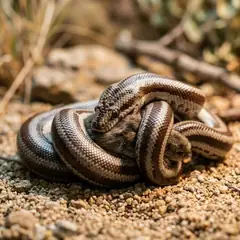
Rosy boas share their signature defensive move, curling into a ball with the head tucked in the center, with the larger ball python. A rosy boa is mild-mannered and saves it for when hiding isn't an option, then adds a trick: it waves its tail back and forth so the tail looks like a head ready to strike.
Where it is legal
9 US jurisdictions restrict this species, from outright bans to permits. Every one quotes the rule it comes from.
Fillable forms for any pet

Universal Pet Kit
25 pages · PDF · $4.99
Deep Dive
Health and More





Did You Know?
Two rosy boas collected in 1965 were still alive in 2019, at 56 and 53 years old. The snake is small, but the commitment is two decades or more.
Explore More