Giant African Millipede
Archispirostreptus gigas
On This Page▾
🌍 Overview
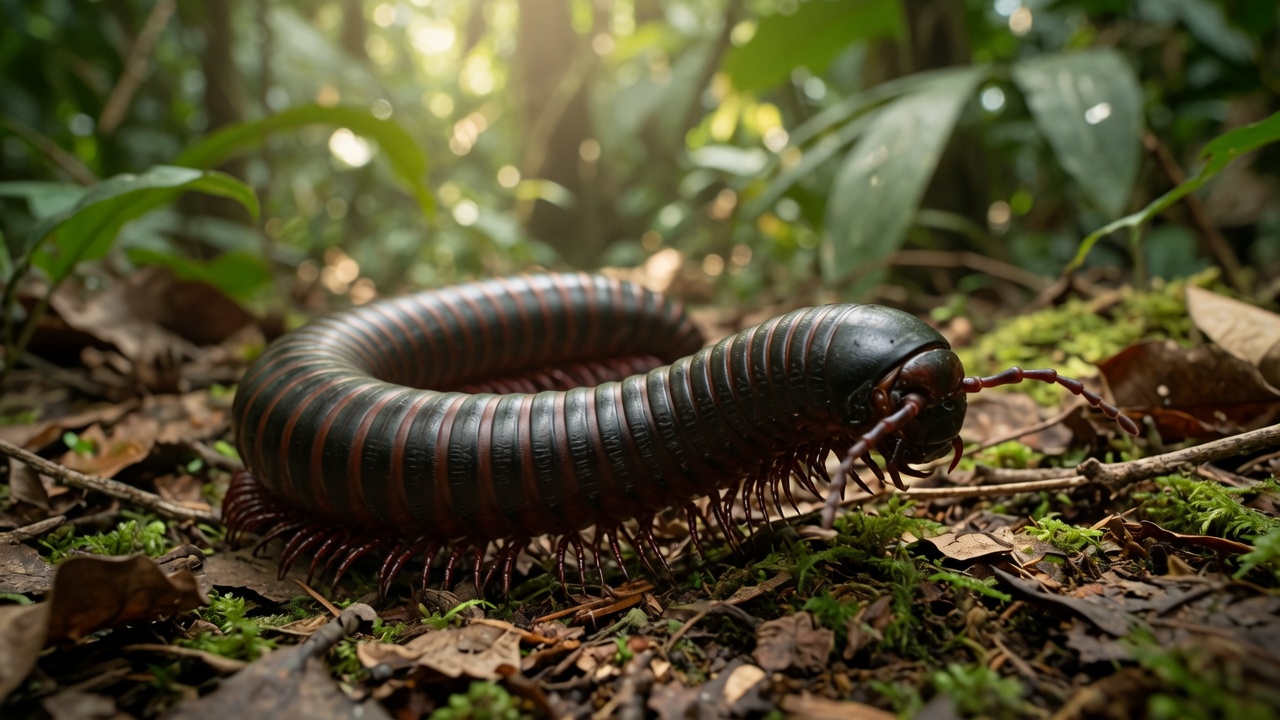
The giant African millipede is one of the largest millipede species on Earth, native to the subtropical and tropical forests of East Africa. Despite their fearsome appearance, they are completely harmless detritivores - feeding on decaying plant matter and playing a vital role in nutrient cycling. When threatened they coil into a tight spiral and may secrete mild chemical irritants from defensive glands. They are gentle, long-lived, and surprisingly personable as pets.
📋 Quick Facts
Native Range
East Africa (Tanzania, Kenya, and surrounding countries)
Natural Habitat
Subtropical and tropical forest floor and savanna
Adult Size
10-15 inches (25-38 cm)
Wild Diet
Decaying plant matter, leaf litter, fungi, and minerals from soil
Wild Lifespan
Not well documented in the wild; typically 5-7 years in captivity, and some individuals pass 10
Conservation Status
Least Concern (IUCN)
📜 History
Wilhelm Peters described the species in 1855. Its path into captivity has been shaped less by hobbyists than by agricultural regulators, because the United States treats giant millipedes as a potential plant pest and requires a federal permit to import them; shipments arriving without one are seized, as happened at San Francisco International Airport in 2014. Much of that caution traces to the mites that ride on the millipede's exoskeleton, which appear to clean their host in exchange for food and shelter but are difficult to screen at a border. The result is an animal that is straightforward to keep and awkward to move across a national line.
⚖️ Compare
Giant African Millipede
Human
Adult Size
10-15 inches (25-38 cm)
5-6 feet (150-185 cm); ~135-200 lbs
Wild Lifespan
Not well documented in the wild; typically 5-7 years in captivity, and some individuals pass 10
~73 years (global average)
Wild Diet
Decaying plant matter, leaf litter, fungi, and minerals from soil
Omnivorous - eats just about anything
Native Range
East Africa (Tanzania, Kenya, and surrounding countries)
Global - originated in Africa roughly 300,000 years ago
Natural Habitat
Subtropical and tropical forest floor and savanna
Everywhere from arctic tundra to tropical megacities
Conservation Status
Least Concern (IUCN)
Least Concern (8+ billion and counting)
🧠 Test Yourself
What's the Giant African Millipede's native range?
⚖️ Where it is legal
10 US jurisdictions restrict this species, from outright bans to permits. Every one quotes the rule it comes from.
Subscribe - it's free
New animal facts and care guides straight to your inbox. No spam. 🐾
📰 Deep Dive
🪱 How Much Does a Giant Millipede Really Cost? (And a Supply Note Worth Knowing)
🪱 How to Handle a Giant Millipede (Gentle Giant, Brittle Shell)
🪱 Common Giant Millipede Health Issues
🪱 Giant Millipede Enclosure Setup
🐛 Giant Millipede Feeding: The Floor Is the Diet, Produce Is the Treat, and Calcium Stays In
🪲 Giant Millipede Enrichment: The Substrate Is the Food and the Home
🩺 Health and More
☠️ Household Pesticides and Your Invertebrate Pet: The Hidden Hazard
📦 Rehousing an Invertebrate: Method, Timing, and Urticating Hair First Aid
🕷️ Invertebrate Housekeeping: Quarantining a New Arrival, Cleaning the Enclosure, and Finding an Escapee
📦 Invertebrate Emergency Plan: Power Outages, Travel, and Shipping
🕷️ Invertebrate Molting 101: What's Normal, Species by Species
🥈 Four Pets Content to Stay Out of the Spotlight
🤓 Did You Know?
Despite their name, millipedes do not have 1,000 legs. Most species have 40 to 400 legs. However, a species discovered in 2021 (Eumillipes persephone) was found 60 meters underground in Australia and has a record 1,306 legs, making it the only true millipede.
Explore More