How Much Does Amano Shrimp Ownership Cost?
On This Page▾

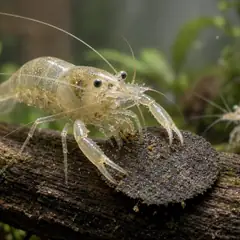
Amano shrimp cost more than most dwarf shrimp, and selective breeding has nothing to do with why. Their larvae must reach salt water within a few days of hatching, so a home tank never raises young, and the price reflects where the shrimp have to come from instead.
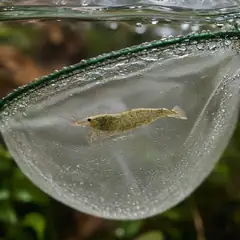
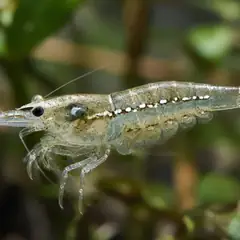
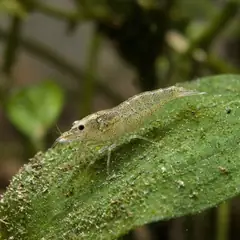
The Shrimp: $3 to $8 Each
A single amano shrimp costs near the top of that range, and packs of five or ten bring each shrimp toward the bottom. Plan on about one shrimp per 2 gallons, so five for a 10 gallon tank. The trade is large: one study counted about 4.3 million imported into a single country between 2008 and 2024.
Takashi Amano, the aquascaper this shrimp is named after, wasn't showing off a brand-new discovery when he made it famous. By 1983 Amano was promoting the shrimp against algae in his magazine writing, then known as Caridina japonica. Decades of that advocacy turned a regional river shrimp into one of the most requested animals in the aquarium trade.
Upfront Setup: $175 to $390
| Item | Cost Range |
|---|---|
| 10 gallon tank | $15 - $40 |
| Tight-fitting glass lid with every gap sealed (fits most standard 10 gallon tanks; measure your tank's opening) | $30 - $40 |
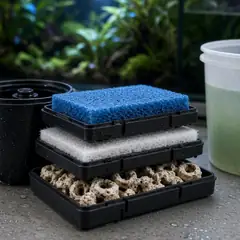
| Sponge filter | $5 - $15 |
| Aquarium heater, only if the room drops below 64°F at its coldest | $15 - $35 |
| Digital aquarium thermometer | $10 - $15 |
| Sand or fine gravel substrate | $10 - $30 |
| Live plants for grazing and cover | $15 - $60 |
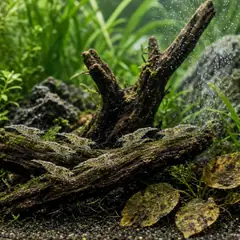
| Driftwood and grazing surfaces | $10 - $35 |
| Soft fine-mesh net | $5 - $10 |
| Airline tubing for drip acclimation | $5 - $10 |
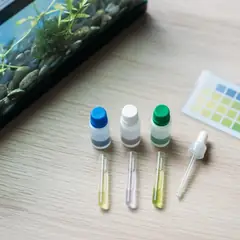
| Liquid water test kit for ammonia, nitrite and nitrate | $25 - $40 |
| GH and KH test kit | $10 - $15 |
| Copper test kit for the tank and the fill water | $10 - $15 |
| Water conditioner that neutralizes chlorine and chloramine | $5 - $15 |
| First supply of sinking wafers | $5 - $15 |
| Setup total | $175 - $390 |
Typical price ranges across retailers.
A 10 gallon tank is a practical minimum, more comfortable than the 5 gallons a small group can survive in. A sponge filter, or a sponge over the intake of another filter, is not optional: a bare intake is a real hazard for a shrimp this small. The lid matters as much, and the tank setup guide covers the lid, the heater rule and the setup order. The rows above come to $175 to $390 before the shrimp themselves.
The copper test kit is on the list because copper is the one thing that can kill a whole tank of shrimp at once. Three items wait until they are needed:
| Extra | Cost Range |
|---|---|
| Indian almond leaves for leaf litter to graze | $5 - $10 |
| Shrimp remineralizer, only if your water tests under 5 dGH | $35 - $45 |
| Copper-removing resin, only after a copper test reads above zero | $20 - $25 |
| All the extras together | $60 - $80 |
Typical price ranges across retailers.
Ongoing Costs: Low
| Item | Annual Cost |
|---|---|
| Sinking algae wafers | $5 - $10 |
| Water conditioner | $5 - $15 |
| Water test kit refills | $15 - $40 |
| Yearly total | $25 - $65 |
Typical price ranges across retailers.
Food and conditioner are cheap, since a share of an amano shrimp's diet comes from the algae and film already growing in the tank. Test kit refills are the line not to skimp on, because this species needs steady dissolved minerals to molt cleanly, not just clean water.
A Quarantine Tank: About $65 to $130
| Quarantine item | Cost Range |
|---|---|
| 10 gallon tank | $15 - $40 |
| Sponge filter | $5 - $15 |
| Glass lid | $30 - $40 |
| Aquarium heater, only if the room drops below 64°F | $15 - $35 |
| Quarantine tank total | $65 - $130 |
Typical price ranges across retailers.
New shrimp spend 30 days in a separate 10 gallon tank before they join an established one, which applies when you add shrimp to a tank that already has animals in it. In a first tank, the tank itself is the quarantine. The quarantine tank needs a heater only if the room drops below 64°F at its coldest. The fish quarantine guide covers how to cycle and run one, and the same tank serves as a hospital tank later.
Vet Costs
Few vets treat shrimp, so the budget goes into prevention: a stable tank and a quarantine tank. The health guide covers what that prevention looks like, from copper testing to the first signs of trouble.
Lifespan
Two to three years is the usual range in a home tank. A replacement costs the same as the first shrimp, so a few dollars more spent on steady water does more for the budget than any saving on equipment.
Budgeting for Shrimp You Cannot Breed
An amano shrimp cannot be bred at home, so every shrimp you keep is one you bought. The money that lasts goes into steady water and a quarantine tank, not into replacing shrimp.
Put these numbers in a budget you can fill in. The Universal Pet Kit has it, among 19 forms for any pet that you can type into or print.
Frequently Asked Questions
How much does an amano shrimp cost?
Roughly $3 to $8 each. A single costs near the top of that range, and packs of five or ten bring the price per shrimp down toward the bottom.
What does a basic amano shrimp tank setup cost?
Roughly $175 to $390 before the shrimp: a 10 gallon tank, a sealed glass lid, a sponge filter, substrate, plants and driftwood, a heater only if the room drops below 64°F, a thermometer, a net and airline tubing for acclimation, test kits for ammonia, GH and KH, and copper, conditioner and the first wafers. A quarantine tank adds about $65 to $130.
What are the ongoing costs of keeping amano shrimp?
Low. Sinking algae wafers run roughly $5 to $10 a year for a small group, water conditioner $5 to $15, and test kit refills $15 to $40, worth keeping up because molting depends on steady hardness.
Why do amano shrimp cost more than other dwarf shrimp?
Biology. Their young need the sea to grow up, so no freshwater tank can raise them, and the whole supply has to come through the trade. That keeps the price up.
How long do amano shrimp live, and how does that affect budgeting?
Usually two to three years. Since none are bred at home, each loss is a new purchase, which is why steady water pays for itself.
Recommended Gear
As an Amazon Associate I earn from qualifying purchases through the links below, at no extra cost to you.
Sources & Further Reading
Last reviewed 24 Nov 2026 · 4 sources
- Clean Shrimp (Caridina multidentata) Ecological Risk Screening Summary - U.S. Fish and Wildlife Service (PDF, downloads)
- Import status of ornamental Atyidae in the Republic of Korea (Park, Chae and Jeong, National Institute of Ecology, 2025) (PDF, downloads)
- Amphidromy and migrations of freshwater shrimps II: delivery of hatching larvae to the sea, return juvenile upstream migration, and human impacts (Bauer, New Frontiers in Crustacean Biology, 2011) (PDF, downloads)
- History of ADA (timeline) - Aqua Design Amano (PDF, downloads)
Written by Michael Ryan
Mike keeps two rescued bearded dragons, Dex and Cera, and writes the care guides on BeastlyFacts from his own research and mistakes. He is not a veterinarian.
More about Michael Ryan →More on the Amano Shrimp
You May Also Like
Deep Dive
Health and More