Praying Mantis
Various
On This Page▾
🌍 Overview
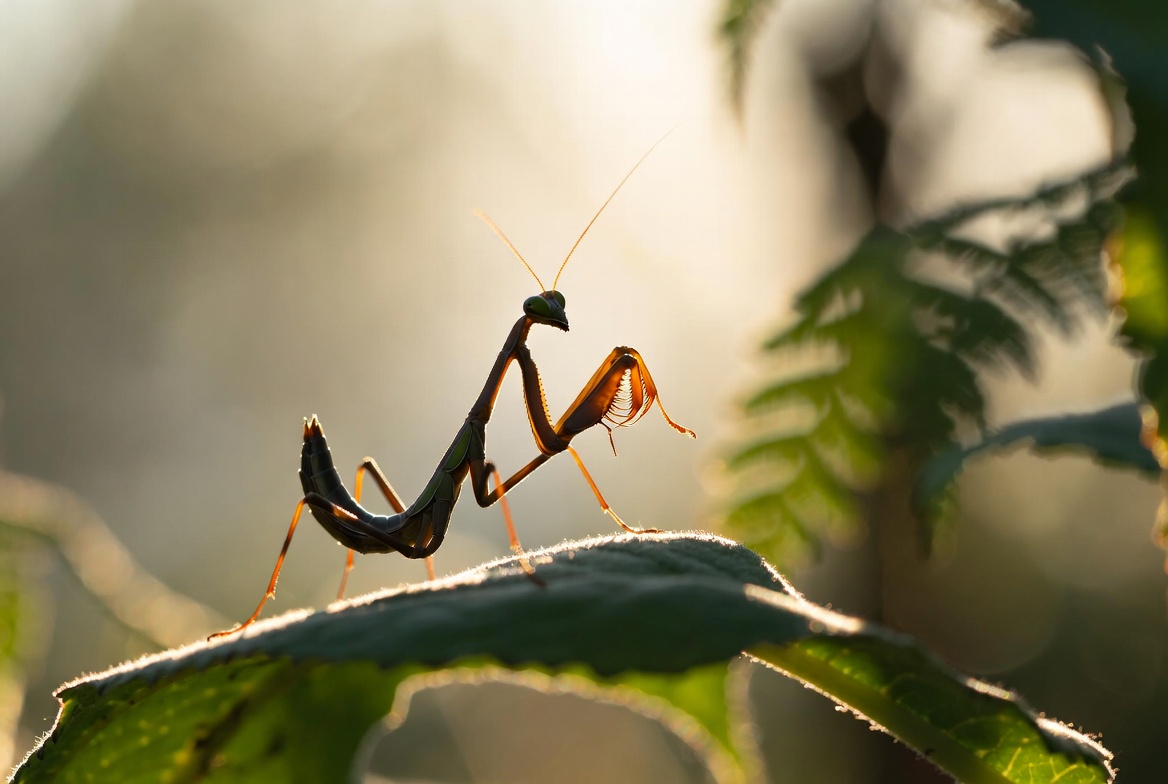
Praying mantises are ambush predators in the order Mantodea, with over 2,400 species found across tropical and temperate regions worldwide. They are famous for the iconic "prayer" posture of their spiked forelegs, held folded and ready to strike with lightning speed. Female mantises occasionally engage in sexual cannibalism, consuming the male during or after mating, though this occurs less frequently in the wild than in captivity. Nymphs pass through six or seven molts in the species that have been counted, and the last produces the winged adult, which never molts again.
📋 Quick Facts
Native Range
Worldwide; most species tropical and subtropical
Natural Habitat
Forest, grassland, shrubland, and gardens
Adult Size
0.5-6 inches (1-15 cm) depending on species
Wild Diet
Insects, spiders, small frogs, lizards, and hummingbirds (large species)
Wild Lifespan
6-18 months (annual life cycle)
Conservation Status
Most species Least Concern; some poorly assessed
📜 History
The mantis most Americans meet outdoors is not a native one. The Chinese mantis, named by Henri de Saussure in 1871, arrived accidentally in 1896 with a nursery tender at Mount Airy in Philadelphia and spread across the eastern United States from there. Its egg cases have been sold through garden centers as living pest control ever since, a market that still runs in the United States and Canada, though an ambush predator that sits and waits makes a poor tool for clearing one specific pest. That commercial supply is also why the Chinese mantis is the usual first species for keepers: the oothecae are cheap, legal and easy to find.
⚖️ Compare
Praying Mantis
Human
Adult Size
0.5-6 inches (1-15 cm) depending on species
5-6 feet (150-185 cm); ~135-200 lbs
Wild Lifespan
6-18 months (annual life cycle)
~73 years (global average)
Wild Diet
Insects, spiders, small frogs, lizards, and hummingbirds (large species)
Omnivorous - eats just about anything
Native Range
Worldwide; most species tropical and subtropical
Global - originated in Africa roughly 300,000 years ago
Natural Habitat
Forest, grassland, shrubland, and gardens
Everywhere from arctic tundra to tropical megacities
Conservation Status
Most species Least Concern; some poorly assessed
Least Concern (8+ billion and counting)
🧠 Test Yourself
What's the Praying Mantis's native range?
📖 Care Guide
Praying Mantis Care Guide
Nature's most impressive ambush predator, in a palm-sized package!
Subscribe - it's free
New animal facts and care guides straight to your inbox. No spam. 🐾
📰 Deep Dive
🦗 How Much Does a Praying Mantis Cost?
🦗 Can You Hold a Praying Mantis? Gently, and Rarely
🦗 Common Praying Mantis Health Issues (Molting Is Where Nearly Everything Goes Wrong)
🦗 Praying Mantis Enclosure Setup: Height, Humidity, and a Mesh Lid
🦗 Praying Mantis Feeding: Live Prey a Third of Its Length, Every Other Day, and Nothing Left in the Cage
🦗 Praying Mantis Enrichment: Height Is a Molting Requirement, Not a Preference
🩺 Health and More
☠️ Household Pesticides and Your Invertebrate Pet: The Hidden Hazard
📦 Rehousing an Invertebrate: Method, Timing, and Urticating Hair First Aid
🕷️ Invertebrate Housekeeping: Quarantining a New Arrival, Cleaning the Enclosure, and Finding an Escapee
📦 Invertebrate Emergency Plan: Power Outages, Travel, and Shipping
🔢 Four Pets, Four Different Right Numbers
🦗 Gut-Loading Feeder Insects: What to Feed Them, for How Long, and Whether It Replaces Dusting
🤓 Did You Know?
Many praying mantises hear through a single ear in the midline of the underside, between the hind legs, where other insects with eardrums have them in pairs. It picks up the ultrasonic calls of hunting bats, and some species swerve mid-flight when they hear one. A flexible neck also lets a mantis swivel its head through 180 degrees while it waits for prey.
Explore More