California Kingsnake
Lampropeltis californiae
On This Page▾
🌍 Overview
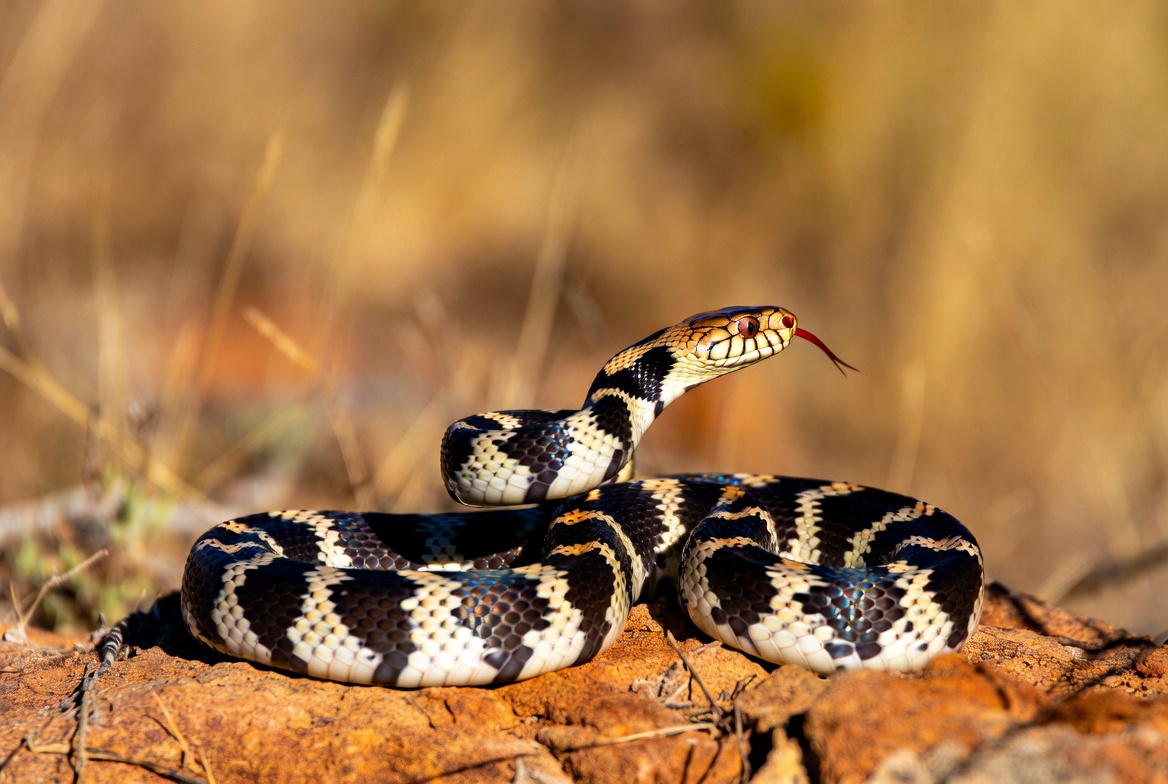
The California kingsnake is a non-venomous colubrid found throughout the western United States and northwestern Mexico. "King" snakes earned their name from killing and eating other snakes, rattlesnakes included, and their blood serum neutralizes a good deal of pit viper venom. That resistance is strong, not total, and it varies between kingsnake species and populations. A powerful constrictor, it takes almost anything it can overpower, from rodents and lizards to eggs, birds and other snakes. It is active by day in cool weather and shifts to dawn, dusk and night when it is hot. Pattern varies from black and white bands to brown and cream, and some populations are striped instead of banded. Hardy and easy to care for, it is a popular beginner species.
📋 Quick Facts
Native Range
Western United States and northwestern Mexico
Natural Habitat
Desert, chaparral, woodland, grassland, and agricultural areas
Adult Size
2.5-4 feet (75-120 cm)
Wild Diet
Lizards, rodents, birds, eggs, and other snakes (including rattlesnakes)
Wild Lifespan
5.5 years on average in the wild, the oldest wild specimen recorded at 9; typically 20 years or more in captivity, with a record of 33.3
Conservation Status
Least Concern (IUCN)
📜 History
The California kingsnake is one of the most popular pet snakes, kept for its easy care, its range of colors and its calm temperament, and almost every pet today is captive-bred. That breeding has a tangle in it. In the wild the species intergrades with the desert kingsnake and the Mexican black kingsnake in Arizona, and in captivity it has been crossed with the corn snake to make the "jungle corn", a hybrid of two different genera that is fertile. At home it is protected by paperwork: California sets limits on wild collection and requires a propagation permit to breed and sell the species inside the state, so a California seller should be able to name the permit.
⚖️ Compare
California Kingsnake
Human
Adult Size
2.5-4 feet (75-120 cm)
5-6 feet (150-185 cm); ~135-200 lbs
Wild Lifespan
5.5 years on average in the wild, the oldest wild specimen recorded at 9; typically 20 years or more in captivity, with a record of 33.3
~73 years (global average)
Wild Diet
Lizards, rodents, birds, eggs, and other snakes (including rattlesnakes)
Omnivorous - eats just about anything
Native Range
Western United States and northwestern Mexico
Global - originated in Africa roughly 300,000 years ago
Natural Habitat
Desert, chaparral, woodland, grassland, and agricultural areas
Everywhere from arctic tundra to tropical megacities
Conservation Status
Least Concern (IUCN)
Least Concern (8+ billion and counting)
🧠 Test Yourself
What's the California Kingsnake's native range?
🤩 Fun Facts
🐍 Tongue Sniffers
Snakes smell with their tongues! They flick their forked tongue to collect chemical particles from the air, then press it into the Jacobson's organ on the roof of their mouth to 'read' the smells.
⚖️ Where it is legal
8 US jurisdictions restrict this species, from outright bans to permits. Every one quotes the rule it comes from.
Subscribe - it's free
New animal facts and care guides straight to your inbox. No spam. 🐾
📰 Deep Dive
🐍 How Much Does a California Kingsnake Really Cost?
🐍 How to Handle a California Kingsnake (And Why It Must Live Alone)
🐍 Common California Kingsnake Health Issues
🐍 California Kingsnake Enclosure Setup
🐍 California Kingsnake Feeding: Prey Size, the Adult Interval, and Why One Snake Per Tank
🐍 Kingsnake Enrichment: Colubrid Evidence, Honestly Labeled
🩺 Health and More
🔌 Reptile Emergency Plan: Power Outages, Travel, and Pet Sitters
💧 Reading Reptile Stool, Urates, and Hydration: A Daily Health Check
🧼 Salmonella and Reptile Hygiene: The Rules That Actually Matter
🌡️ Reptile Heating and Thermostats: Preventing Burns
🧫 Reptile Quarantine: Why New Snakes and Lizards Need Months, Not Weeks
🐍 Sexing, Growth, and Body Condition in Pet Snakes
🤓 Did You Know?
Kingsnakes are strongly resistant, not immune, to the venom of rattlesnakes, copperheads, and cottonmouths, and they actively hunt and eat other snakes, including venomous ones! The name 'King' is well earned.
Explore More