African Grey Parrot
Psittacus erithacus
On This Page▾
🌍 Overview
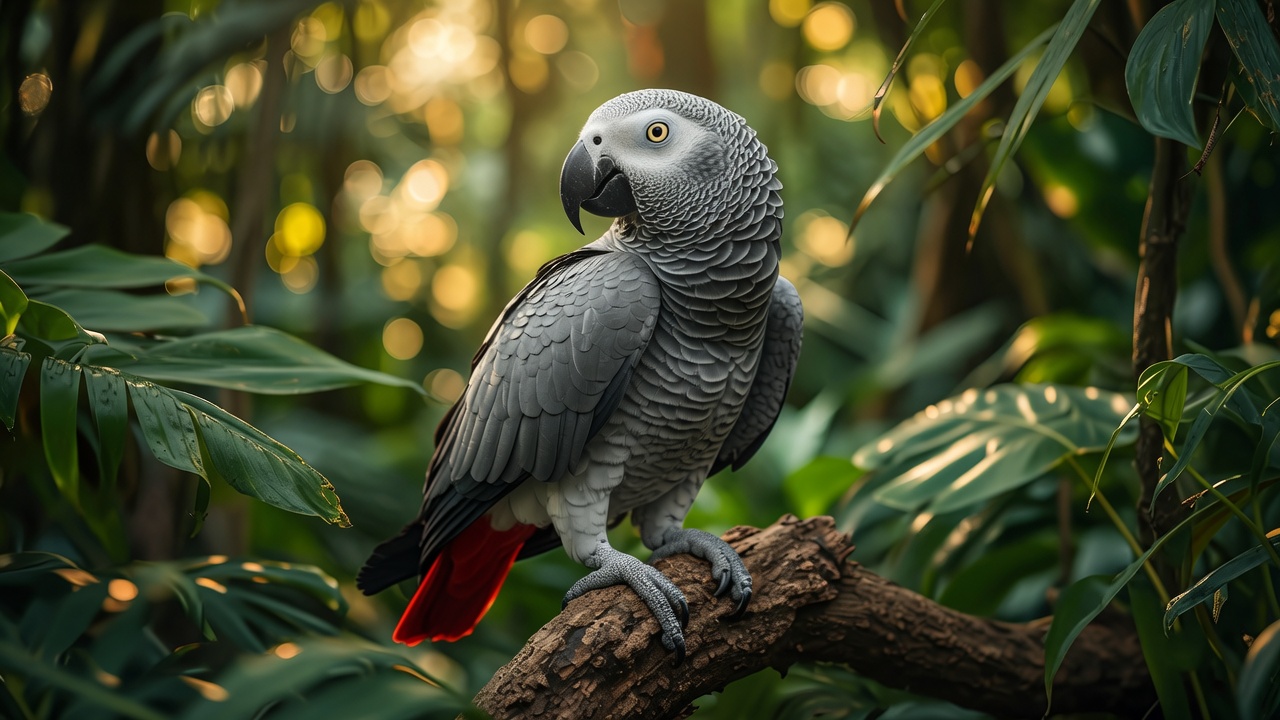
The African grey parrot is widely regarded as the most intelligent parrot species and among the most cognitively sophisticated of all animals. Native to the dense equatorial forests of West and Central Africa, they live in large flocks and form long-term pair bonds. The research parrot Alex, studied by Dr. Irene Pepperberg for over 30 years, demonstrated a working vocabulary of over 150 words and the ability to understand concepts of color, shape, number, and "same vs. different."
📋 Quick Facts
Native Range
West and Central Africa (Ghana, Ivory Coast, Congo, Cameroon)
Natural Habitat
Dense lowland forest and forest edges
Adult Size
13 inches (33 cm); 14-21 oz
Wild Diet
Seeds, nuts, fruits, and leafy vegetation
Wild Lifespan
22.7 years on average in the wild (n=120); a mean of 45 years in captivity, up to 60
Conservation Status
Endangered (IUCN)
📜 History
Legal exports moved this species out of Africa in extraordinary numbers: the US Fish and Wildlife Service counted more than 1.5 million wild greys taken from their habitats in the 25 years to 2016. Trapping and forest clearance erased the bird from much of its western range, leaving the largest populations confined to central Africa. On October 2, 2016, at the CITES conference in Johannesburg, delegates voted 95 to 35 with five abstentions to move Psittacus erithacus from Appendix II to Appendix I. The proposal was sponsored jointly by Angola, Chad, Gabon, Guinea, Nigeria, Senegal, Togo, the European Union and the United States. That listing ended commercial international trade in wild-caught birds outright.
⚖️ Compare
African Grey Parrot
Human
Adult Size
13 inches (33 cm); 14-21 oz
5-6 feet (150-185 cm); ~135-200 lbs
Wild Lifespan
22.7 years on average in the wild (n=120); a mean of 45 years in captivity, up to 60
~73 years (global average)
Wild Diet
Seeds, nuts, fruits, and leafy vegetation
Omnivorous - eats just about anything
Native Range
West and Central Africa (Ghana, Ivory Coast, Congo, Cameroon)
Global - originated in Africa roughly 300,000 years ago
Natural Habitat
Dense lowland forest and forest edges
Everywhere from arctic tundra to tropical megacities
Conservation Status
Endangered (IUCN)
Least Concern (8+ billion and counting)
🧠 Test Yourself
What's the African Grey Parrot's native range?
🤩 Fun Facts
🦜 Multiple Personality Parrots
African Grey Parrots are known for their exceptional intelligence and social skills, often mimicking human speech with astonishing accuracy. They can learn to use and even combine different phrases based on context, displaying personalities that can change depending on their environments!
🦜 Birds Can Count
African Grey Parrots are incredibly smart and can count! Studies have shown that these feathered mathematicians can understand numerical concepts, proving that they are not just pretty faces but also brainiacs of the avian world.
🦜 Century Talkers
Some parrot species can live over 80 years! The oldest known parrot, Cookie the cockatoo, lived to be 83. They can also learn over 100 words and even understand context.
🦜 Parrots Need Company
Parrots need social interaction daily. Isolation can cause feather plucking and behavioral issues. They're highly intelligent birds that thrive on engagement.
🦜 Mimics Everything
Many parrots can mimic not just single words but full sentences, tones, and even laughs. The record for the largest bird vocabulary ever documented doesn't belong to a big exotic species. It belongs to a budgerigar named Puck, credited by Guinness World Records with an estimated 1,728 words.
⚖️ Where it is legal
5 US jurisdictions restrict this species, from outright bans to permits. Every one quotes the rule it comes from.
⚖️ Legal Guide
Subscribe - it's free
New animal facts and care guides straight to your inbox. No spam. 🐾
📰 Deep Dive
🦜 How Much Does an African Grey Parrot Really Cost?
🦜 How to Handle an African Grey Parrot
🦜 Common African Grey Parrot Health Issues and What Causes Them
🦜 African Grey Parrot Cage Setup: Size, Placement, and Enrichment Done Right
🦜 African Grey Parrot Feeding: Schedule, Diet, and Why They Stop Eating
🦜 African Grey Enrichment: Foraging Is the One With Real Evidence
🩺 Health and More
⚠️ Household Hazards for Pet Birds: The Complete Safety Checklist
🚪 Quarantining a New Bird: The Real Timeline and Why It Matters
💩 Reading Bird Droppings: The Daily Health Check Every Owner Should Know
🌙 Photoperiod and Sleep: The Light Schedule That Controls Your Bird's Hormones
🦜 Converting a Seed-Eating Bird to Pellets Without Starving It
✂️ Wing Clipping: Flighted vs. Clipped, Both Sides Explained
🔦 Bird Emergency Plan: Power Outages, Travel, and Transport
⚖️ Sexing, Weight, and Body Condition in Pet Birds: What Actually Works
🥚 Chronic Egg Laying and Egg Binding in Budgies, Cockatiels, and Lovebirds
🪶 Why Is My Bird Losing Feathers? Molt vs. Plucking vs. PBFD vs. Giardia
🦜 Choosing a Pet Bird: What You're Actually Signing Up For
🦠 Avian Polyomavirus: Budgerigar Fledgling Disease and French Molt
🦜 Reading Bird Body Language: Fluffed Content vs. Fluffed Sick
🌫️ Feather Dust, Air Quality, and Bird Fancier's Lung
🎯 Parrot Training: The Behavior Ladder From Budgie to Macaw
🩹 Bird First Aid Kit and Grooming: Nails, Beak, and Blood Feathers
📋 Succession Planning for a Pet That May Outlive You
🕊️ Adopting a Rescue Parrot: The First Months, Honestly
🦜 African Grey Parrot vs. Cockatoo: Which Big Parrot Commitment Fits You
🦅 The Ultimate Birdwatching Guide: Best Places, Times, and Tips for Beginners (2026)
🩺 UVB Lighting: Why It Matters More Than You Think
🤓 Did You Know?
The famous grey Alex, the subject of landmark peer-reviewed research, could label 50 objects, 7 colors, and 5 shapes, count quantities up to six, and grasp the concept of 'none'.
Explore More