Sugar Glider Enrichment: Company, Height, and an Honest Caveat
On This Page▾

This species has one enrichment answer that everyone agrees on and one claim that gets repeated harder than the evidence supports.
Sugar gliders are colonial and should be kept in pairs or small groups. That is the natural history and the veterinary consensus, and solitary housing is treated as a major welfare risk. The caveat worth stating: a study establishing reference values in pet sugar gliders reported the solitary animals in its sample as healthy, without the self-mutilation the hobby describes as inevitable.
What the Research Says
Less than the confidence of the advice suggests.
Colonial in the wild. Sugar gliders live in social groups, and pairs or small groups are the standard veterinary recommendation for captivity. Solitary housing is described in the clinical literature as a risk factor for depression, self-mutilation and failure to thrive.
And a caveat. A study establishing hematological and plasma biochemical reference values for pet sugar gliders, which also analyzed risk factors, noted that the solitary animals in its sample were healthy and that the aggression and self-mutilation behaviors were not observed. That is one sample and it was not designed as a housing experiment, so it does not overturn the recommendation.
Both things are true at once. Keep them in groups, and hold the self-mutilation claim as a real clinical concern rather than a certainty, because that is what the published evidence actually supports.
The reference-value part of that study is quietly the most useful thing in it. Until someone establishes what normal blood values look like for a species, a vet has nothing to compare a sick animal against, which is a bigger problem in exotic pet medicine than most owners realize.
A Colony, Not a Single Glider
The first item. Two minimum, more if you have the space, and neutering males avoids both breeding and a good deal of the scent marking.
Introductions need care and time, and a bonded group does things a single glider cannot: mutual grooming, sleeping in contact, and the vocal social behavior that makes the species interesting.
Height, and Routes Between Things
Gliding marsupials. They travel between trees, and a cage's vertical dimension is the only version of that available indoors.
A tall enclosure like a double unit cage is a common starting point, and what goes inside decides whether the height counts. Branches at varied heights and angles, ropes, and gaps small enough to cross with a short glide give them routes instead of a ladder.
The test is whether a glider can get from the bottom to the top and across the cage without touching the bars.
A Pouch to Sleep In
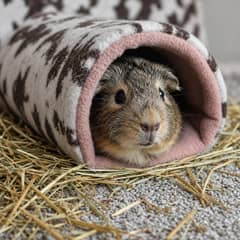
Nocturnal animals that sleep the day in a nest, in contact with each other. A hanging sleeping pouch mounted high gives them somewhere dark and enclosed to do it, and gliders sharing a pouch is the behavior you want to see in a bonded pair.
Have more than one, and check fabric for loose threads. Toes and gliding membranes catch easily and it is a common preventable injury.
Foraging, at Height
Wild gliders take sap, nectar and insects across a home range. A dish of chopped food removes the entire search.
Put food at height so getting to it involves climbing, hide portions in foraging toys and paper parcels, release live insects into the cage, and vary where everything appears. A staple diet covers the nutritional base, while the presentation does the enrichment work.
A Wheel, Solid Track Only
A large solid-surface wheel gets heavy use from many gliders. Solid track and no center axle crossbar, because a tail or a patagium caught in a rung is a serious injury.
Expect it to be used at three in the morning, which is worth knowing before you put the cage in a bedroom.
Accept the Night Shift
Their activity is nocturnal and that is not adjustable, the same constraint hedgehogs put on their keepers. Most of what you provide gets used while you sleep, and daytime handling means waking an animal out of its rest.
If you want interaction, work with the evening and not against the schedule.
Priority Order
- A pair or small group
- Height, with real climbing and gliding routes
- Hanging pouches to sleep in, more than one
- Foraging at height, never a dish
- A large solid-track wheel
- Evening interaction, not daytime handling
- Novel objects and rearrangement, last
What Not to Do
Do not keep a single sugar glider. Do not buy height and leave it empty. Do not use an open-rung wheel or one with a center crossbar. Do not use fabric with loose threads or frayed edges. Do not wake a glider for daytime handling as a routine. Do not improvise the diet, since nutritional disease is common in this species.
Sources & Further Reading
Frequently Asked Questions
Do sugar gliders have to be kept in pairs?
They are colonial in the wild and living in pairs or small groups is the strong veterinary and welfare recommendation, with solitary housing treated as a major risk factor for depression, self-mutilation and failure to thrive. It is worth knowing that a study establishing reference values in pet sugar gliders found the solitary animals in its sample healthy and did not observe those behaviors.
So which is it?
Keep them in pairs or groups. The natural history is unambiguous, the veterinary consensus is unambiguous, and one sample of healthy solitary animals does not overturn either. It does mean the self-mutilation claim is repeated with more confidence than the published evidence supports, and this guide says so rather than pretending otherwise.
How much vertical space do they need?
As much as you can give. They are gliding marsupials that travel between trees, and a cage's height is the only dimension that gives them anything resembling that. Tall, and filled with branches at varied heights so there are real routes to move between.
Are sugar gliders nocturnal?
Strongly. They are active at night and sleep through the day in a pouch or nest box, which means most of the enrichment you provide gets used when you are asleep. It also means daytime handling is waking an animal up.
What is the most important feeding change?
Making them work for it. Gliders forage for sap, nectar and insects across a home range, and a bowl of chopped food is the least interesting version. Foraging toys, food hidden at height and insects released into the cage all extend it.
Do they need a wheel?
A large solid-surface wheel is well used by many gliders and is worth providing. Solid track only, since a tail or a gliding membrane caught in an open-rung wheel is a serious injury.
More on the Sugar Glider
Sugar Glider care guide
🐿️ How Much Does Sugar Glider Ownership Really Cost?
🐿️ How to Handle a Sugar Glider (It Starts With a Pouch, Not Your Hands)
🐿️ Common Sugar Glider Health Issues (Diet Drives Almost Everything)
🐿️ Sugar Glider Cage Setup: Tall, Not Wide
🐿️ Sugar Glider Feeding: Schedule, Diet, and the Calcium Ratio That Prevents Paralysis
Recommended Gear
As an Amazon Associate I earn from qualifying purchases through the links above, at no extra cost to you.

Written by Michael Ryan
Mike keeps two rescued bearded dragons, Dex and Cera, and writes the care guides on BeastlyFacts from his own research and mistakes. He is not a veterinarian.
More about Michael Ryan →