Common Savannah Monitor Health Issues (Obesity Is the Defining One)
On This Page▾

Nearly everything on this list traces back to one root cause more than in almost any other pet reptile: a mismatch between how much this species gets fed in captivity and how much it would eat and burn off in the wild.
Obesity and Hepatic Lipidosis (Fatty Liver Disease)
In the wild, savannah monitors feast and fast with the seasons: they eat heavily through a wet season of about eight months, taking up to a tenth of their body weight in a day, and live off stored fat through the dry one. Captivity removes the fast. The animal gets rich food year-round with a fraction of the activity it would have in the wild, and the fat that was meant to be burned in the dry months builds up in the liver instead.
Body Condition: What the Numbers Look Like
Weight alone does not tell you whether a monitor is fat, because adults range so widely in size, from about 3 to 4 feet on average, and some well past that. Body condition does. Vets score reptiles on a 1 to 9 scale, where 1 is emaciated, 5 is normal, and 9 is obese, and the target is a 5.
- Score 5, normal: a tail about as thick as the body where it joins, with neither bones showing through the skin nor fat hiding the spine and ribs.
- Too thin, 1 to 3: the pelvis, hips, ribs, and spine stand out through the skin, the tail thins, and the eyes look sunken.
- Too heavy, 7 to 9: a thick layer of fat over the back and sides so the spine and ribs cannot be felt, fat jowls under the neck, a pear-shaped torso, and a tail base wider than the body.
Score the monitor the same way every month and weigh it on a scale at the same time. The number that matters is the trend: a monitor gaining weight while its score climbs past 5 is eating more than it burns, and the fix is fewer meals, leaner food, and more room to move. Rodents belong in the diet only occasionally for exactly this reason. Advanced fatty liver disease needs a vet, and by then the damage may not be fully reversible.
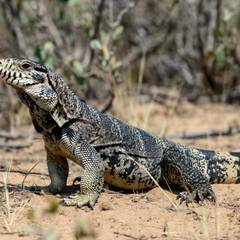
Wild savannah monitors are built for famine. They gorge through the rainy season and fast through the dry one on stored fat, which is why a captive animal fed the same way every week of the year ends up in trouble.
Metabolic Bone Disease (MBD)
Caused by too little calcium or vitamin D3, too much phosphorus, or no UVB. The body pulls calcium out of the skeleton to keep blood levels up, and the signs follow from that: bowed legs, a shortened snout, stunted growth, and fragile bones that fracture. As it progresses, the monitor becomes weak, lethargic, and stops eating. Improved husbandry and long-term calcium under a vet's supervision reverses most cases; severe ones need hospitalization.
Parasites
Common in this species, particularly wild-caught or farmed animals, and feeder insects can carry them in too. Pinworms, coccidia, and flagellated protozoa are the usual finds. A small load may cause no trouble, but an overgrowth brings poor nutrient absorption, appetite loss, lethargy, and abnormal stool. A new monitor gets a fecal exam before any symptom shows, and every monitor gets one yearly after that.
Respiratory Infections
From temperatures running too low or humidity mismanaged, best kept in check with an infrared thermometer and a hygrometer instead of guesswork. Antibiotics from a vet clear the infection; correcting the enclosure keeps it from coming back.
Thermal Burns
A risk that comes with the high basking temperatures this species needs. Burns come from hot rocks and other in-enclosure heaters, and from heat pads or bulbs running without a thermostat. They heal slowly and need long-term treatment to keep them from becoming infected, so every heat source goes on a thermostat and out of the lizard's reach.
Finding a Vet Before You Need One
The name of a good local herp vet is part of the equipment list for this species, and it should be settled before the monitor comes home. A savannah monitor is a large, strong lizard, and a routine nail trim can take two or three people trained in reptile restraint, so ask whether the practice sees large monitors, not just reptiles in general. The reptile quarantine guide covers how to find and vet a reptile practice, and the first visit should include the fecal test. Plan on regular checkups after that, where the vet can track weight and adjust the feeding schedule with you.
The Husbandry Pattern
Overfeeding relative to this species' activity level drives the obesity and fatty liver disease that shorten more savannah monitor lives than any other single factor. Weak UVB and calcium cause MBD. An unregulated heat source causes burns. And an unscreened, farmed, or wild-caught animal brings parasites home with it. The one habit that prevents the most here is resisting the urge to feed generously just because the monitor is always eager to eat.
Sources & Further Reading
Last reviewed 31 Jul 2026 · 5 sources
Frequently Asked Questions
What is the most common health issue in savannah monitors?
Obesity and hepatic lipidosis, fatty liver disease. It's the signature problem for this species, and the cause is a mismatch between how much it gets fed in captivity and how much it would eat and burn off in the wild.
What causes obesity in savannah monitors?
Captivity removes the seasonal rhythm. Wild savannah monitors hunt a lean, largely insect-based diet for much of the year and go far less active through dry periods. A captive one gets rich food year-round on a fraction of that activity level, and the weight follows.
What are the signs of obesity or fatty liver disease in a savannah monitor?
Aim for a 5 on the 1 to 9 body condition scale. Spine and ribs you can no longer feel, jowls, a pear-shaped body, and a tail base wider than the body all mean a monitor scoring 7 or higher. Fewer meals, leaner food, and a large enclosure fix early weight gain; advanced liver disease needs a vet.
What causes metabolic bone disease in savannah monitors?
Inadequate UVB or calcium supplementation. The signs are soft or deformed bones and fractures. Always see a vet if you suspect it. Proper UVB and calcium belong in the setup from day one.
Are parasites common in savannah monitors?
Common, particularly in wild-caught or farmed animals. Pinworms, coccidia, and flagellated protozoa are the usual finds, and they cause poor nutrient absorption, appetite loss, lethargy, and abnormal stool. Get a fecal exam for any new animal before symptoms show, then once a year.
What causes respiratory infections in savannah monitors?
Temperatures running too low or humidity mismanaged. It needs antibiotics from a vet, and the enclosure needs correcting at the same time.
More on the Savannah Monitor
Savannah Monitor care guide
🦎 How Much Does a Savannah Monitor Really Cost?
🦎 How to Handle a Savannah Monitor (This Isn't the Ackie Monitor)
🦎 Savannah Monitor Enclosure Setup: The 8x4x4 Foot Reality
🦎 Savannah Monitor Feeding: Insects as the Staple, Rodents as the Exception, and the Liver That Pays for the Difference
🦎 Savannah Monitor Enrichment: The Species That Gets Bored Fastest
Recommended Gear
As an Amazon Associate I earn from qualifying purchases through the links above, at no extra cost to you.

Written by Michael Ryan
Mike keeps two rescued bearded dragons, Dex and Cera, and writes the care guides on BeastlyFacts from his own research and mistakes. He is not a veterinarian.
More about Michael Ryan →