Beastfile · Marine Life
Cuttlefish
Sepia officinalis
Also known as Common Cuttlefish
It puts on the best color display in the ocean and probably cannot see color.
On This Page▾
Overview
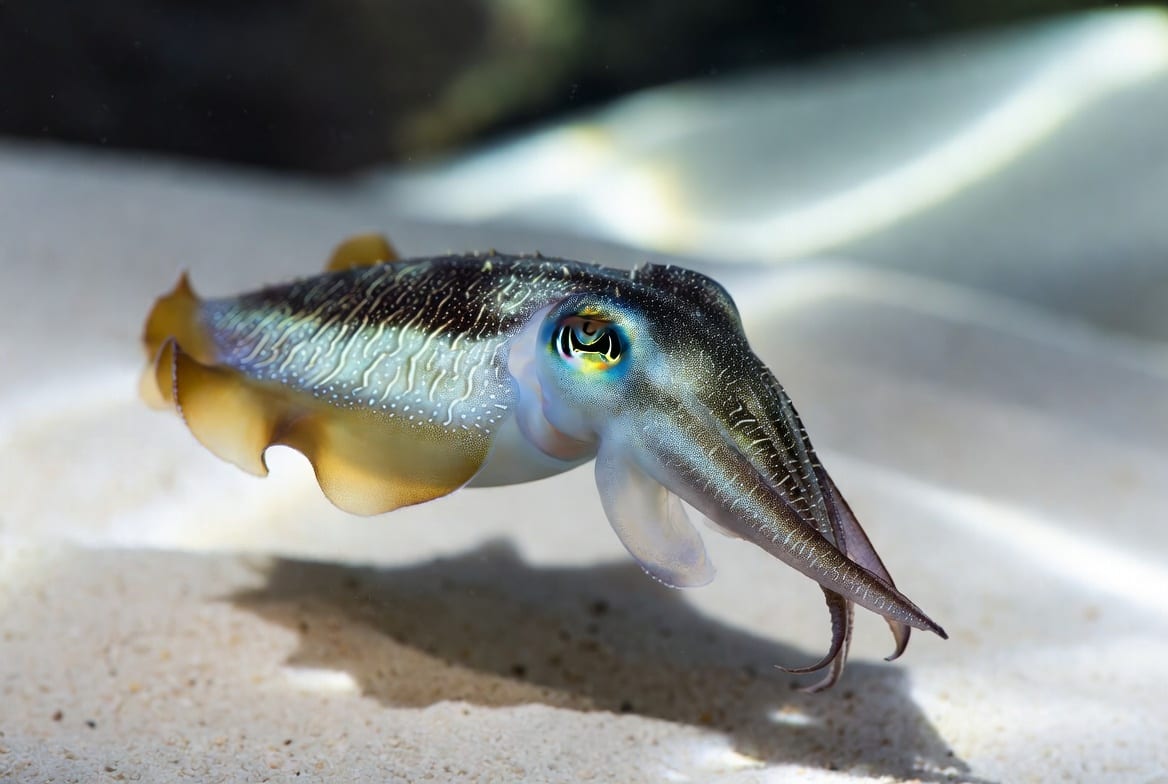
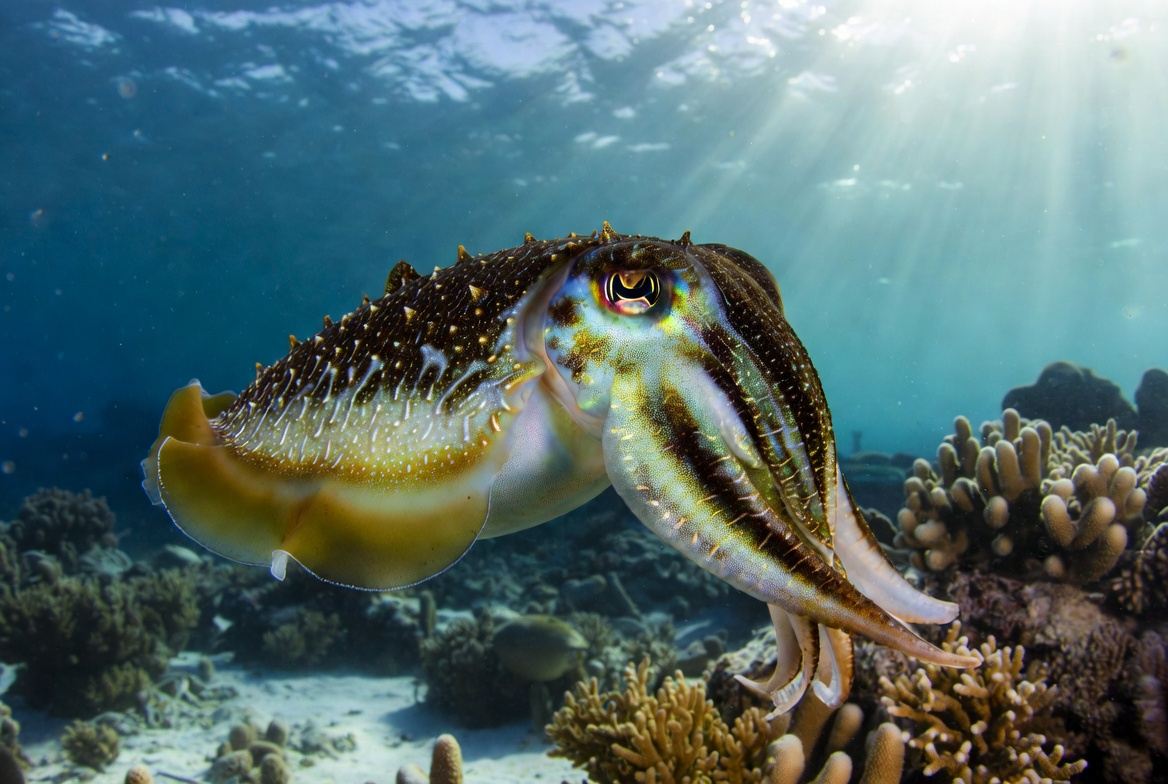
A cuttlefish changes the color, pattern and texture of its skin faster than anything else alive, running millions of pigment cells over layers of reflective ones. It uses this to vanish against sand, to send a rippling wave of dark bands down its body while hunting, and in some species to show courtship colors on one flank and female coloring on the other at the same time. The catch is that it has one visual pigment, so by the usual definition it is color-blind. How an animal that cannot see color matches it so precisely is unresolved; the leading idea involves reading color from the blur its odd W-shaped pupil creates.
Origin
Coastal waters of the eastern Atlantic, North Sea, Mediterranean and Baltic, over sand and seagrass in relatively shallow water.
Habitat
OceanNotable Traits
- •Changes color, pattern and skin texture in under a second
- •A single visual pigment, so effectively color-blind
- •W-shaped pupil, unlike almost anything else
- •An internal cuttlebone used to control buoyancy
- •Can display courtship and female coloring on opposite flanks at once
Conservation
Near Threatened in parts of its range and heavily fished, particularly in the Mediterranean and the eastern Atlantic. Short lifespans mean populations swing hard year to year.
🤯 Fun Facts
📁 Related Files
🐾 More Beastfiles
Marine Life
Giant Manta Ray
Seven meters across, filter-feeding, and one of the few fish to pass a mirror test.
Marine Life
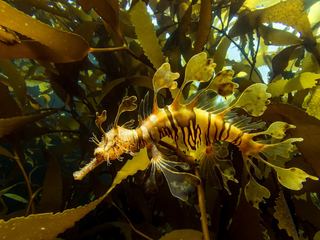
Leafy Sea Dragon
A relative of the seahorse pretending, very convincingly, to be seaweed.

Marine Life
Bottlenose Dolphin
Every dolphin invents a name for itself and answers to it for life.
Marine Life
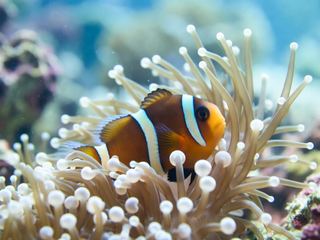
Clownfish
Every clownfish is born male, and the largest one becomes female.