Sugar Glider
Petaurus breviceps
On This Page▾
🌍 Overview
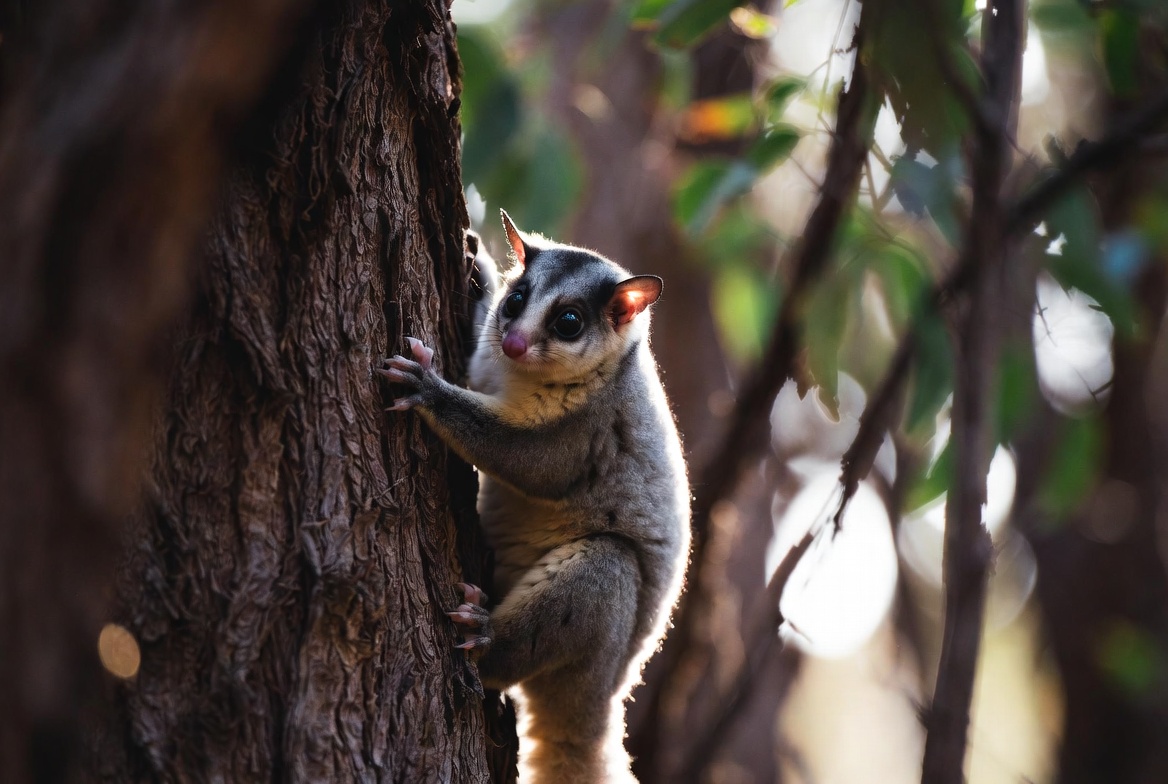
Sugar gliders are small marsupials native to Australia, New Guinea, and eastern Indonesia - more closely related to koalas and kangaroos than to flying squirrels, which they superficially resemble. They possess a membrane (patagium) stretching from wrist to ankle that allows them to glide up to 165 feet between trees. Highly social in the wild, they share nests in groups of up to seven adults and their young, and communicate through a range of calls, barks, and crabbing sounds.
📋 Quick Facts
Native Range
Northern and eastern Australia, New Guinea, eastern Indonesia
Natural Habitat
Tropical and temperate forest and woodland
Adult Size
5-6 inches (13-15 cm) body; males 100-160 g, females 80-130 g
Wild Diet
Nectar, pollen, tree sap, insects, and small vertebrates
Wild Lifespan
Not well documented in the wild; 10 to 15 years is typical in captivity, and 17.8 years is the zoo record
Conservation Status
Least Concern (IUCN)
📜 History
Australia has barred the export of its native wildlife under the Wildlife Protection (Regulation of Exports and Imports) Act of 1982, so the gliders that reached the American pet trade in the 1990s came from somewhere else. A 2019 genetic study in PeerJ settled where. Sequencing captive animals from across the United States turned up 23 closely related haplotypes, two of them identical to sequences from Sorong in West Papua, Indonesia, and none matching Australian or Papua New Guinean populations. The pet population therefore descends from Indonesian stock exported through licensed breeding facilities, whose output has at times been questioned against official quotas.
⚖️ Compare
Sugar Glider
Human
Adult Size
5-6 inches (13-15 cm) body; males 100-160 g, females 80-130 g
5-6 feet (150-185 cm); ~135-200 lbs
Wild Lifespan
Not well documented in the wild; 10 to 15 years is typical in captivity, and 17.8 years is the zoo record
~73 years (global average)
Wild Diet
Nectar, pollen, tree sap, insects, and small vertebrates
Omnivorous - eats just about anything
Native Range
Northern and eastern Australia, New Guinea, eastern Indonesia
Global - originated in Africa roughly 300,000 years ago
Natural Habitat
Tropical and temperate forest and woodland
Everywhere from arctic tundra to tropical megacities
Conservation Status
Least Concern (IUCN)
Least Concern (8+ billion and counting)
🧠 Test Yourself
What's the Sugar Glider's native range?
⚖️ Where it is legal
9 US jurisdictions restrict this species, from outright bans to permits. Every one quotes the rule it comes from.
⚖️ Legal Guide
Subscribe - it's free
New animal facts and care guides straight to your inbox. No spam. 🐾
📰 Deep Dive
🐿️ How Much Does Sugar Glider Ownership Really Cost?
🐿️ How to Handle a Sugar Glider (It Starts With a Pouch, Not Your Hands)
🐿️ Common Sugar Glider Health Issues (Diet Drives Almost Everything)
🐿️ Sugar Glider Cage Setup: Tall, Not Wide
🐿️ Sugar Glider Feeding: Schedule, Diet, and the Calcium Ratio That Prevents Paralysis
🐿️ Sugar Glider Enrichment: Company, Height, and an Honest Caveat
🩺 Health and More
🤓 Did You Know?
Sugar gliders can glide up to 165 feet in the wild using a membrane called a patagium. They steer with their tails and can even do mid-air turns!
Explore More