Rabbit
Oryctolagus cuniculus
On This Page▾
🌍 Overview
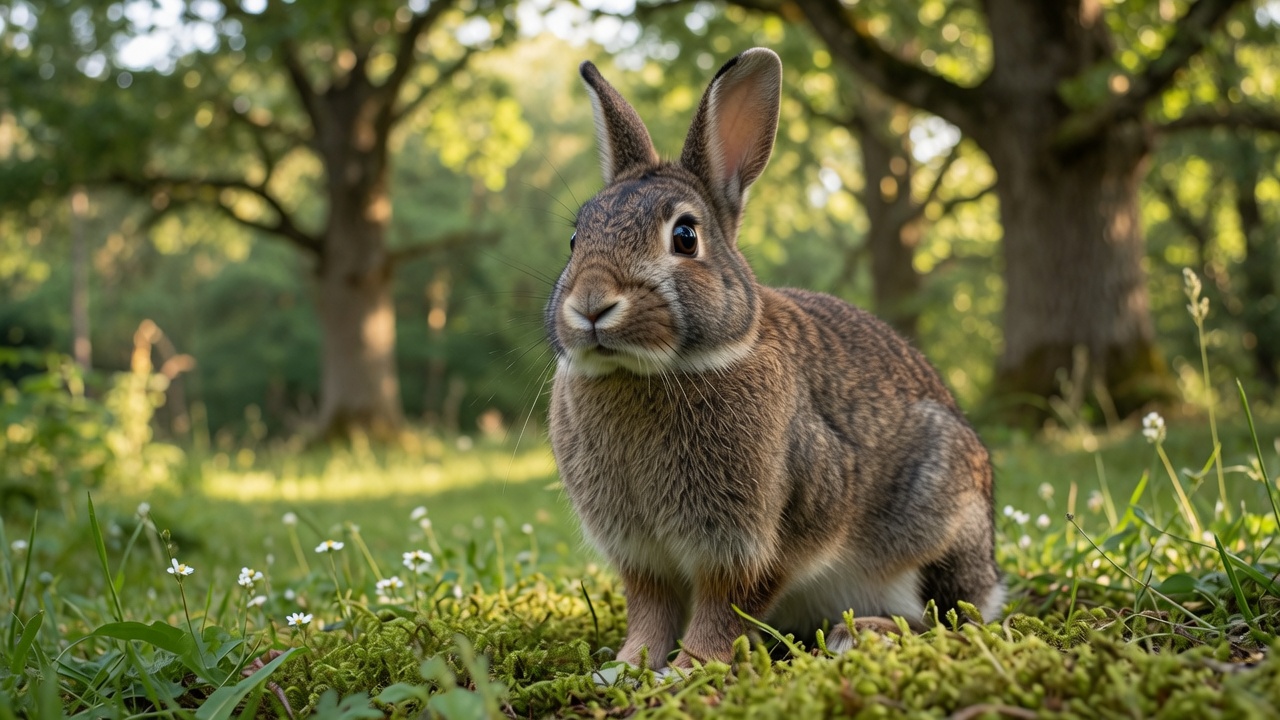
The European rabbit is the ancestor of all domestic rabbit breeds - over 300 recognized worldwide. Originally native to the Iberian Peninsula, they were spread across Europe by the Romans and introduced globally by colonizers, becoming one of the world's most ecologically impactful invasive species in places like Australia. In the wild they live in large, complex underground warrens with strict social hierarchies.
📋 Quick Facts
Native Range
Iberian Peninsula (Spain, Portugal); domesticated globally
Natural Habitat
Grassland, meadow, farmland, and forest edge
Adult Size
Highly variable; 2.5-20+ lbs depending on breed
Wild Diet
Grasses, hay, herbs, root vegetables, and bark
Wild Lifespan
1-2 years (wild); 8-12 years indoors as a pet, some to 14 or beyond
Conservation Status
Endangered (wild European rabbit, IUCN)
📜 History
For decades the textbook account had rabbits domesticated at a stroke around 600 AD, when Pope Gregory the Great supposedly ruled that newborn rabbits counted as fish and could be eaten during Lent, sending French monks to breed them behind monastery walls. Asked to find the decree so it could be set against genetic data, the Oxford graduate student Evan Irving-Pease discovered that no such ruling exists. The story traces instead to a passage written in 584 AD by Gregory of Tours about a man who ate young rabbits during Lent, misread by scholars in the mid-twentieth century. Irving-Pease and Greger Larson published the correction in Trends in Ecology and Evolution in 2018, arguing that domestication is a long process with no single starting point.
⚖️ Compare
Rabbit
Human
Adult Size
Highly variable; 2.5-20+ lbs depending on breed
5-6 feet (150-185 cm); ~135-200 lbs
Wild Lifespan
1-2 years (wild); 8-12 years indoors as a pet, some to 14 or beyond
~73 years (global average)
Wild Diet
Grasses, hay, herbs, root vegetables, and bark
Omnivorous - eats just about anything
Native Range
Iberian Peninsula (Spain, Portugal); domesticated globally
Global - originated in Africa roughly 300,000 years ago
Natural Habitat
Grassland, meadow, farmland, and forest edge
Everywhere from arctic tundra to tropical megacities
Conservation Status
Endangered (wild European rabbit, IUCN)
Least Concern (8+ billion and counting)
🧠 Test Yourself
What's the Rabbit's native range?
🤩 Fun Facts
🐰 Purring Bunnies
Rabbits purr when they're happy! Unlike cats, they do it by softly grinding their teeth together. They also do 'binkies' (joyful leaps and twists in the air) when they're feeling playful.
🐰 Rabbits Need Exercise
Rabbits are not low-maintenance pets. They need at least 3 hours of exercise outside their enclosure every day to stay healthy and mentally stimulated.
📖 Care Guide
Rabbit Care Guide
The gentle, litter-trainable companion that loves to binky!
⚖️ Where it is legal
2 US jurisdictions restrict this species, from outright bans to permits. Every one quotes the rule it comes from.
Subscribe - it's free
New animal facts and care guides straight to your inbox. No spam. 🐾
📰 Deep Dive
🐰 How Much Does a Rabbit Really Cost?
🐰 How to Handle a Rabbit Without Hurting It
🐰 Common Rabbit Health Issues and Why You Need the Right Vet
🐰 Rabbit Housing: Why the Old Pet-Store Cage Isn't Enough
🐰 Rabbit Feeding: Schedule, Diet, and Why They Stop Eating
🐰 Rabbit Enrichment: A Companion Beats Everything Else You Could Buy
🩺 Health and More
💊 Antibiotic-Associated Enterotoxemia: The Small Mammal Danger to Raise Before Any Antibiotic
🌡️ Heat Stress and Cold in Small Mammals: Temperature Ranges and Emergency Signs
🩺 Getting a Small Mammal to the Vet: Carriers, Car Travel, and Anesthesia
✂️ Grooming, Nails, and Molting in Small Mammals
📏 Rabbit and Budgie: Two Classic Pets, Almost Always Kept Too Small
🤓 Did You Know?
Rabbits can jump up to 4 feet high and run up to 25 mph. They're surprisingly athletic!
Explore More