Lovebird
Agapornis spp.
On This Page▾
🌍 Overview
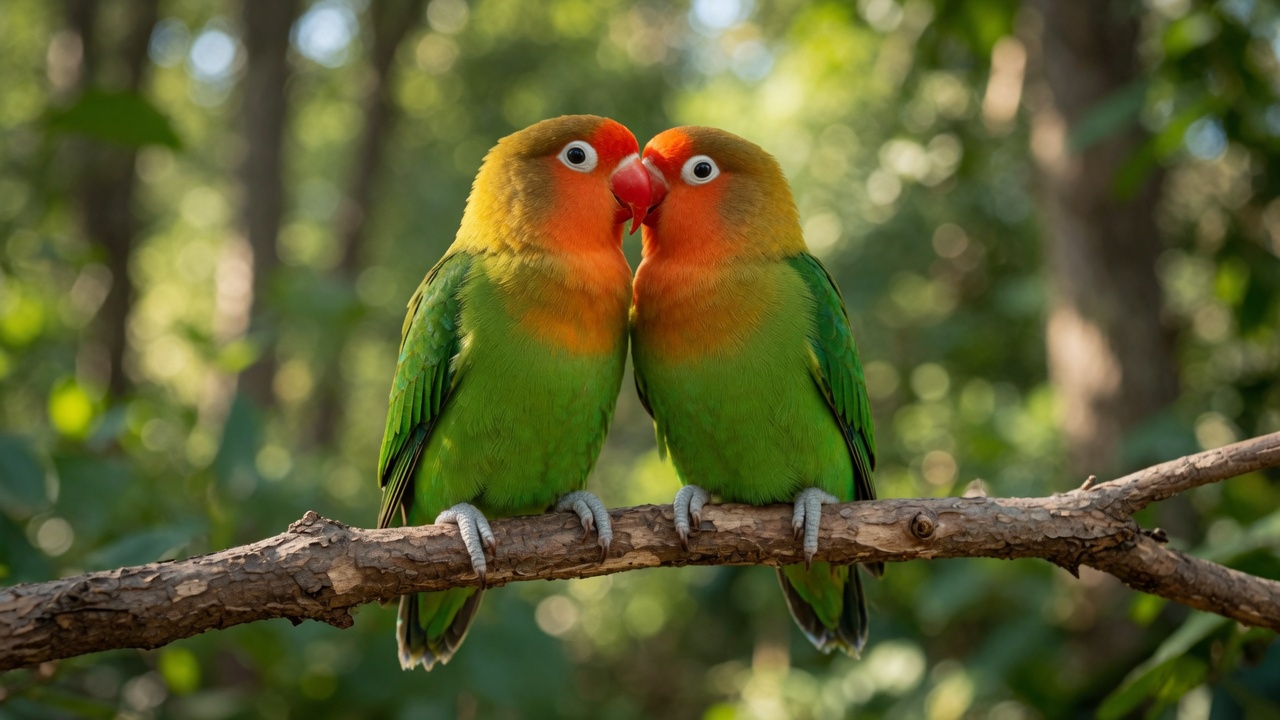
Lovebirds are a genus of nine small parrot species native to Africa and Madagascar. Their name comes from the strong pair bonds they form - bonded pairs spend hours preening each other and sitting pressed together. In captivity, a single lovebird deprived of a companion will often direct all its attachment behavior toward its human keeper - requiring significant daily interaction to thrive emotionally and prevent behavioral problems.
📋 Quick Facts
Native Range
Africa and Madagascar
Natural Habitat
Savanna, open woodland, and forest edge
Adult Size
5-6.5 inches (13-17 cm); 1.5-2 oz
Wild Diet
Seeds, grains, berries, grasses, and some insects
Wild Lifespan
Not known in the wild, though likely shorter than in captivity; typically 10 to 15 years in captivity, with a maximum around 20
Conservation Status
Most species Least Concern; Fischer's Lovebird Near Threatened (IUCN)
📜 History
Louis Pierre Vieillot described the rosy-faced lovebird in 1818, and Anton Reichenow named Fischer's lovebird in 1887 for Gustav Fischer, a German explorer of East Africa. Wild trapping supplied the trade for most of the century that followed, and it cost the birds heavily: collectors worked the black-cheeked lovebird so hard in the 1920s that it is listed as Vulnerable today across its small Zambian range. Fischer's lovebird went out of Tanzania in such volume that the country suspended export licenses in 1992. Captive stock had by then set off on its own line, with a blue Fischer's first bred by R. Horsham in South Africa in 1957.
⚖️ Compare
Lovebird
Human
Adult Size
5-6.5 inches (13-17 cm); 1.5-2 oz
5-6 feet (150-185 cm); ~135-200 lbs
Wild Lifespan
Not known in the wild, though likely shorter than in captivity; typically 10 to 15 years in captivity, with a maximum around 20
~73 years (global average)
Wild Diet
Seeds, grains, berries, grasses, and some insects
Omnivorous - eats just about anything
Native Range
Africa and Madagascar
Global - originated in Africa roughly 300,000 years ago
Natural Habitat
Savanna, open woodland, and forest edge
Everywhere from arctic tundra to tropical megacities
Conservation Status
Most species Least Concern; Fischer's Lovebird Near Threatened (IUCN)
Least Concern (8+ billion and counting)
🧠 Test Yourself
What's the Lovebird's native range?
⚖️ Legal Guide
Subscribe - it's free
New animal facts and care guides straight to your inbox. No spam. 🐾
📰 Deep Dive
❤️ How Much Does a Lovebird Really Cost?
❤️ How to Handle a Lovebird (And Why the Name Is Misleading)
❤️ Common Lovebird Health Issues and What Causes Them
❤️ Lovebird Cage Setup: What Your Bird Actually Needs
🦜 Lovebird Feeding: Calcium, Vitamin A, and the Hen That Keeps Laying
❤️ Lovebird Enrichment: Foraging, Toys, and What Cuts Boredom
🩺 Health and More
⚠️ Household Hazards for Pet Birds: The Complete Safety Checklist
🦠 Avian Gastric Yeast (Megabacteriosis): The Silent Weight-Loss Disease
🚪 Quarantining a New Bird: The Real Timeline and Why It Matters
💩 Reading Bird Droppings: The Daily Health Check Every Owner Should Know
🌙 Photoperiod and Sleep: The Light Schedule That Controls Your Bird's Hormones
🦜 Converting a Seed-Eating Bird to Pellets Without Starving It
✂️ Wing Clipping: Flighted vs. Clipped, Both Sides Explained
🔦 Bird Emergency Plan: Power Outages, Travel, and Transport
⚖️ Sexing, Weight, and Body Condition in Pet Birds: What Actually Works
🥚 Chronic Egg Laying and Egg Binding in Budgies, Cockatiels, and Lovebirds
🪶 Why Is My Bird Losing Feathers? Molt vs. Plucking vs. PBFD vs. Giardia
🦜 Choosing a Pet Bird: What You're Actually Signing Up For
🦠 Avian Polyomavirus: Budgerigar Fledgling Disease and French Molt
🦜 Reading Bird Body Language: Fluffed Content vs. Fluffed Sick
🐦 Colony and Aviary Keeping: Budgies, Canaries, and Finches in Groups
🌫️ Feather Dust, Air Quality, and Bird Fancier's Lung
🎯 Parrot Training: The Behavior Ladder From Budgie to Macaw
🩹 Bird First Aid Kit and Grooming: Nails, Beak, and Blood Feathers
📋 Succession Planning for a Pet That May Outlive You
🕊️ Adopting a Rescue Parrot: The First Months, Honestly
🧭 Four Pets Decided Before You Ever Set Up the Tank
🦜 Lovebird vs. Budgie: Which Small Parrot Actually Fits Your Household
🦅 The Ultimate Birdwatching Guide: Best Places, Times, and Tips for Beginners (2026)
🤓 Did You Know?
Lovebirds mate for life in the wild and are famous for their strong pair bonds. They even feed each other and sit side-by-side for hours! This is where they got their name.
Explore More