Hedgehog
Atelerix albiventris
Beastly Facts · Updated
On This Page▾

Overview
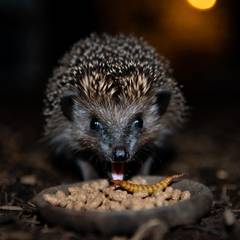
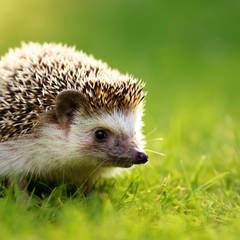
The African pygmy hedgehog - the species most commonly kept as a pet - is native to the arid savanna and grassland of central Africa. Wild hedgehogs are solitary, nocturnal insectivores that travel several miles each night in search of food. When threatened, they curl into a tight ball of interlocking spines that effectively deters most predators. Their spines are not barbed or poisonous - they are hollow, hardened hairs.
Quick Facts
Native Range
Central Africa (Senegal to Tanzania)
Natural Habitat
Savanna, grassland, and dry woodland
Adult Size
5-9 inches (13-23 cm); 8-24 oz
Wild Diet
Insects, worms, snails, small vertebrates, eggs, and some plant matter
Wild Lifespan
About 2 to 3 years in the wild; 3 to 6 is typical in captivity, with some individuals reaching 8 to 10
Conservation Status
Least Concern (IUCN)
History
Hedgehog keeping took hold in the United States in the early 1980s, and the pet is probably not a pure Atelerix albiventris: it appears to descend from hybrids with the North African hedgehog, Atelerix algirus. The supply line closed almost as fast as it opened. Because African hedgehogs can carry foot-and-mouth disease, the USDA banned importing them from Africa in 1991, so every pet hedgehog in the country now comes from captive stock, and ownership remains illegal in several states. Public health agencies have watched them since: a Salmonella Typhimurium outbreak traced to pet hedgehogs sickened 54 people across 23 states between October 2018 and August 2019, hospitalizing eight.
Compare
Hedgehog
Human
Adult Size
5-9 inches (13-23 cm); 8-24 oz
5-6 feet (150-185 cm); ~135-200 lbs
Wild Lifespan
About 2 to 3 years in the wild; 3 to 6 is typical in captivity, with some individuals reaching 8 to 10
~73 years (global average)
Wild Diet
Insects, worms, snails, small vertebrates, eggs, and some plant matter
Omnivorous - eats just about anything
Native Range
Central Africa (Senegal to Tanzania)
Global - originated in Africa roughly 300,000 years ago
Natural Habitat
Savanna, grassland, and dry woodland
Everywhere from arctic tundra to tropical megacities
Conservation Status
Least Concern (IUCN)
Least Concern (8+ billion and counting)
Test Yourself
What's the Hedgehog's native range?
Fun Facts
🦔 Spiny Situation
Hedgehogs have between 5,000 and 7,000 spines on their back! Old spines fall out over time and new ones grow in to replace them, just like our hair. Baby hedgehogs are born with their spines just below the skin.
🦔 Panic Pincushions
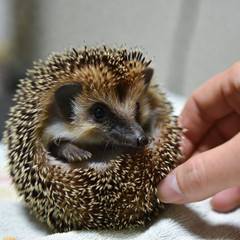
A hedgehog curled into a ball isn't asking for cuddles, it's on high alert. When threatened, it raises its quills in a crisscross pattern, then uses belly muscles, back muscles and extra skin to tuck in its head, legs and tail. The result is a ball of spikes predators struggle to open. No Sonic rolling, though!
Care Guide
Hedgehog Care Guide
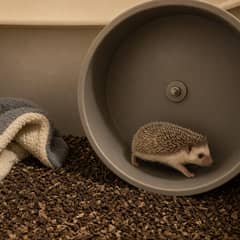
The spiky little explorer that runs on a wheel all night!
Where it is legal
9 US jurisdictions restrict this species, from outright bans to permits. Every one quotes the rule it comes from.
Subscribe - it's free
New animal facts and care guides straight to your inbox. No spam.
Deep Dive
Health and More



Did You Know?
When threatened, hedgehogs roll into a tight ball and can make a variety of cute snuffling and hissing sounds. They're surprisingly vocal!
Explore More