Chronicles of Otis the Bunny: The Bark, the Gap, and the Matter of Proportion (Part 3)
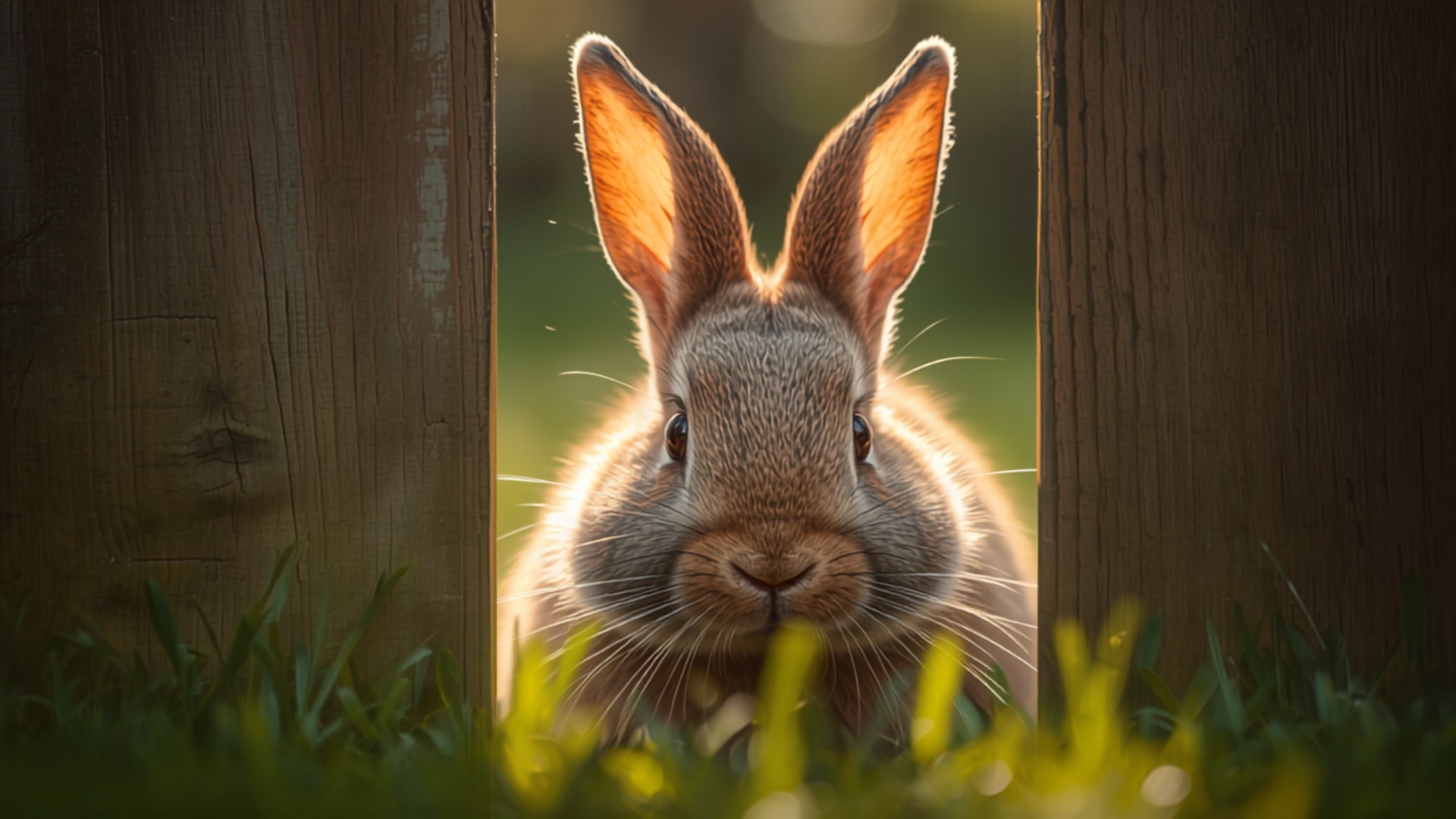
The bark came again at the same hour it always came, low and pitiless and entirely unconcerned with whether he existed, and it took Otis eleven days of careful cataloguing to admit that a sound could feel, in its own particular way, exactly like being ignored.
For eleven days, which Otis did not so much count as accumulate, the way he accumulated grievances and stray lettuce leaves and the general sense that the garden owed him something, the sound had arrived at roughly the same hour each afternoon: three sharp notes, a pause, three more, coming from somewhere past the fence line where the good clover grew and where, as of the previous week, he had stopped being able to pretend the world simply ended. He had at first mistaken it for weather, the way he mistook most things he could not immediately categorize, then for the vacuum cleaner operating under some new and troubling jurisdiction, and then, on the fourth day, for something worse: another animal, of unknown size and clearly substantial confidence, staking a claim of its own in a language he did not speak but understood completely, because it was the same language he used himself, thumping his single sharp warning against the packed dirt of the flower bed.
He began, without quite admitting to himself that this was what he was doing, a survey of the fence. It was, he decided, overdue work for a creature of his standing, the sort of due diligence that ought to have been performed on his very first afternoon out here rather than delayed a full season by lettuce, hydrangea shade, and the low-grade satisfaction of controlling three feet of the best clover in the yard. There were, he catalogued over the course of several afternoons and one entire evening his leash did not remotely restrict him from using to its fullest, six boards with gaps worth examining, two knots gone soft and dark with age that might, with sufficient nose pressure, be persuaded into windows, and one low spot beneath the gate where the wood had warped just enough to admit a thin blade of light and, some days, the very edge of a smell he could not place. He tried each in turn, ears flat, breath held in the particular way that meant business, and found in each only more fence, more grass, more of the same green world folding itself uselessly away from him.
In the absence of an actual look, he built one. By the second week the sound had acquired, in the private cartography of his mind, an entire biography: a hound of considerable size, he decided, easily twice the dimensions of the ottoman in the front room, patrolling a rival garden of its own devising, possibly with its own lettuce bed, possibly with a clover patch it defended with the same unreasonable conviction Otis brought to his, possibly, and this thought cost him an entire afternoon of stillness beneath the hydrangea, running the whole operation with a competence that made his own three feet of fence line look, by comparison, modest. He resented the hound before he had seen it. He resented its confidence, its rhythm, its apparent lack of curiosity about him, which struck him as the same unforgivable indifference the squirrel had shown weeks before, as though the entire world beyond the fence had collectively agreed not to notice him and had never once put it to a vote.
The knot beneath the lowest board finally gave, or rather softened enough on the twelfth day that a single determined push of his nose widened it into something he could actually use, and what he saw through it, after eleven days of biography and dread and mock-epic dimension, was a dog approximately the size of a loaf of bread, gray about the muzzle, sound asleep on a porch cushion three yards distant, who woke only to bark twice at a leaf skating across the paving stones before settling back down with the profound unconcern of a creature who had never in its life needed to defend anything, because nothing had ever seriously threatened to take it. It did not look toward the fence. It did not know the fence, or the hydrangea, or the clover, or Otis, existed at all. It barked at leaves and slept in patches of sun and was, as far as Otis could tell in the three minutes he watched before his neck cramped, entirely and placidly satisfied with a kingdom that appeared to consist of one cushion.
Katie found him that evening with his nose still pressed to the gap, one back foot thumping out a rhythm that had nothing left to warn and nowhere left to send it. "Whatever's over there," she said, crouching down and scratching behind one considerably flattened ear, "I hope it was worth the wait." Otis did not answer, on account of being a rabbit, but he filed the whole business away in the part of his mind reserved for facts that had turned out smaller than promised, and hopped back toward the hydrangea turning over a thought that had not occurred to him before that afternoon, that beyond the fence might not be a bigger place at all, only more of this same one, scaled down to the size of a bread loaf and a cushion and an old dog's small, sunlit concerns, and that the only way to know what else was out there, thumping and barking and guarding its own three feet of something, was to keep listening for the next sound and go looking for the gap it came through.
Otis is a rabbit. If you keep one, our rabbit care guide covers housing, diet and the hay that has to be unlimited.