International Snow Leopard Day Was Signed Into Being by Twelve Governments
On This Page▾

A snow leopard cannot roar. It is a big cat by any reasonable measure, with a range covering more than two million square kilometers of mountains across Central and South Asia, and in place of a roar it makes a soft, non-aggressive puff of breath called a chuff.
It purrs, mews, hisses, growls, moans and yowls the way other large cats do. The roar is missing because of how its throat is built. Every other sound a large cat makes is there, and the one most people would name first is not.
A Cat Built for Being Alone
Snow leopards live at low density over enormous ground. Some hold home ranges of up to 1,000 square kilometers, and the prey that supports them is scattered across cliffs and high pasture: ibex, argali and blue sheep, all of them fast on broken terrain.
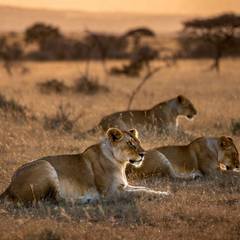
A female raises her cubs alone for about 18 months. Nothing about that is unusual for a cat. Solitary living is the rule across the family, and the one species that broke it is the lion, whose pride is built around related females who stay together for life. The snow leopard sits at the opposite extreme from the lion on almost every axis: a silent, solitary hunter of steep ground against a loud, social one of open plains.
That spacing is also why snow leopards are so hard to count, which matters later.
Twelve Governments and One Date
Most animal days start small. International Sloth Day came from a Colombian wildlife foundation, World Octopus Day from members of an online forum, and International Wombat Day from nobody anyone can name. International Snow Leopard Day is written into an intergovernmental text.
On 22 and 23 October 2013, leaders from the governments of Afghanistan, Bhutan, China, India, Kazakhstan, Kyrgyzstan, Mongolia, Nepal, Pakistan, Russia, Tajikistan and Uzbekistan met in Bishkek, Kyrgyzstan, at the Global Snow Leopard Conservation Forum. Those twelve countries make up the cat's entire range, and the declaration they adopted calls them the custodians of the world's snow leopards.
The Bishkek Declaration lists commitments: map the key populations, protect critical habitat from destructive land use, involve the herding communities who share the mountains, and stop poaching and the illegal trade. The last commitment is to communicate the value of the animal, and to sustain that effort "by celebrating October 23 each year as the International Snow Leopard Day," with an annual International Snow Leopard Conservation Award, and 2015 named as the International Year of the Snow Leopard.
The declaration also makes the case for why governments would bother. It notes that the mountain ecosystems snow leopards inhabit store and release the water feeding river systems that benefit one third of the world's human population. The cat is the symbol. The watershed is the interest.
Vulnerable Is Still a Risk Category
In 2017 the IUCN moved the snow leopard from Endangered to Vulnerable. Vulnerable sounds like good news, and it was partly that, but the move came from a reassessment of the data against fixed thresholds. No count had found more cats than before.
To stay Endangered, the species would have needed fewer than 2,500 mature adults and an ongoing decline of 20% over 16 years. The assessment team found it met neither condition. It worked from the lowest widely accepted global estimate, 4,000 animals, and it still found the population declining, only more slowly than previously thought. Vulnerable is defined as facing a high risk of extinction in the wild.
The numbers behind that call are thin. Earlier global estimates were, in the words of David Mallon and Rodney Jackson writing in Oryx the same year, "based on little more than guesstimates". Published ranges have run from 3,350 to 4,050 at the low end to 4,500 to 7,500 at the high end, and the newer figures are higher mainly because more studies covered more habitat with better methods. Only about 2% of the range had been adequately surveyed at the time of the assessment. Current estimates put the wild population somewhere between about 3,920 and 6,390.
Mallon and Jackson titled their paper "A downlist is not a demotion", and their argument is in that phrase. Some opponents of the change said it was the wrong time and would send the wrong message, and some donors restrict funding to the highest Red List categories. The authors' reply is that a lower category "does not in any way imply that a weakening of conservation or research efforts is warranted." The threats have not moved: conflict with herders whose livestock the cats take, habitat loss and fragmentation, and poaching for the illegal wildlife trade.
A wild population in the low thousands puts the snow leopard in the same bracket as the tiger, spread over country far harder to survey.
That is where the Bishkek Declaration and the Red List meet. The declaration's first commitment was to map the key populations, and the downlisting was decided while only about 2% of the range had been adequately surveyed. Vulnerable is a verdict on thin data about a cat that is still declining, and the next reassessment will only be as good as the counting done before it.
Sources & Further Reading
Last reviewed 20 Oct 2026 · 5 sources
- Mallon, D. P. and Jackson, R. M., "A downlist is not a demotion: Red List status and reality", Oryx 51(4):605-609 (2017), doi:10.1017/S0030605317000606
- The Bishkek Declaration on the Conservation of Snow Leopards, Global Snow Leopard and Ecosystem Protection Program (2013)
- Cave, A. and Weller Sheppard, S., "The Snow Leopard's Shift from Endangered to Vulnerable: Explained", Panthera (2017)
- Key Snow Leopard Facts, Snow Leopard Trust
- Snow Leopard Behavior, Snow Leopard Trust
Frequently Asked Questions
When is International Snow Leopard Day?
23 October, every year. The date is the second day of the 2013 forum in Kyrgyzstan where the range countries adopted the Bishkek Declaration, and that document fixes it as an annual observance.
Who created International Snow Leopard Day?
The governments of the twelve countries where snow leopards live: Afghanistan, Bhutan, China, India, Kazakhstan, Kyrgyzstan, Mongolia, Nepal, Pakistan, Russia, Tajikistan and Uzbekistan. They wrote it into the Bishkek Declaration alongside an annual conservation award.
Can snow leopards roar?
No. They purr, hiss, growl, moan and yowl like other large cats, but the anatomy of the throat rules out a roar. Its friendly call is a soft puff of breath known as a chuff.
How many snow leopards are left in the wild?
Estimates run from about 3,920 to 6,390 animals. The figure is uncertain because so little of the mountain range has been surveyed with reliable methods, and the IUCN lists the species as Vulnerable.
Written by Michael Ryan
Mike keeps two rescued bearded dragons, Dex and Cera, and writes the care guides on BeastlyFacts from his own research and mistakes. He is not a veterinarian.
More about Michael Ryan →