Lions Are the Only Cat That Lives in Groups, and the Pride Belongs to the Females
On This Page▾

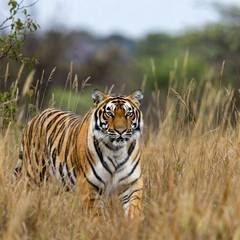
There are around forty species of cat and thirty nine of them live alone. Tigers are solitary. Leopards are solitary. Jaguars, cougars, lynx, ocelots, the lot of them meet to mate and otherwise keep their distance.
Lions are the exception, and they are not a marginal exception. They live in permanent, structured groups with membership that lasts for years. Working out why has taken several decades of fieldwork, and the answer turned out not to be the one everybody assumed.
The Pride Is Not the Male's
The popular version has a dominant male at the center with females attached to him. It is close to backwards.
A pride is built on a core of related females. Sisters, mothers, daughters, aunts, cousins. Female cubs generally stay in the pride they were born into for life, which means the same matriline can hold the same ground across generations. That female core is the permanent structure. It is what the pride actually is.
Males are not part of that lineage and do not stay. Young males are pushed out at around two to three years old and spend a stretch as nomads, usually with brothers or cousins. If a coalition can eventually take over a pride, it does so by driving out the resident males.
Then it loses the pride the same way. Male tenure typically runs a couple of years, sometimes a little more for a large coalition, before a stronger group arrives. A lioness may spend fifteen years in one pride. The males passing through it are temporary by design.
Takeovers are violent, and the violence extends to the cubs. Incoming males routinely kill cubs sired by their predecessors, which brings the females back into breeding condition sooner. It is grim and it is consistent, and it is one of the main pressures shaping everything else about how prides work, including the tendency of pride females to breed in synchrony and rear cubs communally, which makes any individual cub harder to isolate.
Cooperative Hunting Is Not Why
The obvious explanation for group living is hunting. More lions, bigger prey, more food each. It is the explanation almost everyone reaches for, and the numbers do not support it.
Craig Packer and Anne Pusey, working on the long-running Serengeti Lion Project, tested it directly. Per capita food intake does not reliably improve with group size. Solitary females and small groups often do about as well, sometimes better, because a kill divided among many is a smaller share each. Group hunting can raise success rates on large prey, but not enough to explain why lions became social when no other cat did.
What did track with group living was land. Specifically, the quality of the territory rather than its size.
The best territories in the Serengeti are river confluences: places where prey has to come to water and where cover for ambush is good. These spots are limited and worth a great deal, and holding one against neighbors takes numbers. A lone female cannot defend a confluence against a group. A group of related females can, and can pass it to their daughters.
That reframes the pride. It is less a hunting party than a land-holding company, and the thing being held is a piece of ground good enough to be worth fighting over.
Group living in lions is explained better by territory than by teamwork. The best hunting ground is scarce, holding it takes numbers, and a coalition of related females can keep it across generations in a way a solitary cat never could.
So What Are the Males Doing
Given all that, it is tempting to write males off as freeloaders that eat first and hunt rarely. Both of those are true and the conclusion still does not follow.
Resident males are the pride's defense against other males, and the threat they defend against is the one that kills cubs. A coalition holding a pride is doing the job that keeps the current generation of cubs alive long enough to grow. From the females' side that is not a small contribution, and it is a job the females cannot do themselves against incoming males who are half again their weight.
The mane appears to be tied up in this. Peyton West and Craig Packer used life-sized dummy lions with manes varied in length and color and found the response was not random. Darker manes drew more caution from males and more interest from females, and darker maned individuals in the wild tended to be in better condition. The mane appears to work as an honest and quite expensive advertisement of how much of a fight a challenger would be taking on.
The Part That Has Not Aged Well
The alpha framing gets applied to lions constantly, and it fits about as poorly here as it does with wolves. There is no single lion running a pride. There is a female lineage that owns the territory and a rotating set of males who hold a lease on it, defend it while they can, and are eventually removed.
The lion's own scientific name is a fair summary of how much attention the females historically got. Panthera leo means, roughly, the lion, which tells you nothing at all about the animals actually holding the ground.
The contrast is sharpest against the cat everyone assumes is similar. Tigers live alone, and there are now so few of them that the entire wild population would fit into one small town.
We keep a full profile in the Beastlypedia lion file.

Written by Michael Ryan
Mike keeps two rescued bearded dragons, Dex and Cera, and writes the care guides on BeastlyFacts from his own research and mistakes. He is not a veterinarian.
More about Michael Ryan →Comments
No comments yet - be the first!