10 Surprising Humpback Whale Facts

Humpback whales are famous for their beautiful songs and dramatic breaches, but they have many other surprising behaviors and abilities. Here are ten facts that show why these gentle giants continue to amaze researchers and whale watchers.
-
Their songs can travel for miles. Male humpbacks sing complex, evolving songs that can be heard across entire ocean basins. The songs change every year and spread between populations as learned culture. Over an 11-year study in the South Pacific, new song types repeatedly rippled eastward through the populations of the western and central South Pacific, the first time repeated cultural change had been documented across so many populations at once.
-
They hunt using bubble nets. Groups of humpbacks work together to blow bubbles in a circle, trapping fish inside. They then swim upward with mouths open to gulp huge amounts of prey at once. It’s impressive teamwork.
-
They migrate incredibly long distances. Many humpbacks travel over 5,000 miles each year between cold feeding waters and warm breeding areas. They make this journey while living mostly off stored body fat. Not every whale trades cold for warm, though, and the narwhals of the Arctic shift between summer fjords and deep winter water without ever leaving the ice behind.
-
Every tail pattern is unique. The black and white markings on the underside of a humpback’s tail flukes are completely individual, like fingerprints. Researchers use these patterns to identify and track specific whales for decades.
-
They love to breach. Humpbacks often leap dramatically out of the water and crash back down. Scientists aren’t completely sure why, but possible reasons include communication, removing parasites, or simply play.
-
Calves drink less milk than the internet claims. Figures of 100 gallons or more a day circulate widely, but estimates built from calf growth rates and activity put intake at 11 to 15 gallons of milk a day. The larger numbers would be impossible to sustain, because the mother is fasting: she gives birth to a calf of about 2,000 pounds and 13 to 16 feet after an 11-month pregnancy, then nurses it and guides it back to the feeding grounds without eating. Nursing looks wildly different elsewhere in the mammal world, though, and the platypus has no nipples at all, so its young lap milk straight off patches of skin on the mother’s belly.
-
Their pectoral fins are massive. A humpback’s front flippers can be up to one-third of its total body length. They use them for steering, slapping the water, and herding fish during feeding.
-
They can be surprisingly playful with boats. Humpbacks sometimes approach vessels, spy-hop to look around, or gently interact with kayakers. While they should always be observed from a safe distance, they often seem curious.
-
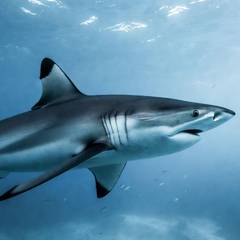
They nearly went extinct. Heavy whaling in the 20th century brought humpback populations to the brink. Thanks to international protection, many populations have made a strong recovery in recent decades. Of the 14 distinct population segments recognized worldwide, four are still listed as endangered and one as threatened. A humpback can live about 80 to 90 years and reach roughly 60 feet and 40 tons. Not every large ocean animal has been so fortunate, and many of the sharks in mind-blowing shark facts are still losing ground to overfishing and the fin trade.
-
They can communicate across vast distances. Their calls and songs can travel hundreds or even thousands of miles underwater under the right conditions. It’s like having a natural long-distance communication system.
Some humpback groups have been using the same bubble-net feeding technique for generations. It’s a learned skill passed down through family lines.
Bubble-net hunting is the one I'd genuinely want to see in person someday. What surprised you most? Say so in the comments.
Sources

Written by Michael Ryan
Mike keeps two rescued bearded dragons, Dex and Cera, and writes the care guides on BeastlyFacts from his own research and mistakes. He is not a veterinarian.
More about Michael Ryan →