Beastfile · Birds
Wild Turkey
Meleagris gallopavo
A forest bird that weighs up to 25 pounds, flies at an estimated 40 to 55 mph and sleeps in the treetops.
On This Page▾
Overview
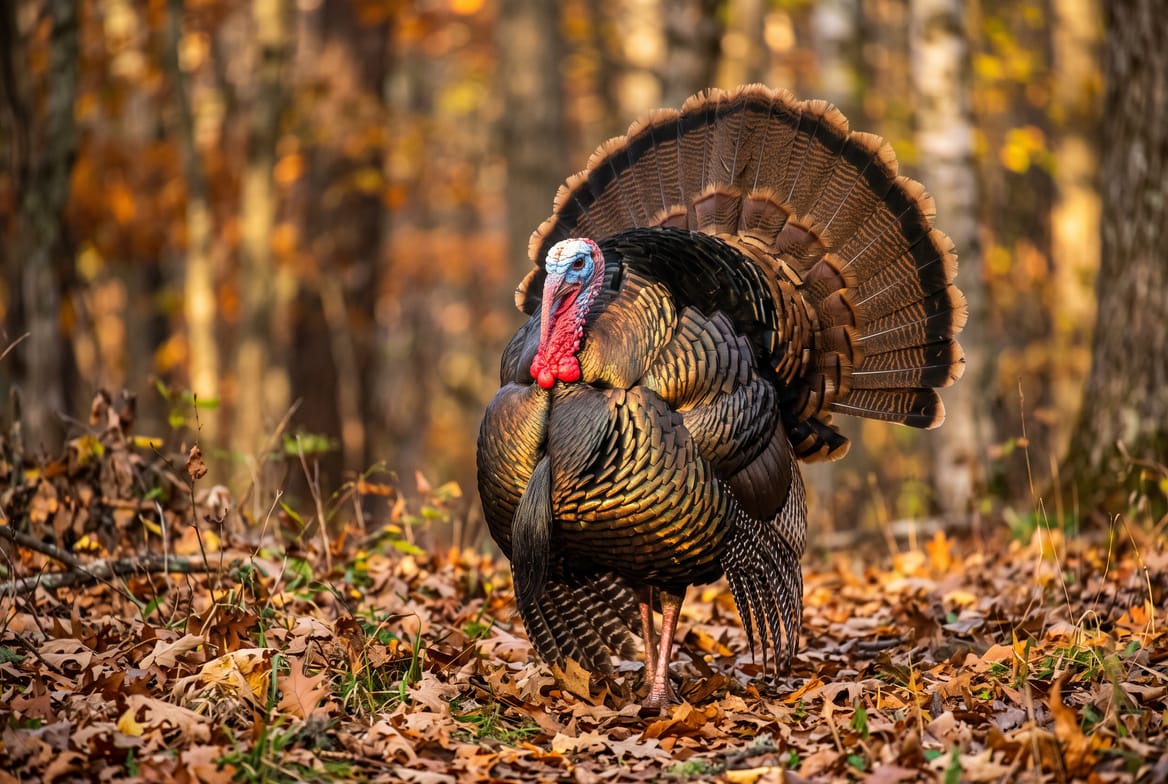
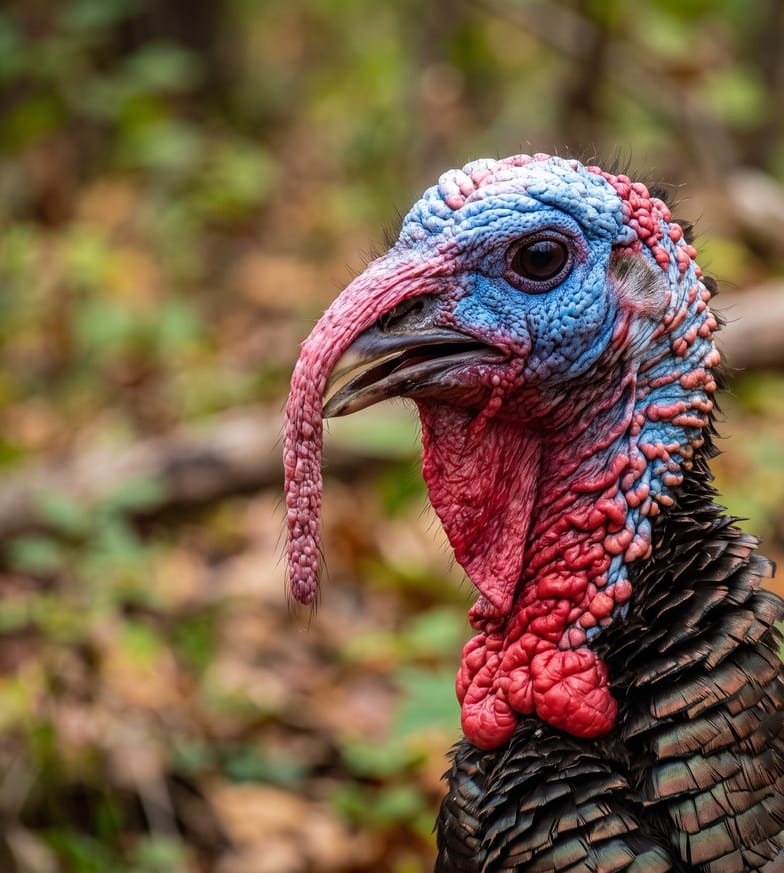
The wild turkey is a large forest bird native only to North America. A gobbler stands 2.5 to 3 feet tall and weighs up to 25 pounds, yet the species is estimated to fly at 40 to 55 mph and can stay in the air for more than a mile. Every evening the flock flies up into the trees to roost, sometimes 6 to 40 birds in one tree or a few neighboring ones, and glides back down in the early morning. In spring the gobble carries more than a mile, calling in hens and announcing territory, while the fleshy snood between the gobbler's eyes swells and lengthens and his head shifts through red, blue, purple and white. Long before Europeans arrived, people domesticated this bird, and ancient DNA points to at least two separate efforts: one in south-central Mexico and one in the American Southwest.
Origin
Native only to North America. It lives throughout most of the eastern United States and in pockets across the West, in hardwood and mixed conifer-hardwood forest broken up by openings, and does best where woods, working farms and fields growing back into forest meet. It has also been introduced to Germany and New Zealand.
Habitat
ForestNotable Traits
- •Flies at an estimated 40 to 55 mph
- •Roosts in trees every night, often many birds to one tree
- •A gobble that can be heard more than a mile away
- •A fleshy snood that swells during courtship, and red wattles in spring
- •Poults can roost in trees from about 10 days to 2 weeks old
Conservation
Least Concern, and a comeback story. Hunting and the clearing of forests eliminated the bird from Connecticut by the early 1800s, Pennsylvania held an estimated 3,500 to 5,000 birds in 1900, and by the 1930s wild turkeys had disappeared from at least 20 states. More than 200,000 game-farm turkeys released in Pennsylvania between 1930 and 1980 proved nearly useless, so state wildlife agencies switched to catching wild birds with rocket and cannon nets and moving them to empty range, while abandoned farms grew back into turkey habitat. Pennsylvania's trap-and-transfer program became a model for every state, and today turkeys live in every Pennsylvania county and all 169 towns in Connecticut. Pennsylvania alone held about 159,000 wild turkeys as of 2021.
Fun Facts
Related Files
More Beastfiles
Birds
Victoria Crowned Pigeon
A turkey-sized pigeon wearing a crown of lace.

Birds
Emperor Penguin
Penguins do not mate for life, and the huddle is a moving machine.
Birds
Crow
It remembers your face, holds a grudge, and tells other crows about you.
Birds
Shima Enaga
A wild bird so round and white it gets mistaken for a plush toy.