Beastfile · Mammals
Narwhal
Monodon monoceros
Also known as Unicorn of the Sea
An Arctic whale whose tusk is really a tooth grown through its lip.
On This Page▾
Overview
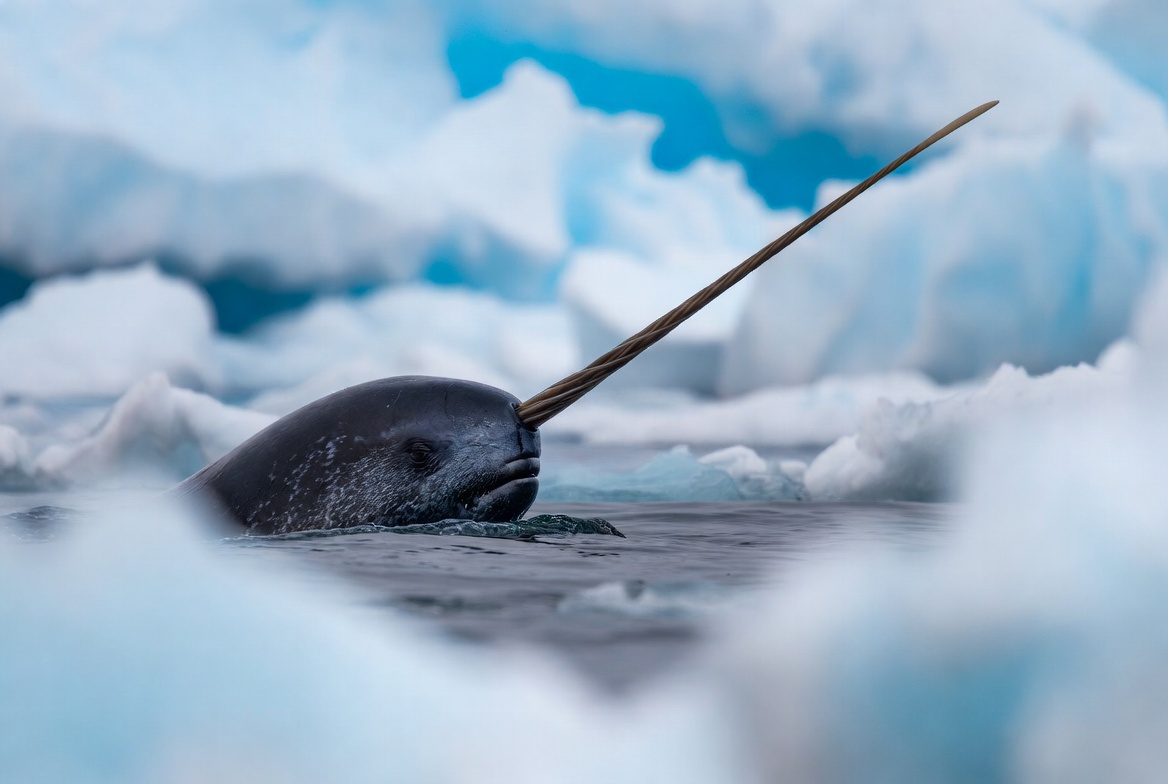
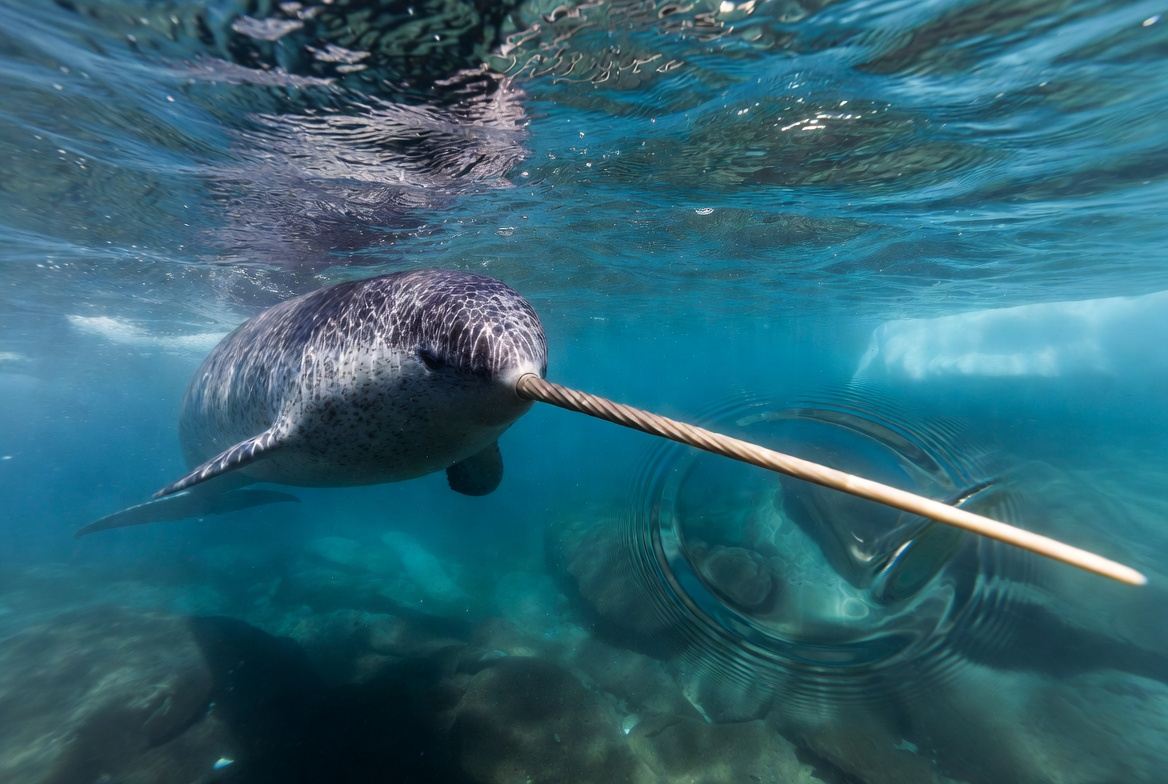
The narwhal is a medium-sized whale of the high Arctic, and the tusk is the thing everyone knows about it. It is not a horn: it is a canine tooth, almost always the left one, that grows straight through the upper lip and can pass three meters. It spirals, always counter-clockwise. Mostly males carry one. The tusk is dense with nerve endings, which has led to the idea that it works as a sensor sampling the water, though narwhals have also been filmed using it to stun fish. They dive extremely deep beneath sea ice and spend their entire lives in Arctic water.
Origin
The Arctic waters of Canada, Greenland, Norway and Russia, following seasonal sea ice and wintering in deep, densely iced offshore areas.
Habitat
ArcticNotable Traits
- •The tusk is an elongated left canine tooth, not a horn
- •It always spirals counter-clockwise
- •Dives beyond 1,500 meters, among the deepest of any marine mammal
- •Has no dorsal fin, which suits life under sea ice
- •The tusk carries millions of nerve connections to its surface
Conservation
Least Concern overall, but narwhals are unusually exposed to a warming Arctic: they are tied to sea ice, they use a small number of wintering areas, and they are highly sensitive to underwater noise as shipping routes open.
🤯 Fun Facts
📁 Related Files
🐾 More Beastfiles
Mammals
Aye-Aye
A nocturnal lemur that hunts grubs by tapping on wood and listening.
Mammals
Giraffe
The famous oversized heart is a myth. What is actually going on is stranger.
Mammals
Slow Loris
The only venomous primate, and the reason is a gland in its elbow.
Mammals
African Elephant
Most of an elephant herd’s conversation happens below what you can hear.