Beastfile · Other
Leafcutter Ants
Atta and Acromyrmex
Also known as Leaf-Cutting Ants
Colonies of millions, with three worker sizes and nests that reach 3 to 6 meters deep.
On This Page▾
Overview
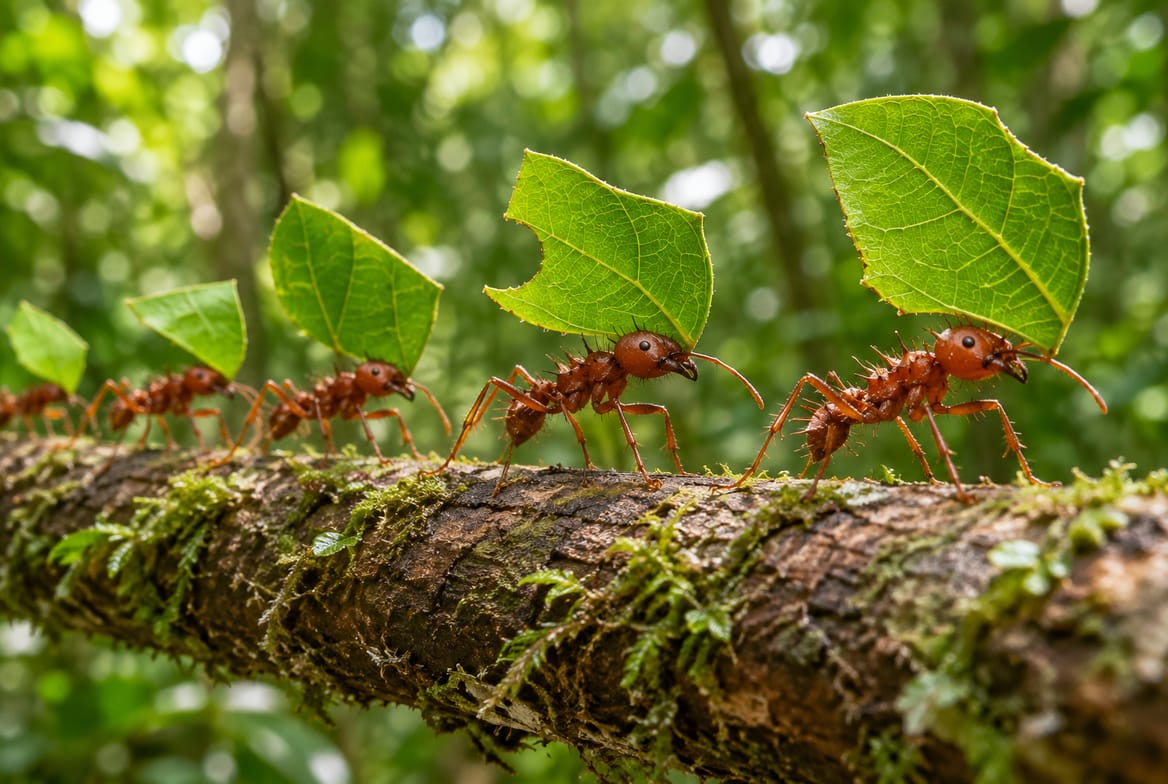
A leafcutter colony is a city. Nests hold millions of workers and young, and an Atta nest can run 3 to 6 meters deep with hundreds of fungus chambers. Workers come in three size groups: tiny minims tend the fungus and ride on leaves, medium workers cut and process the harvest, and large majors defend trails and carry big items. Foraging trails can pass 500 meters and stay in use for months or years. Fragments are cut to about 1 to 2 millimeters across for processing, pressed into pellets and fed to the fungus Leucoagaricus gongylophorus. One 6.5-year-old Atta sexdens colony had processed almost 6,000 kilograms of fresh vegetation.
Origin
The Neotropics, from warm-temperate South America through Central America to the southern United States, in rainforest, forest edges, farms and towns.
Habitat
RainforestNotable Traits
- •Three worker size groups: minims, medias and majors
- •Small workers ride on carried leaves
- •Foraging trails over 500 m, used for months or years
- •Nests hundreds of chambers and 3 to 6 m deep in Atta
- •Forage in surface temperatures from 17 to 45 degrees C
Conservation
About 40 species are described. Atta cephalotes, the best-known species, is listed as Not assessed by IUCN and called abundant and widespread. Leafcutters thrive in forest gaps and edges made by clearing, where one Brazilian study found colony densities about 11 times higher than in forest interiors, and many species are treated as agricultural and urban pests.
Fun Facts
Related Files

More Beastfiles

Other
Tardigrades
A half-millimeter animal with eight legs that turns up in moss, lakes and the deep sea.

Other
Dung Beetles
Only a minority roll the ball, but all of them are in a race against every other beetle at the pile.

Other
Western Honeybee
Famous as a hive animal, but wild colonies live in tree holes, chimneys and even old mailboxes.

Birds
Hummingbirds
The only birds that truly hover, found nowhere outside the Americas.