Beastfile · Other
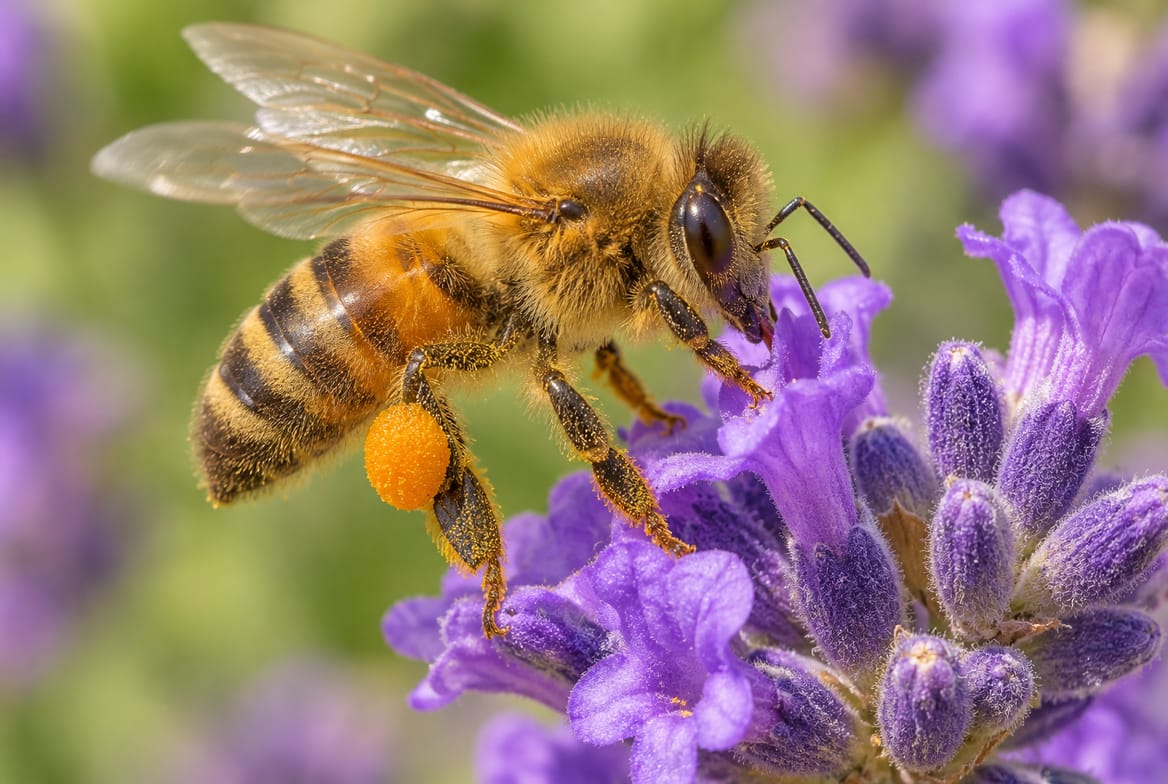
Western Honeybee
Apis mellifera
Also known as European Honey Bee
Famous as a hive animal, but wild colonies live in tree holes, chimneys and even old mailboxes.
On This Page▾
Overview
For years many researchers assumed wild honeybees had gone extinct in Europe, with no evidence either way. Then free-living colonies turned up in tree cavities, chimneys, castles, hollow statues and abandoned mailboxes, from Ireland to Serbia. The species is native to Europe, western Asia and Africa, and people carried it to every continent except Antarctica. A colony has one reproductive queen, who is 18 to 20 millimeters long, many sterile female workers of 10 to 15 millimeters, and drones that leave the hive to mate. Workers turn nectar into honey by passing it mouth to mouth and letting the water evaporate.
Origin
Native to Europe, western Asia and Africa, in meadows, open woodland and gardens, and now kept on every continent except Antarctica.
Habitat
MeadowsNotable Traits
- •One reproductive queen per colony, 18 to 20 mm long
- •Sterile female workers, 10 to 15 mm long, make up most of the colony
- •Drones, 15 to 17 mm long, leave the hive to mate
- •Nests in cavities such as hollow trees
- •Stores honey and pollen to get through winter
Conservation
The species as a whole has no special status on the IUCN Red List, which covers only wild populations. In 2014 wild honeybees were listed Data Deficient in Europe, and in 2025 reassessed wild populations in the EU were listed Endangered. Parasites, pests, predators, pathogens, pesticides and hybridization are named threats, and the Varroa mite is believed to have wiped out nearly all feral colonies in North America.
Fun Facts
More Beastfiles
Other
Dung Beetles
Only a minority roll the ball, but all of them are in a race against every other beetle at the pile.
Other
Tardigrades
A half-millimeter animal with eight legs that turns up in moss, lakes and the deep sea.
Mammals
Fennec Fox
The smallest fox alive, built almost entirely around its ears.
Mammals
Capybara
The largest rodent on Earth, and improbably calm about everything.