Milk Snake
Lampropeltis triangulum
On This Page▾
🌍 Overview
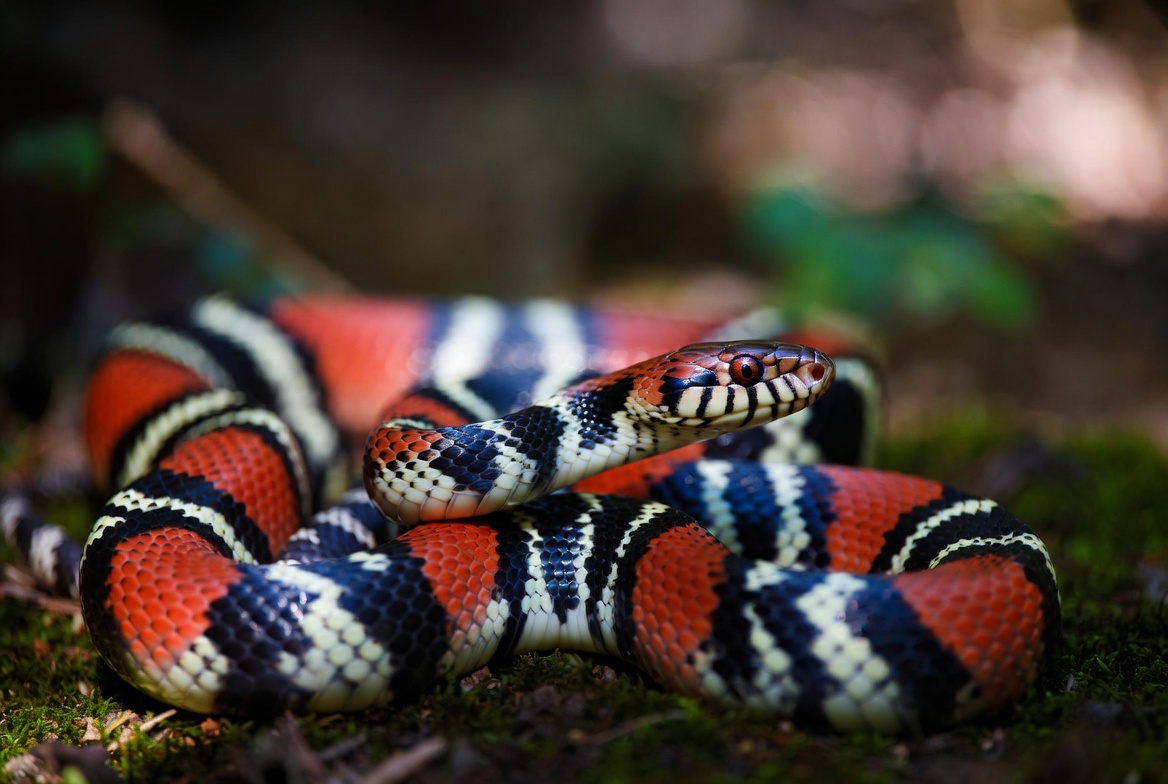
Milk snakes are a widely distributed kingsnake species found from Canada through Central America. Their name comes from the folk myth that they slipped into barns to drink cow's milk - unfounded, but barn-dwelling rodents are certainly part of their diet. Many subspecies display vivid red, black, and yellow/white banding that resembles the venomous coral snake, widely explained as Batesian mimicry.
📋 Quick Facts
Native Range
North and Central America (Canada to Ecuador)
Natural Habitat
Rocky hillsides, woodland, grassland, farmland, and forest edges
Adult Size
2-4 feet (60-120 cm) depending on subspecies
Wild Diet
Rodents, lizards, birds, eggs, and other snakes
Wild Lifespan
Not documented in the wild; one adult-caught individual lived another 21 years in captivity, and 20 years or more is the usual figure for a well-kept pet
Conservation Status
Least Concern (IUCN)
📜 History
The coral snake resemblance has been argued over for longer than the species has been a pet. Milk snakes live across a range that includes large areas where no coral snake occurs at all, which is difficult to square with mimicry as the whole explanation. Research discussed by the American Museum of Natural History points at a second effect: the red, black, and pale banding is conspicuous on a still snake, but on one moving across a forest floor it breaks the outline up and makes the animal hard for a predator to track. The pattern that reads as a warning when the snake stops may work as camouflage when it moves.
⚖️ Compare
Milk Snake
Human
Adult Size
2-4 feet (60-120 cm) depending on subspecies
5-6 feet (150-185 cm); ~135-200 lbs
Wild Lifespan
Not documented in the wild; one adult-caught individual lived another 21 years in captivity, and 20 years or more is the usual figure for a well-kept pet
~73 years (global average)
Wild Diet
Rodents, lizards, birds, eggs, and other snakes
Omnivorous - eats just about anything
Native Range
North and Central America (Canada to Ecuador)
Global - originated in Africa roughly 300,000 years ago
Natural Habitat
Rocky hillsides, woodland, grassland, farmland, and forest edges
Everywhere from arctic tundra to tropical megacities
Conservation Status
Least Concern (IUCN)
Least Concern (8+ billion and counting)
🧠 Test Yourself
What's the Milk Snake's native range?
🤩 Fun Facts
🐍 Tongue Sniffers
Snakes smell with their tongues! They flick their forked tongue to collect chemical particles from the air, then press it into the Jacobson's organ on the roof of their mouth to 'read' the smells.
⚖️ Where it is legal
29 US jurisdictions restrict this species, from outright bans to permits. Every one quotes the rule it comes from.
⚖️ Legal Guide
Subscribe - it's free
New animal facts and care guides straight to your inbox. No spam. 🐾
📰 Deep Dive
🐍 How Much Does a Milk Snake Really Cost?
🐍 How to Handle a Milk Snake (And the Coral Snake Look-Alike Question)
🐍 Common Milk Snake Health Issues
🐍 Milk Snake Enclosure Setup: Corn Snake Basics, Plus a Few Species-Specific Twists
🐍 Milk Snake Feeding: Prey at 1.5 Times the Body Width, and Why Hatchlings Eat Snakes
🐍 Milk Snake Enrichment: A Shy Snake Needs More Cover, Not Less Space
🩺 Health and More
🔌 Reptile Emergency Plan: Power Outages, Travel, and Pet Sitters
💧 Reading Reptile Stool, Urates, and Hydration: A Daily Health Check
🧼 Salmonella and Reptile Hygiene: The Rules That Actually Matter
🌡️ Reptile Heating and Thermostats: Preventing Burns
🧫 Reptile Quarantine: Why New Snakes and Lizards Need Months, Not Weeks
🐍 Sexing, Growth, and Body Condition in Pet Snakes
🐍 How Snakes Actually Shed, and Why Humidity Is Not the Engine
🦎 Understanding Reptile Shedding (Ecdysis)
🔍 Four Animals, Four First Impressions That Are Wrong
🐍 Milk Snake vs. Corn Snake: Which Beginner Snake Actually Differs More
🐍 Brumation in Pet Snakes: How to Safely Cool Down Ball Pythons and Corn Snakes
🤓 Did You Know?
Milk snakes are harmless, but their red, black, and yellow banding resembles the deadly coral snake, a survival trick widely explained as Batesian mimicry. The rhyme 'Red touch yellow, kill a fellow; red touch black, friend of Jack' helps tell them apart!
Explore More