Beagle
Canis lupus familiaris
On This Page▾
Overview
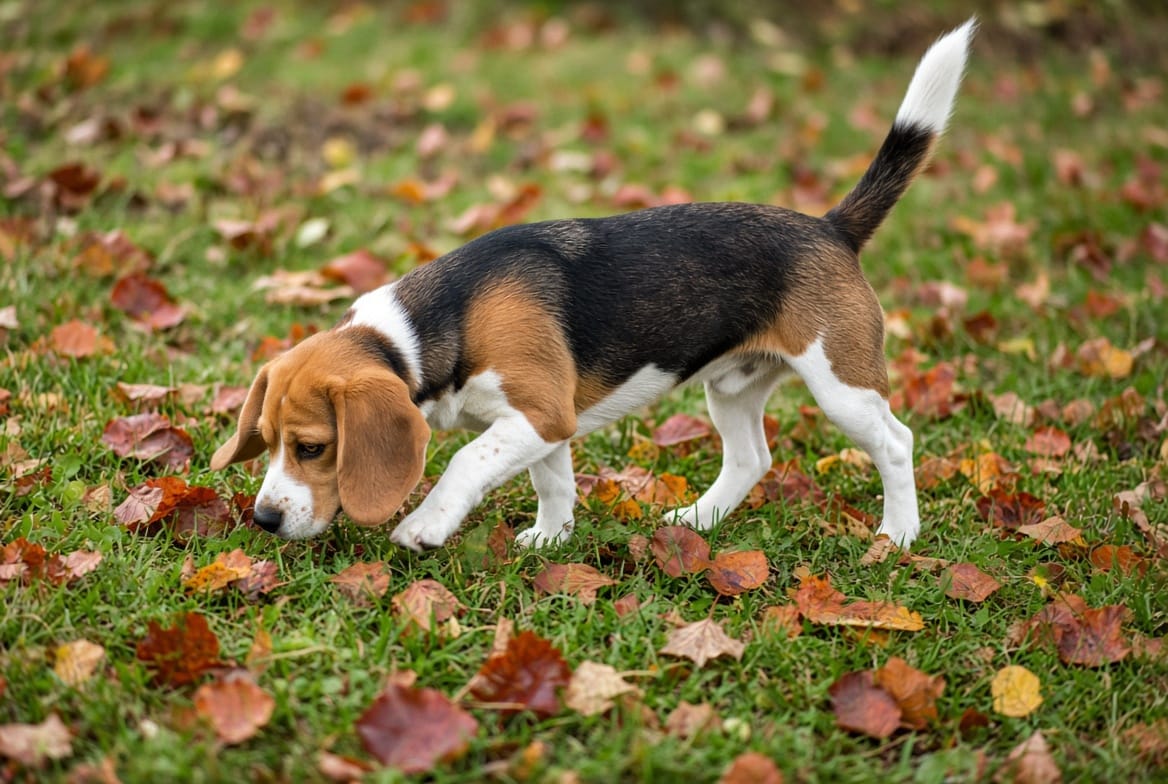
The Beagle descends from small English pack scenthounds bred to trail hare on foot, kept deliberately smaller than mounted hunting hounds so that owners without a horse could keep up. The compact type traces to the 1500s and the first AKC registration came in 1885. Selection targeted stamina, an exceptional nose and a carrying voice rather than handler focus, so the traits that made a good rabbit hound are the same ones that make a demanding pet: the AKC states plainly that walks must always be on leash because a Beagle will not resist the urge to run off after a compelling scent. The long drop ears that help sweep scent upward also trap warmth and moisture, and Beagles carry 2.54 times the odds of outer ear infection compared with crossbred dogs. Breeding has also left them markedly food-motivated, with obesity the single most diagnosed disorder in UK Beagles at 24.27 percent. The honest counterweight is that a 2025 study of 19,906 UK Beagles concluded the breed should not be considered to have an extreme conformation, with a median age at death of 11.28 years, broadly in line with dogs overall.
Quick Facts
Native Range
Breed origin: England (small foot-hunting pack hounds bred to trail hare, compact type established by the 1500s, first AKC registration 1885)
Natural Habitat
Fully domesticated
Adult Size
Two AKC varieties: 13 inches and under at the shoulder, under 20 lbs; and over 13 up to 15 inches, 20-30 lbs
Wild Diet
Fully domesticated
Wild Lifespan
10-15 years (UK primary-care records give a median age at death of 11.28 years)
Conservation Status
Not applicable (domesticated breed)
History
American packs were built on imports. General Richard Rowett of Illinois brought hounds over from English packs around 1870, an original American standard was published in 1884, and the National Beagle Club of America organized later that decade. The club split the breed into two size varieties on the argument that a small hound had no chance of winning a field trial against a larger one, and it revised the scale of points in 1900 to weight the head less heavily. The same qualities that suited pack life, modest size and an even temper, later made the Beagle the default laboratory dog. The American Anti-Vivisection Society, working from USDA figures, counted more than 47,200 dogs in US laboratories in 2023 and names this breed as the one most used.
Compare
Beagle
Human
Adult Size
Two AKC varieties: 13 inches and under at the shoulder, under 20 lbs; and over 13 up to 15 inches, 20-30 lbs
5-6 feet (150-185 cm); ~135-200 lbs
Wild Lifespan
10-15 years (UK primary-care records give a median age at death of 11.28 years)
~73 years (global average)
Wild Diet
Fully domesticated
Omnivorous - eats just about anything
Native Range
Breed origin: England (small foot-hunting pack hounds bred to trail hare, compact type established by the 1500s, first AKC registration 1885)
Global - originated in Africa roughly 300,000 years ago
Natural Habitat
Fully domesticated
Everywhere from arctic tundra to tropical megacities
Conservation Status
Not applicable (domesticated breed)
Least Concern (8+ billion and counting)
Test Yourself
What's the Beagle's native range?
Fun Facts
🐶 The USDA's Nose Squad
Since 1984, the USDA's Beagle Brigade has used beagles to sniff out smuggled fruit, meat, and plants in airport luggage, growing from a single dog in Los Angeles to around 120 beagles working major airports nationwide. Beagles get the job over bigger sniffer breeds partly because their friendly, non-threatening size doesn't intimidate travelers waiting in line.
Subscribe - it's free
New animal facts and care guides straight to your inbox. No spam.
Health and More
🐕 Dog Enrichment: Let Them Sniff, and the Dog Gets More Optimistic
🧬 What a Pet DNA Test Actually Tells You
👁️ Inherited Eye Disease: What Screening Actually Catches
⚖️ Body Condition Score: How to Tell if Your Pet Is Actually Overweight
🦷 Dental Disease: Why White Teeth Do Not Mean a Healthy Mouth
🐶 Why Your Dog Needs Daily Exercise (And What Happens When They Don't Get It)
Did You Know?
A Beagle's enrichment needs are olfactory, not athletic. Dogs carry roughly 800 to 1,200 functional olfactory receptor genes, and scenthounds like the Beagle were specifically selected for olfactory performance, which is why a 20 minute scent game tires one out more thoroughly than a 20 minute jog.
Explore More