World Animal Day Was Almost 24 March
On This Page▾

On 24 March 1925, more than five thousand people filled the Sport Palace in Berlin for an event about the treatment of animals. That was the first World Animal Day, and it was on the wrong date.
The man who organised it, Heinrich Zimmermann, had wanted 4 October. He was a writer and editor who had founded the magazine Mensch und Hund, or Man and Dog, and who spent his working life arguing in print that animals were owed something better than they were getting. The date he wanted was the feast day of Saint Francis of Assisi, the patron saint of animals, which made it the obvious anchor for what he had in mind.
The hall was not free on 4 October. So the first World Animal Day happened in March, five thousand people turned up anyway, and Zimmermann spent the next four years trying to move it.
Four Years to Get the Date Right
It shifted to 4 October in 1929. That is the date it has held ever since, without exception, which makes it one of the few observances on the animal awareness calendar that has never needed re-checking.
Getting it onto the German calendar was not the same as getting it onto anyone else's. That took until May 1931, when the International Animal Protection Congress met in Florence. Zimmermann put his proposal to the delegates: make 4 October World Animal Day, universally. It was accepted unanimously and adopted as a resolution.
Six years, then, from a rearranged booking in Berlin to an international agreement. The 2025 observance was the centenary.
What It Is Now
Naturewatch Foundation, a UK animal welfare charity, has coordinated World Animal Day since 2003. It runs the official site, sets an annual theme, and registers ambassadors in various countries.
What it does not do is control the day, because nobody does. There is no treaty behind World Animal Day and no UN resolution. It is not comparable in status to World Wildlife Day, which the General Assembly adopted in 2013 and pinned to the anniversary of the CITES signing. World Animal Day rests entirely on the fact that a lot of people, for a century, have agreed to treat 4 October as the day.
That turns out to be enough. Shelters run open days, zoos and aquariums schedule talks, schools build lessons around it, and a large number of small rescues get their one reliable burst of attention in the year.
The Breadth Is the Point
Most of the calendar is species-specific. There is a day for pangolins, a day for sloths, a day for octopuses. World Animal Day is deliberately not that. It covers companion animals, farmed animals, working animals, laboratory animals and wildlife under one heading, which is unusual and is the reason it still has a function a hundred years on.
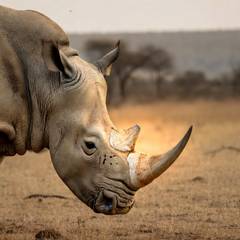
It also means the day carries some genuinely uncomfortable arithmetic. The species that get individual awareness days are, almost by definition, the charismatic ones. Pangolins are the most trafficked wild mammal on Earth and they got a day in 2012. Rhinos got one in 2010, on the back of a poaching crisis and a horn made of the same protein as fingernails. The animals with no day at all are the ones nobody has built a campaign around, and there are far more of those.
Zimmermann's original framing was closer to the broad version. He was not running a species campaign. He was arguing about cruelty, in a magazine, to whoever would read it, and the day he built was for animals generally rather than for any one of them.
Marking It
There is no correct way to observe it, and the official campaign changes theme annually, so the honest answer is that the day is a prompt rather than a programme.
The version with the most obvious effect is local. Shelters and wildlife rescues schedule around 4 October precisely because attention is available that week, and they are the organisations for which a single good day measurably changes the year. The species-level conservation bodies behind the individual animal days tend to run their own campaigns on their own dates instead.
A hundred years after a booking clash in Berlin put the first one in March, the date Zimmermann wanted is the one the world uses.
Sources & Further Reading
❓ Frequently Asked Questions
When is World Animal Day?
4 October, every year. It is a fixed date and has been since 1929, though the first World Animal Day in 1925 was held on 24 March.
Why is World Animal Day on 4 October?
It is the feast day of Saint Francis of Assisi, the patron saint of animals. Heinrich Zimmermann wanted that date for the first event in 1925, but the hall he had booked in Berlin was not available, so the inaugural event ran on 24 March instead.
Who started World Animal Day?
Heinrich Zimmermann, a writer and editor working in Berlin who founded the magazine Mensch und Hund, or Man and Dog. He organised the first event in 1925 and spent the next six years campaigning to have 4 October adopted internationally.
Who runs World Animal Day now?
Naturewatch Foundation, a UK animal welfare charity, has coordinated it since 2003. It runs the official site and sets an annual campaign theme, but there is no central authority and most events are organised locally.
Written by Michael Ryan
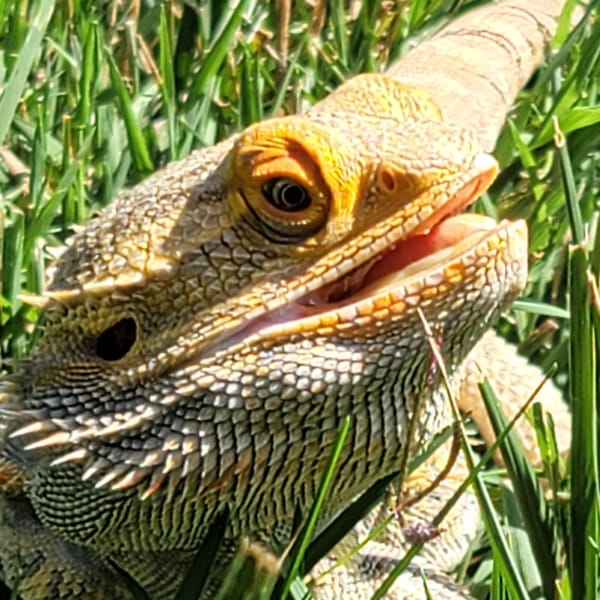
Mike keeps two rescued bearded dragons, Dex and Cera, and writes the care guides on BeastlyFacts from his own research and mistakes. He is not a veterinarian.
More about Michael Ryan →Comments
No comments yet - be the first!