French Bulldog Feeding: Schedule, Diet, and Why They Stop Eating
On This Page▾

A French Bulldog's gas problem is often less about what's on the plate and more about how the breed is built to breathe, which changes what helps at feeding time.
Feeding Schedule
Growing puppies, 8 weeks to about a year, eat 3 to 4 meals a day on a consistent schedule, using food labeled specifically "puppy," not an all-life-stages formula, and the weight-based chart on the bag as a starting point. A Frenchie should never leave a breeder before 8 weeks old.
Adults are where sources genuinely diverge. One veterinary source says twice daily, another recommends 2 to 3 times a day, reasoning that splitting food into smaller, more frequent meals lowers perceived bloat risk compared with one large daily meal. A real, unresolved difference in professional guidance, not a typo. Seniors, roughly 7 to 8 years and up, move to a senior-specific formula, which typically brings in joint-support ingredients and a dental-friendly kibble texture.
No source gives one fixed cups-per-day or grams-per-day number that applies breed-wide, and any site claiming otherwise is worth treating with caution unless it's tied to a specific food's calorie density. Use the feeding chart on your food's bag or a vet-calculated target based on your dog's weight and activity, adjusted for body condition.
What French Bulldogs Eat
A complete-and-balanced, AAFCO-approved commercial food matched to life stage is the baseline, wet or dry both work as long as it's properly balanced. Raw or homemade diets are discouraged for puppies specifically, their immune systems are still developing. Breed-specific formulas emphasize highly digestible protein and prebiotics for puppies, a minimum 24% protein plus digestive-support fiber for adults, and joint-support ingredients for seniors. A quality omega-3 supplement is commonly recommended for this breed given its predisposition to skin allergies and back problems, and overweight Frenchies should move to a calorie-restricted formula, extra weight worsens both back-injury risk and airway complications.
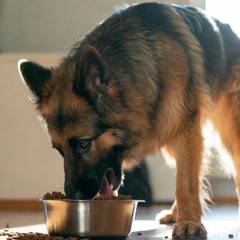
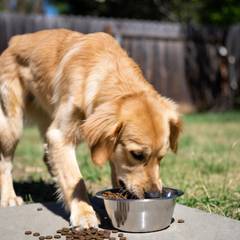
Because French Bulldogs are brachycephalic and prone to gulping air while eating, slow-feeder or sectioned bowls plus smaller, more frequent portions genuinely help cut down on air-swallowing. Routinely limiting naturally gas-forming ingredients, broccoli, cabbage, beans, dairy, and soy, is also worth doing for this breed specifically, not because they're unsafe, but because they compound an already gas-prone digestive system.
Safe Treats and Foods to Avoid
Safe in moderation: fully cooked plain eggs, cooked salmon or sardines, unsalted air-popped popcorn, unsalted peanut butter without xylitol, cooked turkey or pork with fat and seasoning removed, plain low-fat cheese or yogurt if tolerated, a few unsalted cashews, and small amounts of plain bread, never bread with raisins.
Never feed: chocolate, macadamia nuts (called one of the most poisonous foods for dogs), garlic (roughly five times more toxic to dogs than onions), xylitol, and almonds (a real choking and windpipe injury risk if not fully chewed). Raisins are also flagged as unsafe. Beyond outright toxicity, limit broccoli, cabbage, beans, dairy, and soy for this breed specifically, they're likely to worsen the flatulence and GI sensitivity already common with airway issues.
Why French Bulldogs Stop Eating
- Teething. Sore gums during teething can make puppies reluctant to eat, especially dry kibble. Softened food or cooling teething toys usually resolve it.
- Heat. Dogs commonly eat less in hot weather. For a brachycephalic breed this deserves closer watching, the same anatomy that suppresses appetite in heat also raises heat-stroke risk.
- Stress. A new home, a move, or a new pet or family member is a common, usually short-lived trigger for skipped meals.
- Pickiness. Some dogs simply tire of the same food, though true pickiness is comparatively rare as a cause specifically in puppies.
- Dental pain. Gum disease or a fractured tooth is a leading cause of pseudo-anorexia, where the dog wants to eat but physically hurts too much to chew.
- GI disease. Food allergies, inflammatory bowel disease, pancreatitis, and parasites are all common medical drivers of appetite loss, including in puppies.
- Systemic illness. Kidney disease, cancer, hypothyroidism, and other organ dysfunction can cause a dog to show no interest in food at all.
- Airway obstruction syndrome. Because of this breed's airway anatomy, French Bulldogs with BOAS frequently show GI signs like regurgitation or reduced appetite. One study found 93% of affected Frenchies also had GI signs, which improved after corrective airway surgery, a real breed-specific link between how they breathe and how they eat.
- Competing with other pets. Some dogs hold back from eating when they feel they have to compete for food, usually resolved by feeding pets separately.
When to Worry
Two independent veterinarian sources converge on 12 hours as the real limit for puppies, who lack the fat reserves adults have, and small breeds like this one carry extra hypoglycemia risk on top of that. The same sources put adults at roughly 24 to 48 hours before it's an emergency vet visit. A hospital-affiliated source is more cautious about giving any fixed number, preferring to say any change in eating pattern warrants a vet call rather than waiting for a specific hour count, worth keeping in mind rather than treating 12 or 24 hours as a hard rule everyone agrees on.
For puppies, see a vet if one skipped meal turns into no interest in the next, if vomiting or diarrhea appear, if diarrhea lasts over 12 hours, if the puppy seems weak or lethargic, or immediately for dehydration signs like pale gums or sunken skin. For adults, the consistent thread across every source: appetite loss plus lethargy, vomiting, weight loss, or any other new symptom means don't wait it out, call the vet.
The French Bulldog encyclopedia profile covers the species itself, beyond keeping one.
Sources & Further Reading
Last reviewed 2 Aug 2026 · 4 sources
❓ Frequently Asked Questions
How often should I feed my French Bulldog?
Puppies eat 3 to 4 meals a day on a consistent schedule using a food labeled specifically for puppies, not an all-life-stages formula. Adults are where sources diverge, one says twice daily, another recommends 2 to 3 times, arguing smaller, more frequent meals lower perceived bloat risk versus one large daily meal.
Why does my French Bulldog need a slow-feeder bowl?
Because of their short muzzle and airway anatomy, Frenchies tend to gulp air while eating, called aerophagia. A slow-feeder or sectioned bowl, plus smaller, more frequent portions, cuts down on that air-gulping, and it's a big part of why this breed is so notoriously gassy.
How much food should I feed?
No source gives one fixed breed-wide cup or gram amount, and treat any site that claims otherwise with caution. The right amount depends on the specific food's calorie density and your dog's weight and body condition, use the feeding chart on the bag or a vet-calculated target as your starting point.
Why has my French Bulldog stopped eating?
Teething in puppies, hot weather, and stress from a new home or routine change are all normal explanations. Dental pain and GI disease are common concerning causes. This breed specifically can show reduced appetite or regurgitation as a symptom of airway obstruction syndrome, one study found 93% of affected Frenchies also had GI signs that improved after corrective airway surgery.
How long can a French Bulldog puppy safely go without eating?
Twelve hours, per two independent veterinarian sources. Puppies have less fat in reserve than adults, and a small breed like this one carries extra hypoglycemia risk. A hospital-affiliated source is more cautious about giving any fixed number, saying any change in eating pattern warrants a vet call.
What foods are dangerous for French Bulldogs?
Chocolate, macadamia nuts, garlic, xylitol, and almonds are all named specifically. Beyond outright toxicity, broccoli, cabbage, beans, dairy, and soy are flagged as foods to limit for this breed in particular, they compound the gas and GI sensitivity already common with airway syndrome.
📰 More on the French Bulldog

Written by Michael Ryan
Mike keeps two rescued bearded dragons, Dex and Cera, and writes the care guides on BeastlyFacts from his own research and mistakes. He is not a veterinarian.
More about Michael Ryan →Comments
No comments yet - be the first!