Why Do Koalas Have Chlamydia? The Disease Threatening Australia's Icon
On This Page▾

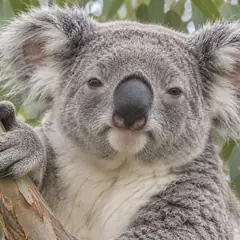
Koalas have chlamydia because a bacterium called Chlamydia pecorum has spread through wild populations, passed mainly through mating and from mother to joey. It is a different species of chlamydia from the one that infects people. In parts of Queensland and New South Wales, half or more of all koalas carry it.
It is an awkward subject for Australia's cuddliest animal, but it matters. Alongside cars, dogs and land clearing, chlamydia is one of the biggest threats koalas face. It can leave a koala blind, infertile or dead. The good news is that a vaccine, approved in 2025, is now cleared for use.
How Common Is Chlamydia in Koalas?
In some places, most koalas have it. Across Australia, infection rates in tested koala populations run from about 1 in 5 to almost 9 in 10, depending on the area. Some hot spots:
- South East Queensland: 31 to 71 percent infected.
- Raymond Island, Victoria: 33 to 81 percent.
- Mount Lofty Ranges, South Australia: 47 to 88 percent.
One population has stayed almost entirely clear: Kangaroo Island, off South Australia. Its isolation has kept the disease out so far.
Being infected does not always mean being sick. But among wild koalas in South East Queensland, about two thirds of infected animals went on to develop the disease.
What Does Chlamydia Do to a Koala?
Nothing good. It attacks several parts of the body:
- The eyes. Chronic eye infections can scar the surface of the eye until the koala goes blind. A blind koala cannot find good leaves or climb safely.
- The bladder. Urinary infections cause pain and leaking, which leaves a stained, soggy rump. Wildlife carers have a name for it: "wet bottom."
- The reproductive tract. Scarring can make both females and males infertile. A population full of infertile koalas shrinks fast.
Severe cases can kill, and untreated infection can cut years off a koala's life. Chlamydia has also been linked to fatal pneumonia and joint disease.
How Do Koalas Catch Chlamydia?
Mostly the way you would guess: through mating. Adult koalas pass it to each other during the breeding season.
Mothers can pass it to their young too. A joey spends about six months in its mother's pouch, which opens toward her back legs. The pouch of the koala's closest relative, the wombat, opens the same way. The joey is in constant contact with her body there, and that is when the bacteria can pass to it. About a quarter of joeys tested have turned out positive.
Where it came from in the first place is still an open question. On French Island in Victoria, the koala strains turned out to be closer to strains found in cattle and pigs than to other koala strains. That hints that at least some koala infections jumped over from livestock.
Moving koalas around spreads it fast. In one move where the koalas were not tested first, 94 percent had been exposed by their second breeding season.
Can People Catch Chlamydia From Koalas?
It is unlikely. Koala chlamydia is mainly a disease of animals such as koalas, sheep and cattle, and cuddling a koala at a wildlife park is not how people catch chlamydia.
Why Not Just Give Koalas Antibiotics?
Because antibiotics can starve a koala. A koala depends on the microbes in its gut to break down eucalyptus leaves, which are tough and toxic. Antibiotics kill those helpful microbes along with the chlamydia. A treated koala can lose the ability to digest its only food. Some can starve even after the infection is cleared.
Even when treatment works, a koala released back into the wild can simply catch it again.
Why Do Koalas Sleep So Much?
Not because eucalyptus drugs them. That one is a myth. Koalas sleep 18 to 22 hours a day because their food gives them so little energy. Eucalyptus leaves are low in nutrients and loaded with toxins, so the gut has to work hard just to break them down. A koala eats more than a pound of leaves a day and gets most of its water from them too.
The cheapest way to survive on that diet is to do almost nothing. So a koala wedges itself into a fork in a tree and naps the day away. A sick koala needs every bit of that energy, which is one more reason chlamydia hits them so hard.
Is There a Chlamydia Vaccine for Koalas?
Yes. In 2025, Australia's veterinary medicine regulator approved the first koala chlamydia vaccine, a single shot with no booster. Over a decade of trials in Moreton Bay, South East Queensland, 165 wild koalas were vaccinated and tracked. The vaccine cut deaths from chlamydia by at least 65 percent. It also pushed back the age when koalas got sick, from about five years old to over eight. That adds about three years of healthy breeding life on average.
It can now be used in wildlife hospitals, vet clinics and out in the field. The next step is paying for a national rollout to the koalas most at risk. The vaccine works best alongside protecting koalas from traffic, dogs and land clearing. For an animal that spends most of its life asleep in a tree, a few extra healthy years is a big deal.
Sources & Further Reading
Last reviewed 22 Nov 2026 · 4 sources
- University of the Sunshine Coast (UniSC): Ten years of research proves chlamydia vaccine can save lives of wild koalas (2024), and World first: UniSC's koala vaccine approved to fight deadly disease (2025)
- Helping koalas battle disease: recent advances in Chlamydia and koala retrovirus (KoRV) disease understanding and treatment in koalas, FEMS Microbiology Reviews 44(5) (Quigley and Timms, 2020)
- Temporal dynamics of koala retrovirus plasma RNA load in relation to faecal glucocorticoid metabolites and Chlamydia infection, Journal of General Virology 106(9) (Blyton et al., 2025)
- Koalas 101, National Geographic
Written by Michael Ryan
Mike keeps two rescued bearded dragons, Dex and Cera, and writes the care guides on BeastlyFacts from his own research and mistakes. He is not a veterinarian.
More about Michael Ryan →