Beastfile · Mammals
Three-Toed Sloth
Bradypus variegatus
It climbs all the way down once a week to defecate, and it often dies doing it.
On This Page▾
Overview
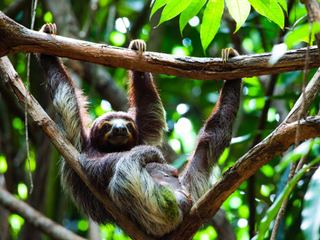
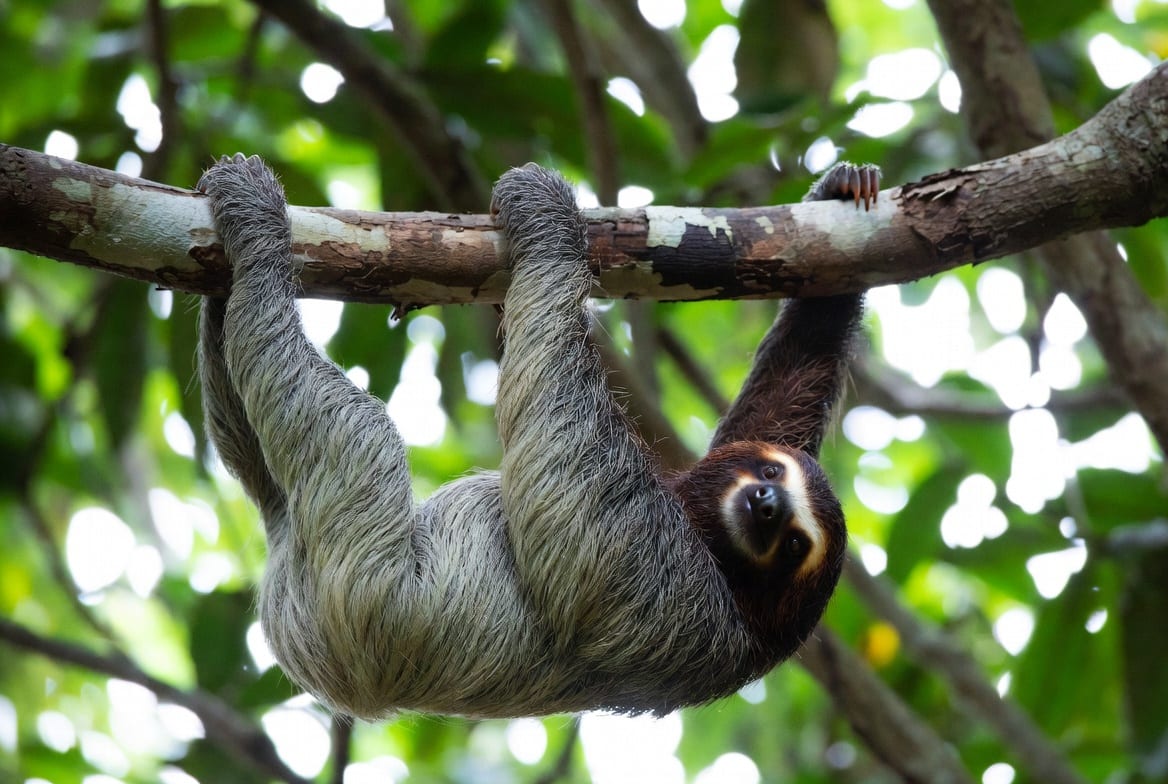
A sloth is built around an extremely poor diet. Leaves give up very little energy, so it moves slowly, keeps a low body temperature, and takes days to digest a meal in a multi-chambered stomach. The strangest consequence is the weekly trip. Roughly once a week a three-toed sloth climbs all the way to the forest floor to defecate, where it cannot walk and has to drag itself by its front claws. A large share of sloth deaths from predation happen during those trips, which is a striking amount of risk for something with an easy alternative. Its coat, meanwhile, is a habitat: grooved hairs hold moisture, grow algae, and house moths.

Origin
Lowland and montane rainforest from Central America into northern South America, spending nearly all of its life in the canopy.
Habitat
RainforestNotable Traits
- •Descends to the ground about once a week to defecate
- •Cannot walk on the ground and drags itself by the front claws
- •Grooved hairs that grow algae found almost nowhere else
- •A multi-chambered stomach that takes days to process leaves
- •Can turn its head roughly 270 degrees
Conservation
Least Concern for this species, though other sloths are not so lucky. Road building and forest fragmentation are the practical threats, because a sloth crossing open ground is nearly defenseless.