Veiled Chameleon
Chamaeleo calyptratus
On This Page▾
Overview
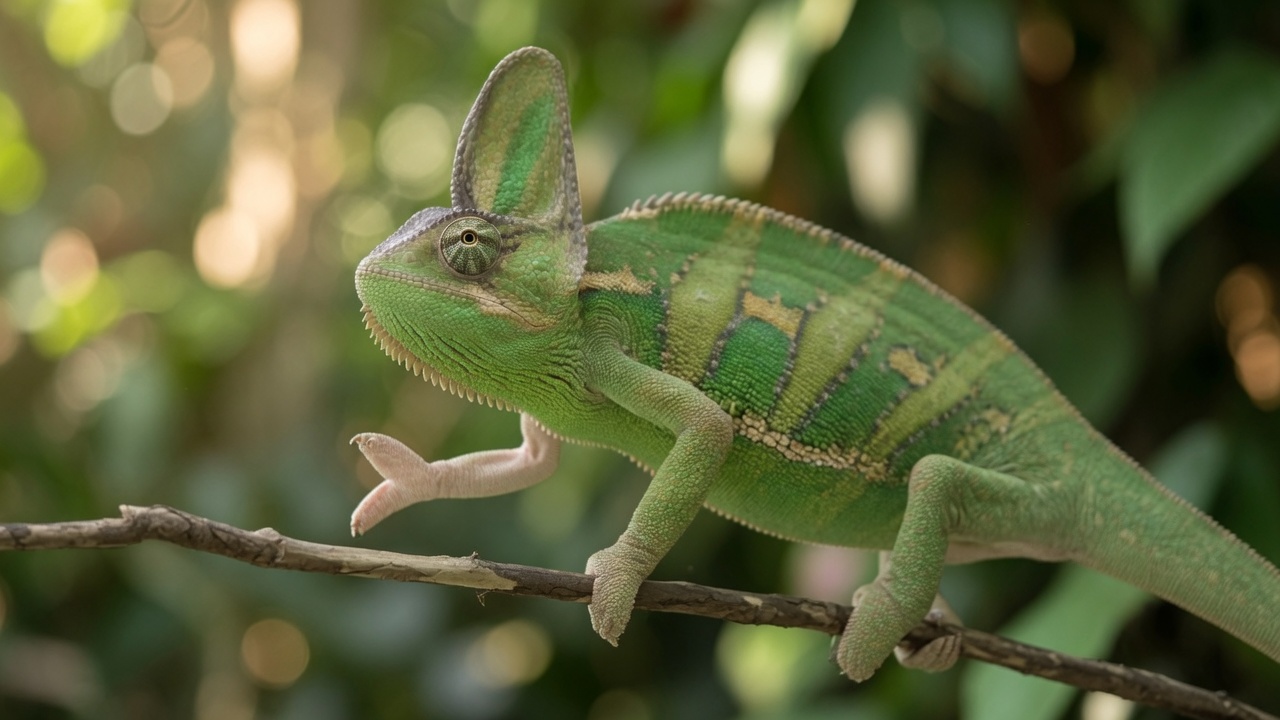
The veiled chameleon is native to the mountainous valleys of Yemen and southwestern Saudi Arabia, where it tolerates wider swings in temperature and humidity than most other chameleon species - an adaptation to its relatively dry, variable habitat. Both sexes develop a tall, helmet-like casque on top of the head, more pronounced in males, which helps condense atmospheric moisture and plays a role in visual communication. Females can lay large clutches of infertile eggs even without ever mating.
Quick Facts
Native Range
Yemen and southwestern Saudi Arabia
Natural Habitat
Mountain valleys, plateaus, and vegetation near water sources in an otherwise arid landscape
Adult Size
18-24 inches (46-61 cm) males; 10-14 inches (25-36 cm) females
Wild Diet
Insects, with some opportunistic feeding on leaves and flowers
Wild Lifespan
Males up to 8 years and females usually around 5 in the wild; in captivity females often just 2-6 and frequently less, from the toll of producing egg clutches
Conservation Status
Not evaluated (widespread and common)
History
Auguste Duméril and Gabriel Bibron named the species in 1851. It reached the pet trade late and then reshaped it: where most chameleons of the era arrived as wild caught imports that died quickly, this one bred willingly in captivity, and it went on to become the most widely kept and captive bred chameleon in the hobby. That productivity had a side effect. Escaped and released pets have founded breeding populations in both Florida and Hawaii, an unusual outcome for a family that rarely establishes itself outside its native range.
Compare
Veiled Chameleon
Human
Adult Size
18-24 inches (46-61 cm) males; 10-14 inches (25-36 cm) females
5-6 feet (150-185 cm); ~135-200 lbs
Wild Lifespan
Males up to 8 years and females usually around 5 in the wild; in captivity females often just 2-6 and frequently less, from the toll of producing egg clutches
~73 years (global average)
Wild Diet
Insects, with some opportunistic feeding on leaves and flowers
Omnivorous - eats just about anything
Native Range
Yemen and southwestern Saudi Arabia
Global - originated in Africa roughly 300,000 years ago
Natural Habitat
Mountain valleys, plateaus, and vegetation near water sources in an otherwise arid landscape
Everywhere from arctic tundra to tropical megacities
Conservation Status
Not evaluated (widespread and common)
Least Concern (8+ billion and counting)
Test Yourself
What's the Veiled Chameleon's native range?
Fun Facts
🦎 Color Means Communication
Chameleons don't change color primarily for camouflage. They do it to communicate mood and temperature. Color changes signal stress, excitement, readiness to mate, and more.
🦎 Color-Changing Camouflage
Chameleons are famous for their ability to change color, but did you know it's primarily a way to communicate? They alter their hues depending on their mood and social signals, rather than just blending into their surroundings!
🦎 Chameleon Color Change
Chameleons are famous for their color-changing abilities, but it's not just for camouflage! They change colors in response to mood, temperature, and even social signals, making them masters of both disguise and emotion!
🦎 Faster Than a Fighter Pilot
A chameleon's tongue accelerates fast enough to briefly pull more G-force than a human fighter pilot can withstand. It can strike a full body-length away and snap back with its prey in a fraction of a second.
Where it is legal
5 US jurisdictions restrict this species, from outright bans to permits. Every one quotes the rule it comes from.
Subscribe - it's free
New animal facts and care guides straight to your inbox. No spam.
Deep Dive
🦎 How Much Does a Veiled Chameleon Really Cost?
🦎 How to Handle a Veiled Chameleon (Carefully, and Not Often)
🦎 Common Veiled Chameleon Health Issues and What Causes Them
🦎 Veiled Chameleon Enclosure Setup: The Dripper Isn't Optional
🦎 Veiled Chameleon Feeding: Schedule, Diet, and the Supplement Schedule That Actually Matters
🦎 Veiled Chameleon Enrichment: The First Two Months Change the Animal
Health and More
🦎 Chameleon Hydration: Drippers vs. Misters vs. Foggers Explained
💡 T5 vs Compact UVB: Which One Won't Fail Your Reptile
🔌 Reptile Emergency Plan: Power Outages, Travel, and Pet Sitters
💧 Reading Reptile Stool, Urates, and Hydration: A Daily Health Check
🧼 Salmonella and Reptile Hygiene: The Rules That Actually Matter
🌡️ Reptile Heating and Thermostats: Preventing Burns
🧫 Reptile Quarantine: Why New Snakes and Lizards Need Months, Not Weeks
🦎 Understanding Reptile Shedding (Ecdysis)
🎪 Three Pets Whose Drama Isn't the Real Story
🥈 Four Pets Content to Stay Out of the Spotlight
🦗 Gut-Loading Feeder Insects: What to Feed Them, for How Long, and Whether It Replaces Dusting
🩺 UVB Lighting: Why It Matters More Than You Think
Did You Know?
Veiled chameleons are remarkably drought-adapted for a chameleon. Native to the mountains of Yemen and Saudi Arabia, they tolerate wider temperature and humidity swings than most other chameleon species. Females are also famous for laying large clutches of infertile eggs even without ever having contact with a male.
Explore More