Jumping Spider
Phidippus regius
On This Page▾
Overview
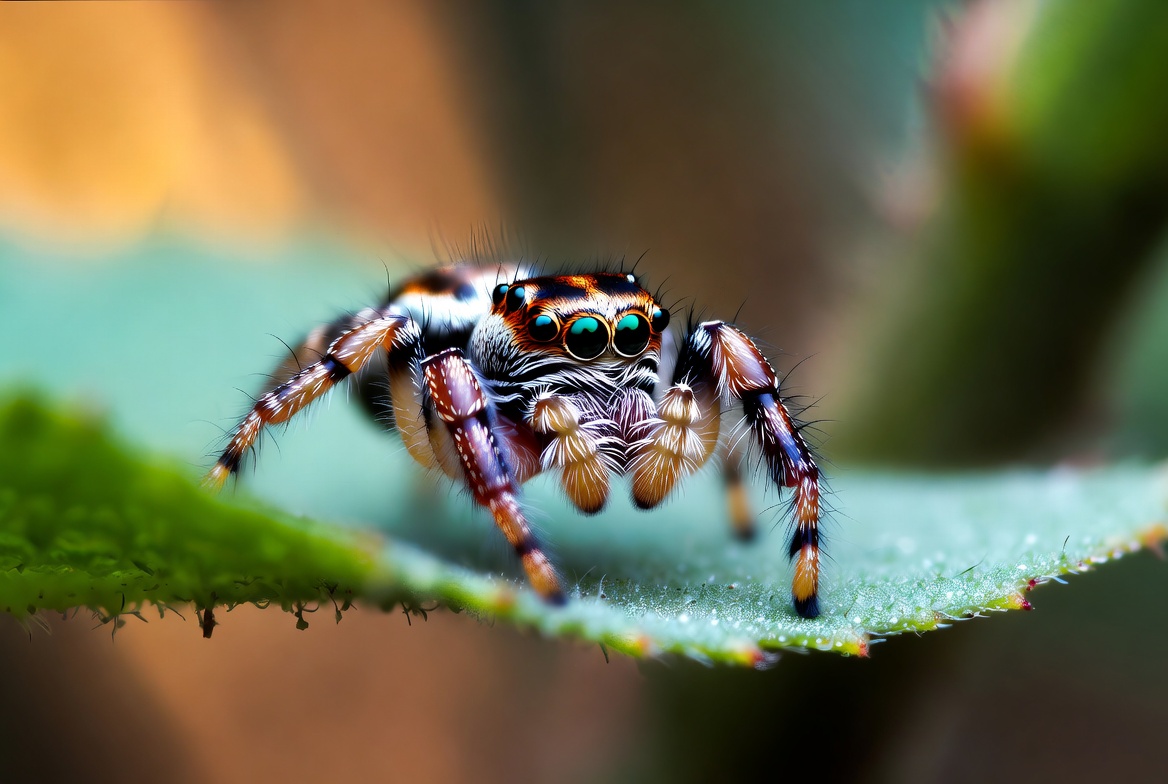
The regal jumping spider is the most commonly kept pet jumping spider, native to scrubland, palmetto stands, and forest edges of the southeastern United States and the Caribbean. Unlike web-building spiders, jumping spiders are active visual hunters, using four pairs of eyes for nearly 360-degree awareness and sharp depth perception to stalk and pounce on prey. Many keepers describe their jumping spider as genuinely curious, often turning to track movement outside its enclosure.
Quick Facts
Native Range
Southeastern United States, Bahamas, and Caribbean islands
Natural Habitat
Scrubland, palmetto stands, and forest edges
Adult Size
0.5-0.75 inches (1.3-1.9 cm); females larger than males
Wild Diet
Flies, moths, and other small insects, caught by active stalking and pouncing
Wild Lifespan
Shorter in the wild, where predation, food gaps and weather take their toll; 1-2 years in captivity, and a well-kept female can go longer
Conservation Status
Not evaluated (widespread and common)
History
Carl Ludwig Koch described the species in 1846, and it remains the largest jumping spider in eastern North America. Exotic pet keepers have worked with it since the 1970s, but for decades it stayed a niche animal traded among specialists. That changed after 2017, when the animated series Lucas the Spider and a wave of social media accounts turned jumping spiders into a mainstream pet, and the regal, already the largest of the North American species, became the default choice. It is now stocked by chain pet stores across the United States and Canada, an unusual place for a spider to end up.
Compare
Jumping Spider
Human
Adult Size
0.5-0.75 inches (1.3-1.9 cm); females larger than males
5-6 feet (150-185 cm); ~135-200 lbs
Wild Lifespan
Shorter in the wild, where predation, food gaps and weather take their toll; 1-2 years in captivity, and a well-kept female can go longer
~73 years (global average)
Wild Diet
Flies, moths, and other small insects, caught by active stalking and pouncing
Omnivorous - eats just about anything
Native Range
Southeastern United States, Bahamas, and Caribbean islands
Global - originated in Africa roughly 300,000 years ago
Natural Habitat
Scrubland, palmetto stands, and forest edges
Everywhere from arctic tundra to tropical megacities
Conservation Status
Not evaluated (widespread and common)
Least Concern (8+ billion and counting)
Test Yourself
What's the Jumping Spider's native range?
Subscribe - it's free
New animal facts and care guides straight to your inbox. No spam.
Deep Dive
🕷️ How Much Does a Jumping Spider Really Cost?
🕷️ How to Handle a Jumping Spider (And Why Its Eyesight Matters)
🕷️ Common Jumping Spider Health Issues
🕷️ Jumping Spider Enclosure Setup: Small, Simple, and All About Humidity
🕷️ Jumping Spider Feeding: Schedule, Diet, and Why They Stop Eating
🕷️ Jumping Spider Enrichment: They Can Recognize Individuals
Health and More
🕷️ Invertebrate Molting 101: What's Normal, Species by Species
☠️ Household Pesticides and Your Invertebrate Pet: The Hidden Hazard
📦 Rehousing an Invertebrate: Method, Timing, and Urticating Hair First Aid
🕷️ Invertebrate Housekeeping: Quarantining a New Arrival, Cleaning the Enclosure, and Finding an Escapee
📦 Invertebrate Emergency Plan: Power Outages, Travel, and Shipping
🔁 Four Animals That Break Their Own Category's Rules
Did You Know?
Jumping spiders have some of the best vision of any arthropod, with four pairs of eyes giving them nearly 360-degree awareness and sharp enough focus to visually track and judge the distance of prey before pouncing - hence the name. Many keepers report their jumping spider appearing to watch and turn to follow movement outside the enclosure, genuinely interactive behavior that's unusual for an invertebrate.
Explore More