Hermit Crab
Coenobita clypeatus
On This Page▾
Overview
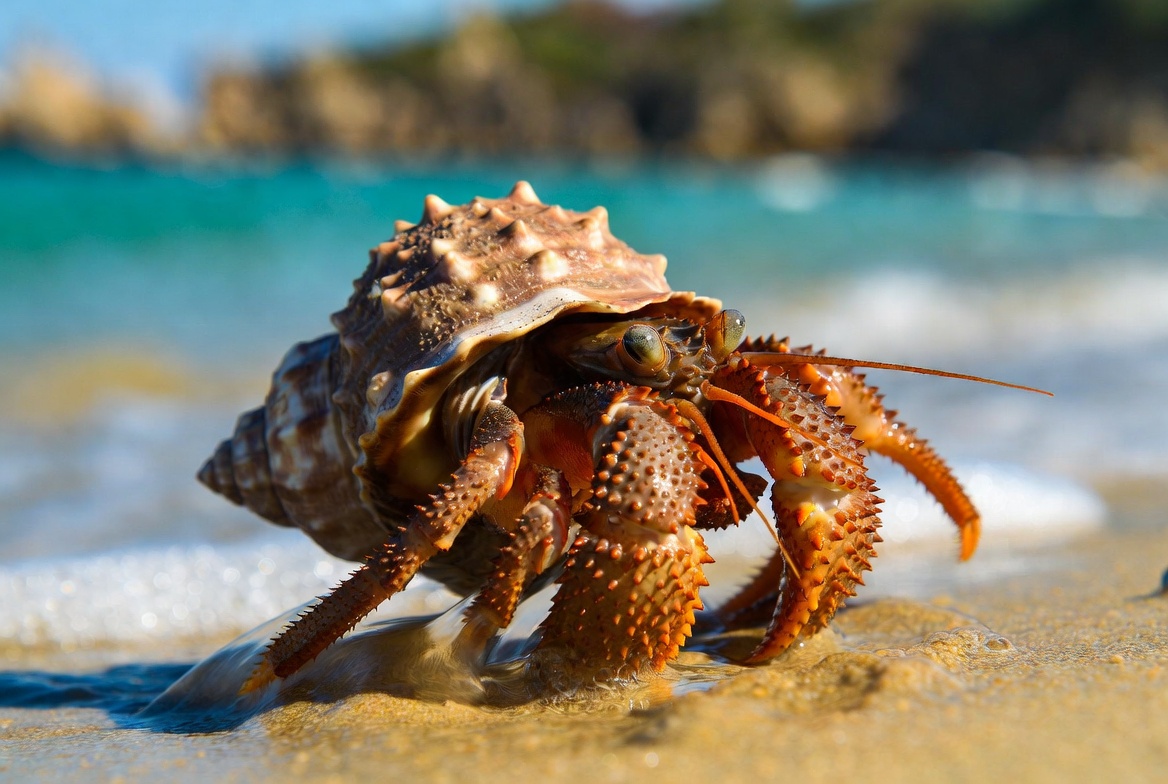
The Caribbean hermit crab, also called the purple pincer hermit crab, is the most commonly kept pet land hermit crab, native to coastal regions of the Caribbean and the western Atlantic. Because they don't grow their own shells, hermit crabs spend their lives searching for, trying on, and trading empty snail shells as they grow - a behavior so structured that groups will form an orderly size-based queue to exchange shells when a larger one becomes available. Despite their reputation as a disposable beach-souvenir pet, they can live for decades with proper care.
Quick Facts
Native Range
Caribbean islands and coastal Central America and Florida
Natural Habitat
Tropical coastal regions; land-dwelling but reliant on nearby fresh and marine water
Adult Size
Up to 4 inches (10 cm) across, including legs
Wild Diet
Decaying plant and animal matter, fruit, and organic debris (omnivorous scavenger)
Wild Lifespan
20-30+ years in the wild
Conservation Status
Not evaluated; regional populations pressured by coastal development and the pet trade
History
The species entered the American pet market in 1953, sold to tourists at a souvenir shop in West Palm Beach. It went mass market in the 1970s, when one company branded it the Crazy Crab and pitched it as a moving Pet Rock, and by 2000 a single wholesaler was reported to be moving more than a million a year. Nearly all of those animals were taken from the wild, because the larvae spend about a month drifting as plankton in salt water and captive rearing had defeated everyone who tried it. Mary Akers finally managed it in 2018, raising two crabs to land and then 204 in a later attempt that year, against a previous record of 24 set by a German hobbyist.
Compare
Hermit Crab
Human
Adult Size
Up to 4 inches (10 cm) across, including legs
5-6 feet (150-185 cm); ~135-200 lbs
Wild Lifespan
20-30+ years in the wild
~73 years (global average)
Wild Diet
Decaying plant and animal matter, fruit, and organic debris (omnivorous scavenger)
Omnivorous - eats just about anything
Native Range
Caribbean islands and coastal Central America and Florida
Global - originated in Africa roughly 300,000 years ago
Natural Habitat
Tropical coastal regions; land-dwelling but reliant on nearby fresh and marine water
Everywhere from arctic tundra to tropical megacities
Conservation Status
Not evaluated; regional populations pressured by coastal development and the pet trade
Least Concern (8+ billion and counting)
Test Yourself
What's the Hermit Crab's native range?
Subscribe - it's free
New animal facts and care guides straight to your inbox. No spam.
Deep Dive
🦀 How Much Does a Hermit Crab Cost?
🦀 How to Handle a Hermit Crab (Minimally, and On Its Terms)
🦀 Common Hermit Crab Health Issues (There's Almost No Vet Care, So Prevention Is Everything)
🦀 Hermit Crab Enclosure Setup: Humidity, Deep Substrate, and Extra Shells
🦀 Hermit Crab Feeding: Scatter It, Vary It, and Watch the Label
🦀 Hermit Crab Enrichment: Shells Are a Welfare Need, Not Decoration
Health and More
🕷️ Invertebrate Molting 101: What's Normal, Species by Species
☠️ Household Pesticides and Your Invertebrate Pet: The Hidden Hazard
🕷️ Invertebrate Housekeeping: Quarantining a New Arrival, Cleaning the Enclosure, and Finding an Escapee
📦 Invertebrate Emergency Plan: Power Outages, Travel, and Shipping
🐾 Four Pets That Break the Usual Mold
Did You Know?
Hermit crabs don't grow their own shells - they spend their entire lives searching for, trying on, and trading empty snail shells as they grow, and will even form an orderly 'vacancy chain,' lining up by size to swap shells in turn when a larger one becomes available. In the wild, land hermit crabs can live 20 to 30+ years, though most pet hermit crabs sold in beach-town gift shops die within their first year from incorrect humidity and being kept alone.
Explore More